



By Gaston Kelman, writer.
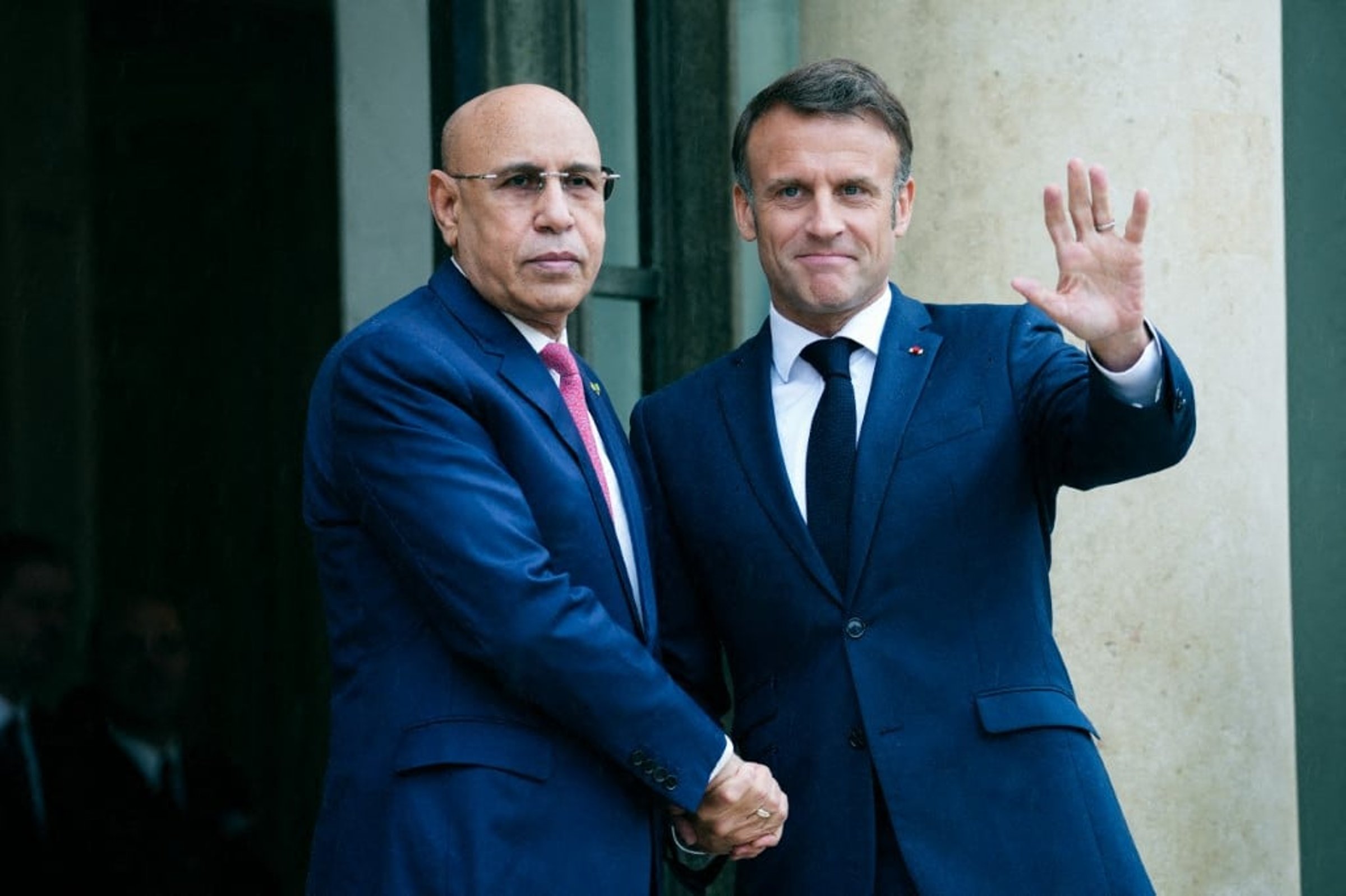
Twenty years ago in 2007, I prophesied in my book entitled Les hirondelles du printemps africain that Mauritania would be one of the most promising swallows heralding the African spring. For the kindest, I was just an iconoclast, a provocateur who wanted to shock at all costs. It was a time when people held their noses when they heard the name of this country, of which the only references granted to it – condemnation without trial and without possibility of appeal – were modern slavery – biased analysis – and very real terrorism. At that time, one would not have imagined the French president inviting his Mauritanian counterpart to the Elysée, at a time when Africa is to be approached with caution and where visits in one direction or the other are rare and carefully selected. Macron’s last tour in Africa – at the end of November 2025 – took place in “respectable” countries – South Africa, Mauritius, Angola – or eternal friends of France like Gabon. Shortly before, in July 2025, we received at the Elysée the rather compliant Alassane Ouattara who professes that he owes nothing to anyone except to France. There was also the interlude with the unavoidable president of the Senegalese epic.
Mauritania, this rugged country, rigid backbone between the Maghreb and black Africa, does not claim to be the friend of anyone. It is not the enemy of one or the other either. What is happening in Mauritania is not a social revolution led by a junta – a distant past – or the flashy emergence of forty-something-year-olds. One could even speak of a smooth sailing. What was considered the stronghold of terrorism and all kinds of trafficking in the desert has become the most secure country in the Sahel. Economic, social, and cultural development is progressing at a pace appreciated by all. The currency is said to be stable, and when complaints about the CFA franc are heard in Nouakchott, an indescribable smile is displayed.
The choice of meetings of the French president with his African counterparts hides a subliminal, perhaps even unconscious message. We remember not so long ago when heir to Gaullist France, he still believed he was more or less in the colonial era. Each French president experienced this exhilaration. One felt obliged to demonstrate his authority through a gesture or a speech since de Gaulle had given the starting signal in Brazzaville. After the Pompidou interlude, Giscard d’Estaing strolled arrogantly in conquered territory. Mitterrand delivered the speech of La Baule and, fraudulently appropriating the quest for freedom initiated by African societies through roundtable discussions, promised carrots to the nice ones and sticks to the recalcitrant ones. Chirac flexed his muscles like any right-wing president, dropping bombs on Ivorian populations. And Sarkozy, in addition to bombs for enthroning or deposing, sent Africa back to prehistory in the Dakar speech. Finally, Hollande did his Hollande thing, in Kinshasa, that is to say the clown, during his visit to the Francophonie summit.
Then came Emmanuel Macron, determined to make a revolution, forgetting to first rid himself of the Francafrique nature which came back like a boomerang. Indeed, times had changed a lot. Recently, many swallows were crisscrossing the African sky in various forms: some under the tumultuous harmattan like the countries of the AES. We will never forget the huge farce, the ultimate backpedaling, at the disastrous meeting with African youth at the African summit in Montpellier. The French president had decided to declassify African leaders and make this youth his new interlocutor on the continent. Since the rage of this same youth that the press euphemistically dubbed “anti-French sentiment”, when it is actually a deep-seated resentment, a heavy rejection, a profound anger, he has calmed down a bit. So, he reserves his visits for “neutral” countries, often not part of what is called the “reserved area”. It is necessary to avoid the demands and uprisings of the street that a trip to one of the countries in this reserved area would surely cause.
In this context, the choice of Mauritania as the host at the Elysée is a wise choice. The French president knows that this country can be a field of experimentation for a different type of view on Africa, a view less condescending, less arrogant, more respectful of peoples and their destinies. As mentioned earlier, the phlegmatic people of the desert have no qualms, no mood, and no enemies. They no longer feel or pretend – with much success, it must be said – to no longer feel the post-colonial trauma. Moreover, even at a time when coups d’état were rightly attributed to France, the proud Mauritanian boasted of carrying out his own, all by himself, like a grown-up, without the help of anyone.
So this is a visit on good terms. And we hope that it bears all the fruits, those of cooperation between states that respect each other, and those of a lesson in things for the French president.

