



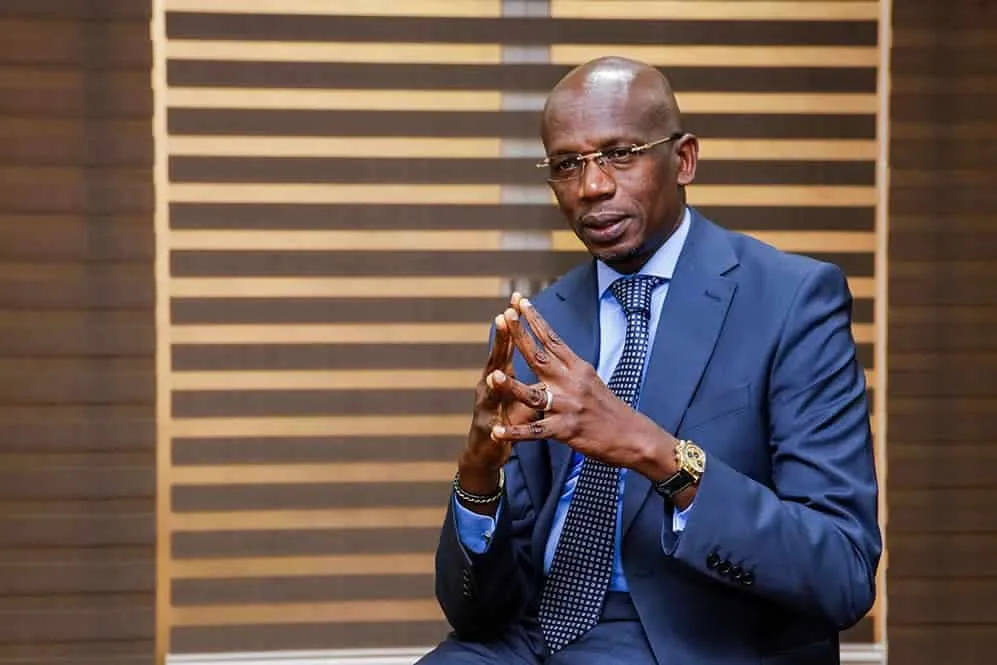
By Lansana Gagny SAKHO, Adm.A., C.M.C.
While the word “sovereignty” invades the African economic debate, three Asian models – South Korea, Vietnam, Indonesia – impose an obvious fact: sovereignty is not proclaimed, it is built. A comparative analysis of a continent at a crossroads.
There are words that end up betraying what they claim to defend. In the contemporary African debate, the word “sovereignty” is one of those. It is repeated to reassure, to affirm a will for control. But by being invoked without being defined, declaimed without being measured, brandished without being built, it has become a refuge word that protects the illusion more than it builds power. It hovers in the public space like a promise, when it should be a method.
This drift has crossed African decades since independence. The nationalizations of the 1960s-1970s often produced dilapidated productive systems and suffocated finances. Food self-sufficiency policies sometimes maintained non-competitive sectors. National airlines, state-owned refineries defended in the name of sovereignty, accumulated debts while services deteriorated.
“Sovereignty is not a word, it is a demonstration. It is not displayed, it is proven.”
THE TRAP OF PROCLAIMED SOVEREIGNTY
African sovereigntist rhetoric operates according to a recurring pattern: it identifies an external enemy – the IMF, multinational corporations, Western partners – and presents resistance to this enemy as an act of sovereignty. It confuses protectionism and competitiveness, nationalization and control, symbols and capabilities. It thus deprives decision-makers of a fundamental question: what do we produce, and at what cost?
Three sectors illustrate this failure with relentless precision. In energy, state-owned companies presented as pillars of national sovereignty see their networks deteriorate and power outages multiply, depriving African companies of reliable energy without which no industrial competitiveness is possible. In agriculture, administered prices and poorly targeted subsidies maintain costs so high that local products cannot compete either in national or regional markets: proclaimed food sovereignty produces reinforced food dependency. In the air transport sector, national airlines absorb billions in subsidies while African travelers pay the highest airfares in the world to connect two neighboring capitals.
The cost is also political and intellectual. Sovereigntist rhetoric justifies the absence of reforms by presenting them as concessions to sovereignty, and creates a framework in which any proposal for openness can be attacked as national betrayal. However, in the next ten years, Africa needs to attract massive capital, integrate into global value chains, and train a workforce mastering the technologies of tomorrow – the exact opposite of what a rhetoric of closure produces.
THE ASIAN MIRROR: THREE MODELS OF BUILT SOVEREIGNTY
South Korea: Sovereignty as a national strategy
In 1960, South Korea was poorer than Ghana. Without significant natural resources or technological capital, it had a conviction: sovereignty is built in competitiveness, not in speeches. Its strategy rested on three pillars: a strategic State defining clear industrial priorities – steel, automotive, electronics; an ambitious private sector (the Chaebols) evaluated on performance rather than proximity to power; and national discipline around exports as a measure of sovereignty.
In 2024, South Korea is the 13th largest economy in the world, with 684 billion dollars in annual exports, a global leader in semiconductors and electronics. The private sector accounts for 77% of national R&D spending. Industry represents 31.6% of GDP. Its sovereignty is not heard in speeches, it is read in numbers.
Vietnam: Sovereignty through intelligent integration
In 1986, Vietnam exhibited all the characteristics of a poor African economy: dominant subsistence agriculture, destroyed infrastructure, 600% inflation. The Đổi Mới reform was an act of sovereignty in the deepest sense: the act of a nation that decides to look lucidly at its situation. Not by closing its borders, but by opening them intelligently – 17 free trade agreements signed, foreign investors attracted, workforce trained.
In 2024, Vietnam’s foreign trade reached 786 billion dollars, 165% of its GDP, with a trade surplus of 25 billion dollars. The manufacturing industry grew by 9.6% in 2024, driven by electronics, textiles, and automobiles. From a ruined economy to a global industrial platform in three decades.
Indonesia: Sovereignty through resource transformation
Indonesia offers the most directly applicable lesson to the African context. In 2020, it banned the export of raw nickel ore – a decision challenged at the WTO by the European Union. Result: billions of foreign investments flowed into local processing capacities. BYD, Eramet, BASF built refining and electric vehicle component production plants on Indonesian soil. In a few years, Indonesia has become an essential player in the global value chain of electric batteries.
The lesson is clear: sovereignty over resources is built through local transformation, creating attractive conditions for investors, and training human capital. It is transformation, not protection, that creates value.
AFRICA IN THE MIRROR: RESOURCES WITHOUT TRANSFORMATION
Africa represents about 30% of global mineral reserves and holds two-thirds of global cobalt reserves. It is the world’s largest producer of cocoa and coffee. Yet, less than 5% of African minerals are processed on the continent. Most of the value created from African resources is captured in Europe, Asia, North America.
This is not the result of a curse, but of a persistent confusion between sovereignty over the resource – a legal reality – and sovereignty over value – an economic construction. Owning the ore is not enough. It is necessary to have the capacity, the will, and the institutional environment to transform it. This is precisely what Indonesia understood with its nickel, Malaysia with its rubber, Thailand with its agri-food sector.
One of the most striking paradoxes of African sovereigntism is that it demands a strong state while producing states that intervene in the economy without the capacity to transform it. In Africa, the sovereigntist state is too often the one that nationalizes without industrializing, protects without competitiveness, subsidizes without conditionality. It is present everywhere without being effective anywhere, producing the opposite of sovereignty: increased dependence and a local private sector stifled by rents rather than stimulated by competition.
Yet, some glimmers exist. Morocco has built a world-class automotive and aerospace industry in two decades. Rwanda has transformed its economy into a platform for digital services and technologies through rigorous governance. Ivory Coast is developing the local transformation of its cocoa to capture an increasing share of added value. These examples show that the path exists – it requires method, patience, and a courageous conception of what sovereignty truly means.
THE TIME FOR BUILT SOVEREIGNTY
Africa does not need declared sovereignty. It needs visible, measurable, performance-based sovereignty built. It is forged in industrial discipline, factory by factory, sector by sector, well-negotiated contract by contract. It is measured in the local transformation of resources, the competitiveness of exports, the progressive upgrading of national productive capacities.
The Asian mirror does not lie. What transformed South Korea, Vietnam, and Indonesia was not a declaration of sovereignty but a sovereignty strategy: patient, consistent, demanding, anchored in the reality of the global market, and driven by a long-term political will. Africa has all the ingredients for this transformation. What it still lacks is the collective conviction that sovereignty is not a state to be achieved by proclamation but a horizon to be built every day, with method and with the courageous lucidity to face the numbers.
“Africa will only be sovereign when it can produce, transform, export, and innovate. Not when it has said it, but when it has proven it.”
Lansana Gagny SAKHO, Adm.A., C.M.C.
The data cited in this article are from publications by the OECD, the World Bank, and national statistical institutes (2024).
Africa: Sovereignty and the Asian mirror ©LGS May 2026

