



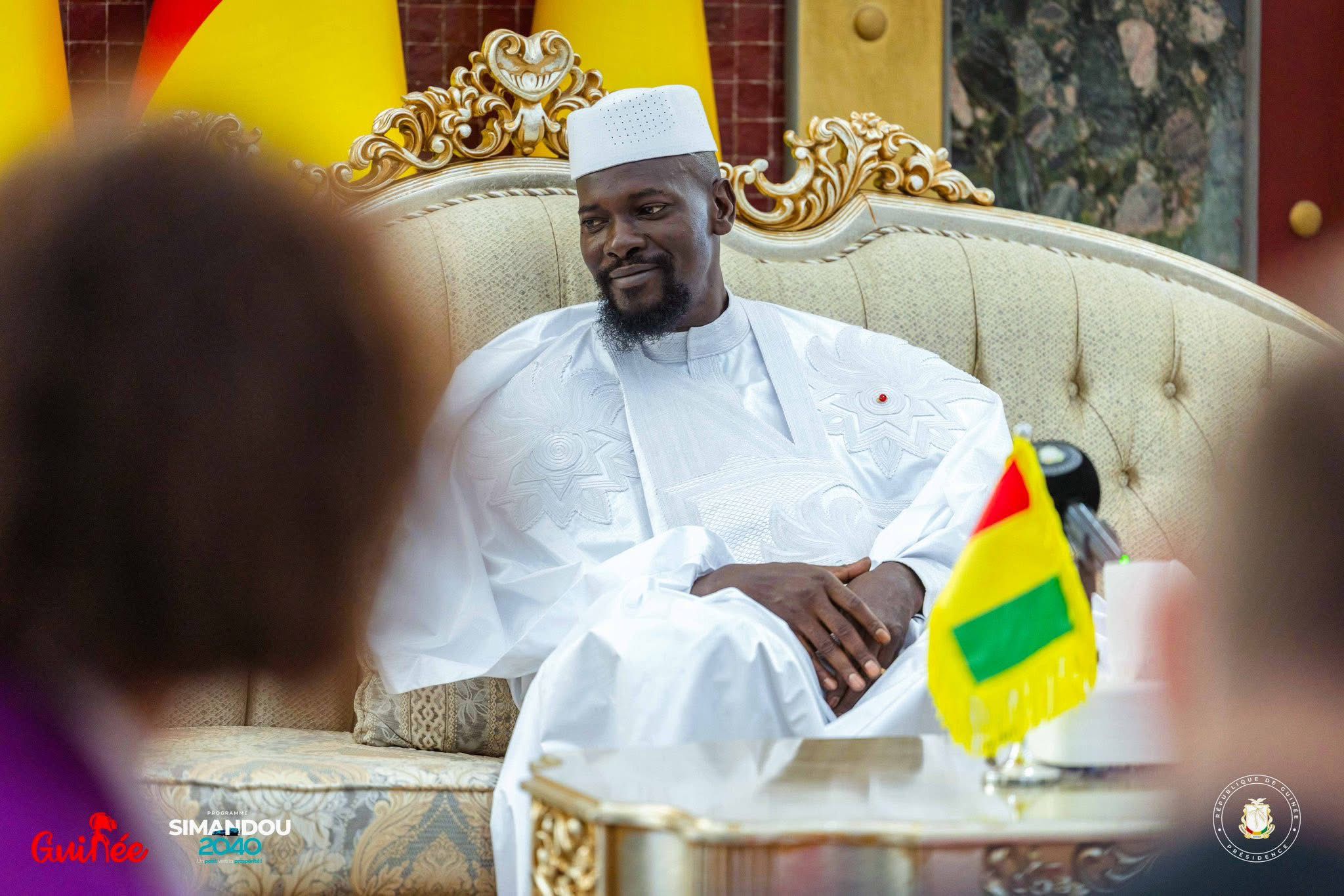
Special envoy to Nairobi, Kenya
During the Africa Forward Forum held on May 11 and 12, 2026 in Nairobi, Kenya, the President of the Republic of Guinea, General Mamadi Doumbouya, called on African nations to fundamentally rethink their position in the global economy.
“Africa can no longer be a mere supplier of raw materials to feed the world’s industries,” he declared, to the applause of the audience.
A short but meaningful statement. The African continent, rich in immense natural resources such as gold, bauxite, oil, lithium, and cocoa, continues to export these resources in their raw state, leaving the majority of added value to industrialized countries. President Doumbouya thus emphasized local transformation, industrialization, and upgrading African economies at the heart of his message.
This positioning is part of an increasingly pan-Africanist vision carried by a new generation of African leaders, determined to make the continent a sovereign player in global trade, rather than just a provider of resources. In a context marked by the reshuffling of global value chains and competition over strategic minerals, several African countries are now seeking to impose increased requirements for local transformation on foreign investors.
Guinea specifically aims to align with this dynamic. As the world’s leading bauxite exporter, the country is taking multiple initiatives to develop a local refining and mining transformation industry to capture more value within its borders. This direction is driven by the “Simandou 2040” program, presented by Guinean authorities as a roadmap to structurally transform the national economy around infrastructure, energy, industrialization, and the valorization of natural resources.
At the core of this strategy lies the massive mining project of Simandou, considered one of the world’s largest iron ore deposits. Located in the southeast of Guinea, the site is said to hold over two billion tons of high-grade ore reserves. Long delayed by legal disputes, geopolitical issues, and financing difficulties, the project is now being revived with the ambition of becoming a major lever for economic transformation in Guinea.
The development of Simandou goes beyond iron ore exploitation. The project includes the construction of a 600-kilometer railway corridor connecting mining areas to a deep-water port on the Atlantic coast. This colossal infrastructure is also expected to open up several regions of the country and promote the emergence of agricultural, logistical, and industrial activities along the corridor.
The consortium mobilized around the project brings together several major international actors, including Rio Tinto, the Chinese group Chinalco, and the Sino-Singaporean consortium Winning Consortium Simandou. The cumulative investments around the project are estimated at several tens of billions of dollars, making Simandou one of the largest mining and infrastructure projects currently under development in Africa.
Beyond iron ore, Guinea is also looking to better capitalize on its other strategic mineral resources, particularly bauxite, of which it holds some of the world’s largest reserves. Authorities now aim to encourage the construction of alumina refineries and local processing units to limit the export of raw ore. This policy aims to create more skilled jobs, strengthen tax revenues, and develop a national industrial base.
Through Simandou 2040, Guinean authorities thus aim to make mineral resources a driver of economic diversification and not just an export rent. This is a way for Conakry to concretely translate the discourse of economic sovereignty defended in Nairobi by General Doumbouya.

