



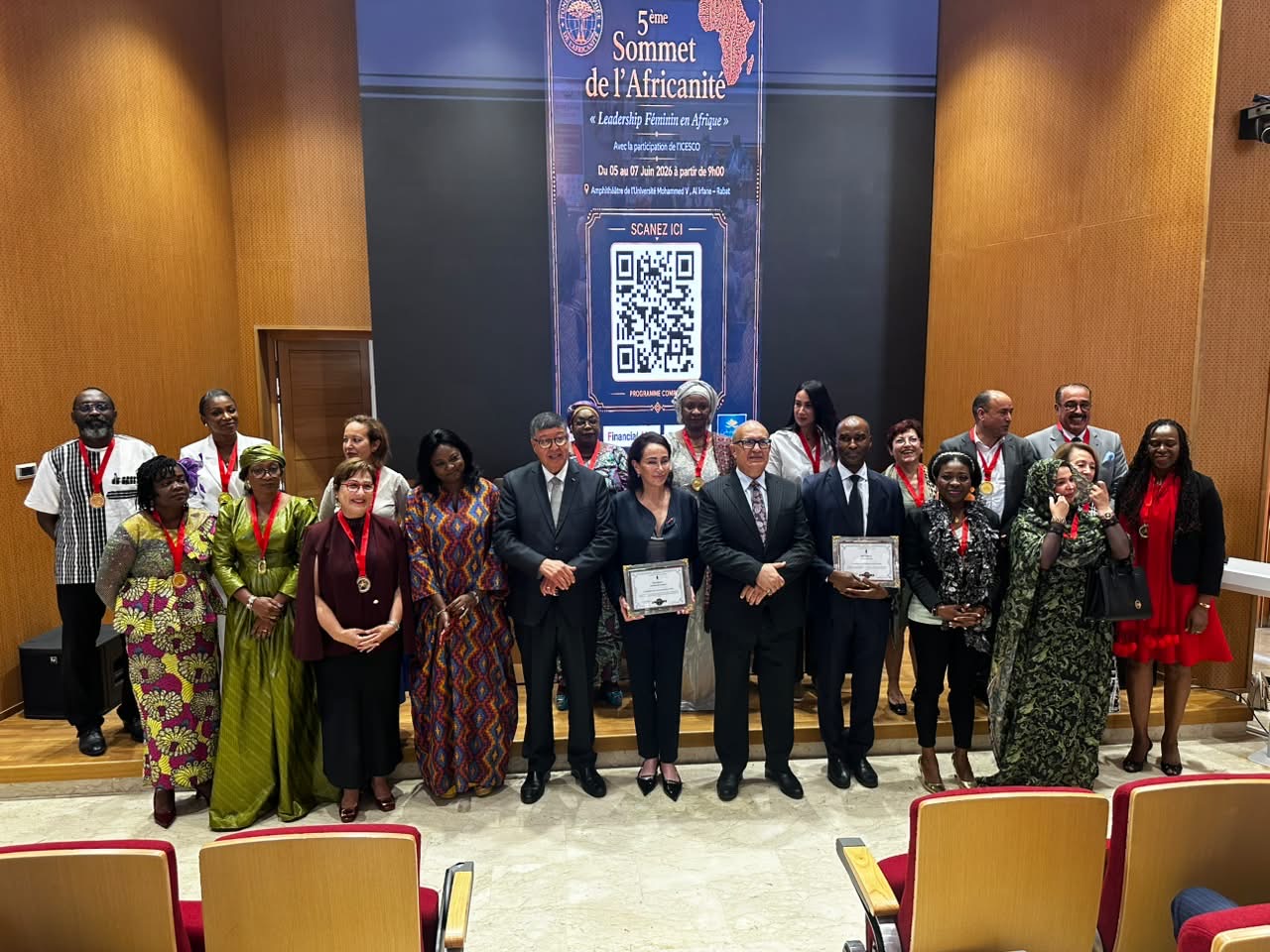
Since June 5, Rabat has been hosting the 5th Summit of Africanity dedicated to African female leadership. Over fifty prominent personalities representing twenty nationalities have responded to the call of the Africanity Trophy Foundation (FTA), ICESCO, and their media partner Financial Afrik.
Beyond academic and diplomatic exchanges, this meeting illustrates the rise of a parallel African diplomacy driven by intellectual, economic, cultural, and associative networks. A diplomacy of bridges rather than borders, of which Nassrallah Belkhayate appears today as one of the most consistent promoters.
Through the Africanity Foundation, he has managed to bring together diplomats, academics, entrepreneurs, politicians, and civil society actors around a common ambition: to make Africanity a space for dialogue, solidarity, and concrete cooperation. A approach that is in line with the Moroccan tradition of South-South cooperation and a long-term vision of African relations.
One of the highlights of the summit was the intervention of Dr. Mohamed H’Midouche, former senior official of the African Development Bank, executive vice president of the African Diplomatic Academy, and honorary consul of Cape Verde in Morocco. In a particularly noted speech, he emphasized that “women should no longer be seen as mere beneficiaries of public policies but as central actors in national construction, social cohesion, people’s diplomacy, and the future of Africa.”
For him, the promotion of women is based on three inseparable pillars: dignity, equal opportunities, and economic empowerment. An requirement that goes beyond the social issue. “No country can succeed in its transformation by leaving aside half of its intelligence, energy, and talent,” he emphasized to the participants.
The Moroccan diplomat also stressed the often underestimated role of African women in the diaspora, whom he describes as a “living bridge” between continents. According to him, they constitute an essential economic, cultural, and diplomatic force for contemporary Africa.
But it is undoubtedly his reflection on Africanity that has left the most lasting impression. “Africanity is not a slogan. It is a consciousness, a memory, a responsibility, and a project,” he affirmed, reminding that African women remain at the heart of mechanisms of transmission, education, social mediation, and innovation.
In the same spirit, Mohamed H’Midouche highlighted Moroccan policies of continental cooperation. He recalled that nearly 20,000 African students from 47 countries are currently pursuing their studies in Morocco thanks to cooperation programs, with 47% being young girls, illustrating, according to him, “a diplomacy of the long term based on the training of African human capital.”
This vision aligns with that defended by Nassrallah Belkhayate. The president of the Africanity Trophy Foundation sees female leadership as a strategic lever to build a more prosperous and influential Africa. By bringing together participants from all corners of the continent and beyond in Rabat, he demonstrates that economic, cultural, and intellectual diplomacy can sometimes open paths that official channels find more difficult to navigate.
At a time when Africa is seeking new models of integration, the Africanity Summit confirms its role as a laboratory of ideas and a platform for dialogue. For three days, Rabat has established itself as one of the capitals of this Africa that reflects, undertakes, and builds its future in a network.

