



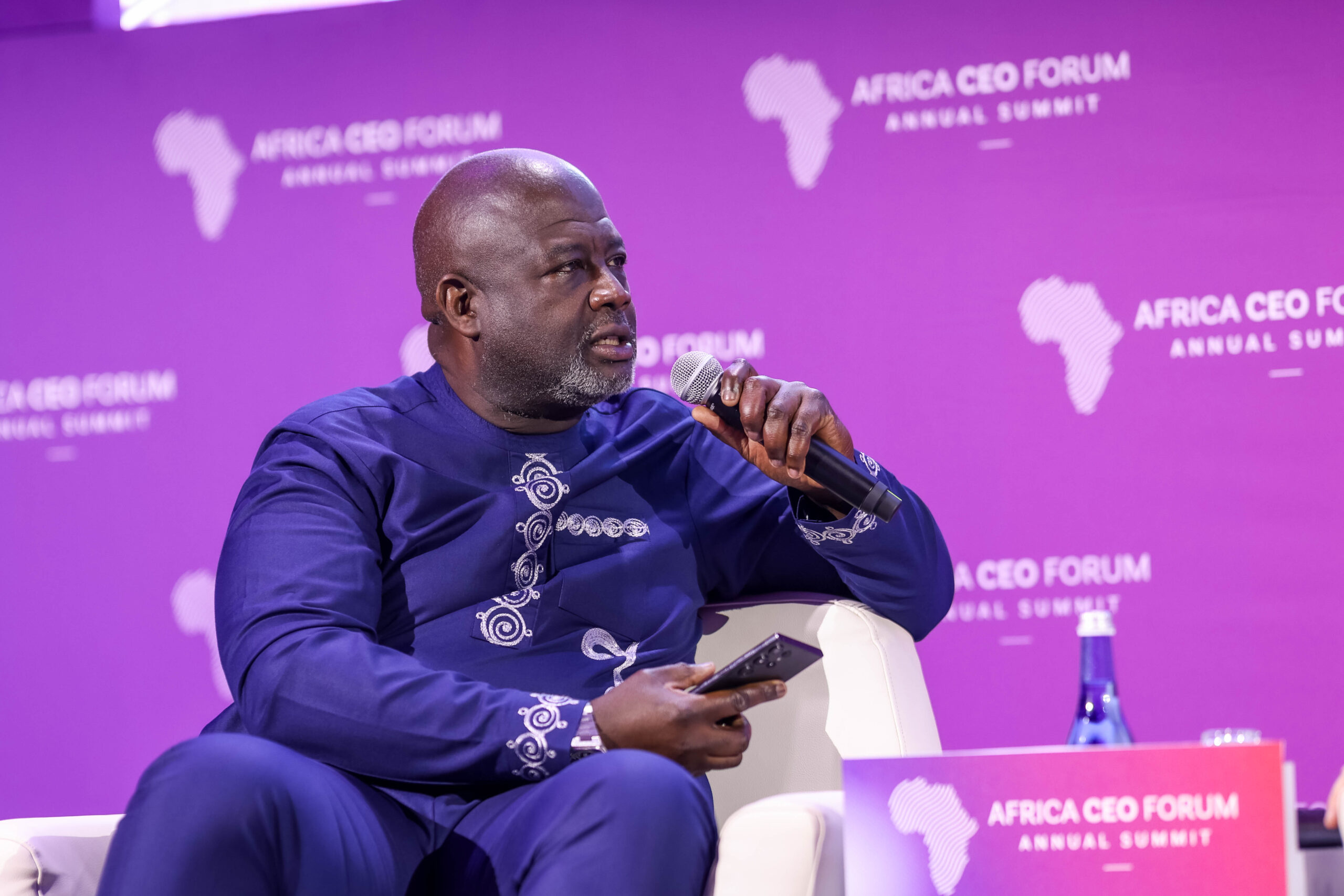
During the 2026 edition of the Africa CEO Forum, held on May 14 and 15 in Kigali, Abdou Diop, Managing Partner of Forvis Mazars, gave an interview to Financial Afrik. Governance of family businesses, financing of African champions, regional integration, risk management, and evolution of leadership on the continent: he provides his analysis of the main challenges that African companies must overcome to successfully scale up and establish themselves sustainably in regional and international markets.
As an advisor to African multinationals, you observe from the inside the breaking points in growth trajectories. Beyond capital and market access, what governance and leadership failures most often derail fast-growing African companies when they try to establish themselves at the regional or continental level?
Today, several factors influence the development trajectory of African companies.
The first concerns governance. Many groups remain family businesses that struggle to put in place the necessary governance processes and mechanisms for international expansion. Leaders often want to retain direct control over all activities, whereas international development requires a more structured organization, remote management capability, increased delegation of responsibilities, and strong processes.
The second issue is that of succession. We often observe a generational gap, with leaders not adequately preparing for their succession. However, the new generations do not always want to take over the family business. This raises real governance issues. This is one of the reasons why we often encourage companies to open up to financial markets, especially through the stock exchange, in order to adopt management mechanisms capable of ensuring their sustainability.
Finally, anticipating crises remains a major issue. Many companies do not have suitable mechanisms to identify and manage risks. When a crisis occurs, they often lack the necessary resilience to deal with it. The ability to anticipate shocks has become an essential factor for sustainability and growth.
The Forum places the co-mobilization of African institutional capital at the heart of its agenda. However, building true structures for pan-African co-investment remains an unfinished task. What concrete developments does Forvis Mazars perceive in the field and what structural barriers still prevent African companies from becoming multinational champions?
We are currently experiencing a particularly favorable period. The appointment of the new President of the African Development Bank (AfDB), Sidi Ould Tah, and the launch of the New African Financial Architecture for Development (NAFAD) are significant advances.
This initiative offers the opportunity to rethink the financial architecture of the continent so that each segment of the economy has appropriate financing solutions: large companies, structuring projects, SMEs, and startups.
We also noted, during discussions in Nairobi, an increasing support from the international community. President Emmanuel Macron notably advocated for NAFAD at the G7. Initiatives to establish guarantee mechanisms are also underway.
The context is therefore particularly favorable. However, it is essential for states to develop a real strategy to support their national champions in order to fully benefit from this momentum.
Rapid expansion inevitably exposes companies to amplified regulatory, operational, and reputational risks across multiple jurisdictions. How do you advise leaders to build resilient and compliant frameworks capable of keeping pace with aggressive expansion without becoming a hindrance to growth?
We support many companies in their expansion strategies and always emphasize a simple principle: consolidate each step before taking a new one.
It is also essential to seek support. Beyond our own profession, we believe that an external perspective often helps to identify risks and avoid pitfalls.
International development exposes companies to new markets, new regulations, and sometimes complex environments. It is therefore essential that risks are correctly identified, framed, and controlled to avoid failures related to regulatory non-compliance or a misunderstanding of the markets involved.
The challenge is also financial and operational: too rapid growth can put an organization in difficulty if it does not have the necessary resources to finance and manage its expansion.
Integrated value chains and regional corridors are at the heart of the “infrastructure” pillar of the Forum. Based on your experience advising on cross-border megaprojects, what distinguishes initiatives that truly unlock collective growth from those that get bogged down at the announcement stage?
Regional integration projects involve several states and naturally have many risk factors.
The first is the lack of a common vision. All partners must share the same objectives and move in the same direction.
The second concerns the management of national sovereignties. To succeed in a regional integration project, it is often necessary to accept a collective logic that transcends strictly national interests.
The third risk arises when the project is driven primarily by political ambition rather than a true strategic vision.
Conversely, successful projects are those that create value for all stakeholders. The future Atlantic gas pipeline is an example: each country involved perceives the potential benefits in terms of energy access, industrial development, and improvement of living conditions for the populations.
Similarly, regional transport infrastructures only work when they generate tangible economic impact, both for the directly involved countries and for those indirectly using them.
For a project to be truly integrative, it must be based on a shared vision, common will, and clearly identified socio-economic impact.
As a sponsor of the Africa CEO Awards, Forvis Mazars has a privileged view on what distinguishes mere ambition from sustainable high-impact performance. Through the profile of the nominees and winners of this edition, what new leadership model do you see emerging to define the next generation of African champions?
Over the years, we have seen the emergence of a new generation of leaders with a true pan-African vision.
These leaders no longer limit themselves to their national market. Many have continental, and for some, global ambitions. They are no longer afraid to compete internationally.
The second striking element is their ability to combine strategic vision and local impact. They know how to keep an overview while creating value as close as possible to the territories where they operate.
Finally, these leaders place humans at the heart of their development model. They believe that sustainable growth is based above all on the women and men who make up the company.
This combination of international ambition, local impact, and human leadership, in our opinion, forms the foundation of the next generation of African champions.

