



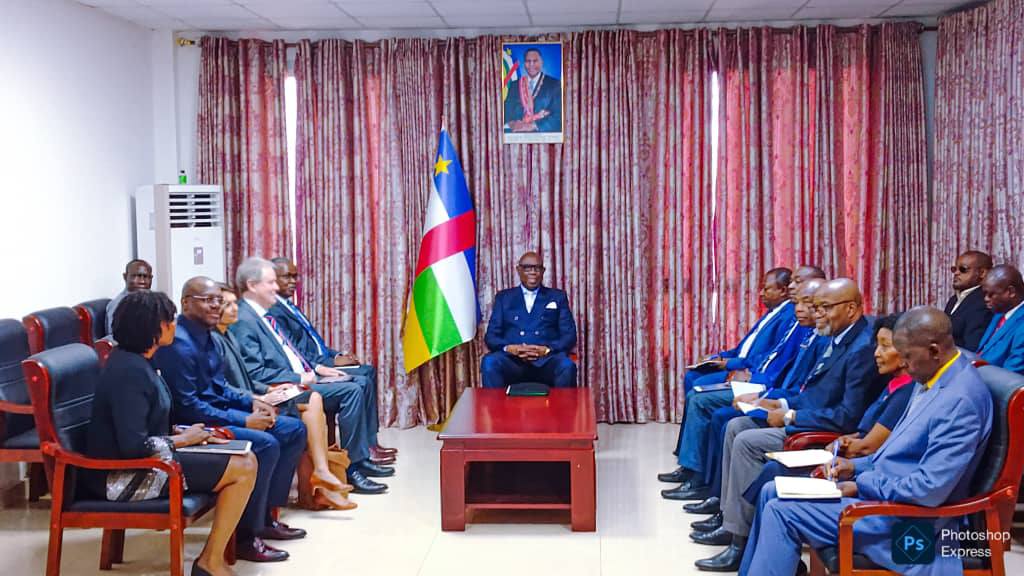
During a meeting on June 4 in Bangui with the Central African Prime Minister, Felix Moloua, the World Bank’s Regional Director, Franz Drees-Gross, announced a financing of $90 million for the Central African Republic (CAR). This support aims to improve land infrastructure and electricity supply, “two major obstacles to sustainable development of the national economy.”
In a country without access to the sea and heavily dependent on imports, the quality of roads determines logistical costs and the competitiveness of products in the domestic market. A significant portion of this financing will be dedicated to the rehabilitation of the corridor linking Bangui to the Autonomous Port of Douala (PAD) in Cameroon, the main route for transporting goods.
The modernization of internal road segments is also planned, especially on the Bossembélé-Bossangoa axis. This action is part of a broader objective of reducing territorial inequalities and stimulating trade between regions.
From the perspective of foreign trade, a more reliable service to the Cameroonian port should reduce the “logistical penalties” imposed by degraded roads. This should attract new flows of private investments into sectors such as agro-processing or local transformation.
In addition to the transportation aspect, an ambitious energy program is being implemented to combat recurrent power outages that paralyze productive activities and affect the daily lives of households. In this context, part of the financing is dedicated to strengthening the Danzi solar power plant, now a source of more stable electricity production.
The construction of a new transmission line to Bangui is also part of the plan. This electrical infrastructure will allow for smoother distribution to urban areas and could support the growth of small industries, while reducing dependence on expensive generators.
This project also includes the acquisition and installation of smart meters to expand access to the formal network and increase consumption monitoring.
The CAR, which is among the weakest economies on the continent with a large portion of the population not electrified, could see the impact of these investments reflected in its productive fabric in the medium term.
The precise disbursement deadlines are yet to be defined, pending final approval from the World Bank’s authorities. However, the authorities have indicated that additional details will be communicated in the coming days.

