



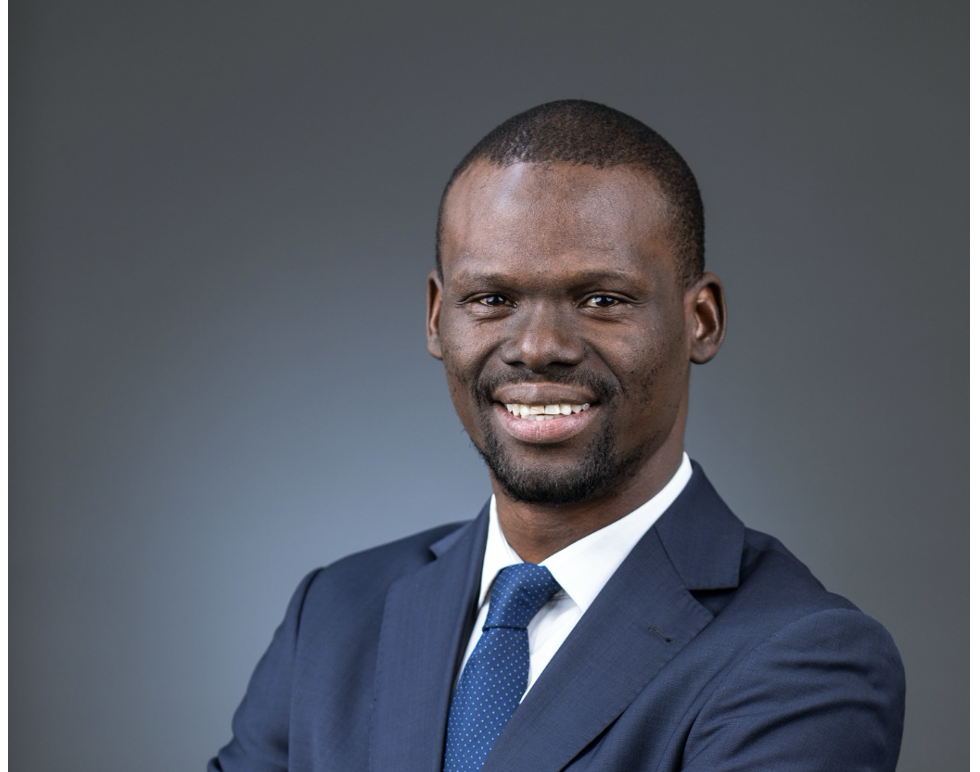
By Dr. Moussa K. Fall, Economist, Cofounder & Dean Marselya Tech
The BCEAO indicates that in 2025, the countries in the zone borrowed 15,105.2 billion FCFA from the local financial market. The debt is rising and could quickly exceed sustainable levels in several UMOA member states. The BCEAO must intervene and buy back the short-term debts of the member states from regional banks; regional banks, in turn, must see their purchases of sovereign bonds restricted. They must grant more credit to the private sector to revitalize economic activity in the zone.
Regional banks in the UMOA zone are heavily involved in the fundraising operations carried out by the Union states; everyone benefits for the moment. The BCEAO indicates that in 2025, the countries in the zone borrowed 15,105.2 billion FCFA from the local financial market. Senegal raised over 745 billion FCFA through treasury bills and bonds in the first two months of 2026. The proposed rates are attractive, and the maturities are quite short for most securities. Clearly, Senegal still inspires confidence despite repeated downgrades of its ratings by rating agencies. Ivorian banks hold 42% of the debt, Senegalese banks 39%. The availability of funds in the zone is a significant asset for our economies. However, they need to be better utilized. Would these funds be more productive if they were directed to the private sector? We have a strong opinion on the matter: banks must substantially reduce the amounts allocated to state bonds and treasury bills and lend more to the private sector. Given the sluggishness of activity, only an agile and powerful private sector could revive economic growth in our countries. Banks would be less exposed to sovereign risk, and they would benefit from a revitalization of investment and employment.
The massive reliance of states on regional banks exposes the latter to sovereign risk, makes borrowing more expensive for businesses and individuals, and ultimately leads them to shorten the repayment periods of loans contracted by the latter. The private sector is largely losing out in this process. Senegal has a strong interest in revitalizing its private sector; it can play a decisive role in the much-desired economic recovery. Undoubtedly, a redirection of credit, especially funds intended for financing state debt, towards the private sector will be the growth lever for the economies of the zone.
The BCEAO has so far played a significant role in controlling inflation in the zone, it is imperative in this role. It is time for it to go further. Given the evolving power dynamics characterizing relations between the different blocs that the new international geopolitics is helping to reshape, the disruptive effects inflicted on the global economy are here to stay. Our economies must reinvent themselves to survive. In essence, we must rely on ourselves, and our central bank must be flexible to provide tailored support to the economic situation and debt levels of each UMOA member state. The future adoption of the Eco as the single currency within ECOWAS could also be a reasonably sufficient pretext to introduce a dose of flexibility into the functioning of the BCEAO.
Furthermore, two rating agencies, namely S&P and Fitch, point out that a large part of Senegalese securities purchased by Ivorian banks are actually held by foreign entities. Only the foreign investor benefits, it is a form of speculation on our debt. The displayed depth of the local financial market in the UMOA zone is in fact an illusion. The BCEAO must intervene and buy back the short-term debts of the member states from regional banks; regional banks, in turn, must see their purchases of sovereign bonds restricted. The BCEAO could consider ratios such as the amount of short-term debt as a percentage of GDP, and the amount of foreign exchange reserves of the country in question as a percentage of its GDP, to decide on the extent and necessity of intervention.
It should be noted that a conventional central bank can print money at will. It can lend to commercial banks, buy back debts, and, in doing so, inject a lot of liquidity to support economic activity in a country. Our central bank operates as an issuing house. It cannot act as a lender of last resort. It must support additional monetary units with foreign currencies. This is exactly the barrier that needs to be removed. An appreciable virtue found quite reassuring with issuing houses is that spendthrift or irresponsible governments cannot simply monetize their debt to easily reduce their deficits. Are we mature enough to go there? Have we turned our backs on unsober and unvirtuous rulers?
Nowadays, the increasing use of Stablecoins and digital currency should make the operations of a central bank with other financial institutions less risky and more efficient, regardless of the zone they are in. The BCEAO may not significantly deviate from its orthodoxy and expose member states to the adverse consequences of indirect debt financing if such levers were to be explored. Productive investment must be prioritized. It may be time for the BCEAO to support the industrialization process in the zone. Its status must evolve, and the nature of its currency must also evolve. No foreign entity will be able to support the industrialization process in the UMOA zone in place of the BCEAO; either due to a lack of manifest interest and/or sufficient resources. We cannot overcome the debt crisis without fundamental reforms in our regional financial institutions. Debt is rising and could quickly exceed sustainable levels in several member states of the UMOA. The BCEAO must be called upon. The consequences of a default by a member state would be disastrous. The central bank is a powerful body if it is independent, agile, and flexible. In addition to controlling inflation, it can revitalize economic growth and boost employment.

