



The second edition of the BOAD Development Days has come to an end. For two days, on June 11th and 12th, Lomé welcomed bankers, investors, insurers, guarantee specialists, real estate developers, architects, and public decision-makers around a question that goes beyond just the housing sector: how to finance the growth of a Union expected to have over 300 million inhabitants by the middle of the century?
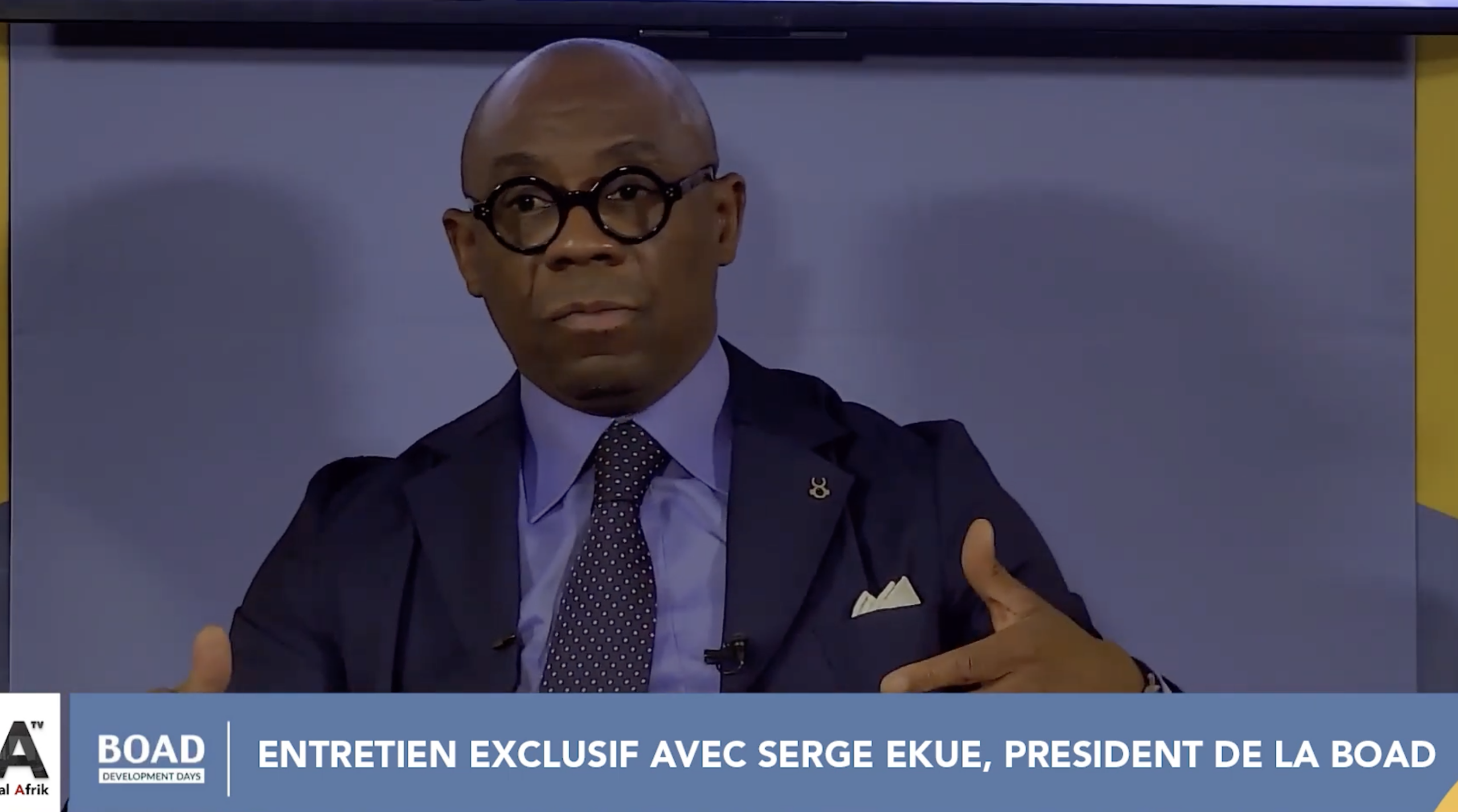
On the eve of the event, the President of the West African Development Bank (BOAD), Serge Ekué, granted an exclusive interview to Jeune Afrique, Sika Finance, Agence Ecofin, and Financial Afrik. A conversation that, due to its technical density, resembled a true masterclass on the functioning of a multilateral development bank in an increasingly demanding financial environment.
The first lesson is a simple idea: for a development bank, the central question is not only the quality of the balance sheet but its ability to grow at the same pace as the financing needs of the economy. “Our job is to ensure that the balance sheet grows because the needs increase year after year,” explains Serge Ekué. Behind this statement lies the entire challenge of the UEMOA. With a demographic growth close to 3% per year and rapid urbanization, the needs for infrastructure, energy, housing, and productive financing are progressing at a speed rarely seen elsewhere in the world.
To address this equation, the BOAD has undertaken a significant strengthening of its financial structure. Since 2021, equity has doubled. For the fiscal year ending on December 31, 2025, effective equity has increased by 28%. Emphasis is placed on so-called “hard” equity, which directly determines the lending capacity and institution’s strength. Hybrid capital operations and increases in equity resources pursue the same objective: to sustainably increase the bank’s firepower.
This strategy is closely linked to the issue of rating. The BOAD currently has an A rating from JCR, Baa1 from Moody’s, and BBB from Fitch, a level that places it among the strongest signatures in the African continent. In an international context marked by persistently high interest rates, this credibility is a decisive advantage to access capital markets on competitive terms.
Another highlight of the interview concerns the notion of risk. While many international investors have been implementing “derisking” policies for several years, reducing their exposure to several emerging and African markets, Serge Ekué claims an opposite approach. “We are structurally buyers of UEMOA risks,” he asserts. The statement summarizes the very mission of a development bank: to intervene where markets hesitate and support projects that the private sector would not finance alone.
This logic also explains the countercyclical vocation of the institution. “We are meant to be a countercyclical actor,” he reminds. When market conditions deteriorate, when margins tighten, or when investors become more selective, the BOAD intends to maintain its investment effort to prevent a slowdown in regional economic financing.
Housing, the central theme of the BOAD Development Days, perfectly illustrates this approach. Faced with a deficit estimated at 3.5 million units and an annual demand of nearly 800,000 housing units, Serge Ekué believes that traditional solutions have reached their limits. “Salaried employment is the exception,” he points out, advocating for financing mechanisms better suited to the realities of African economies.
Throughout the interview, a strong conviction emerges: in a region undergoing a demographic transition, the question is no longer just about preserving financial balances but about building institutions capable of supporting growth over several decades. It is from this perspective that the BOAD claims its role as the top investor in the UEMOA. “We are the top investor in the area. Imagine the signal if the BOAD stops investing?”

