



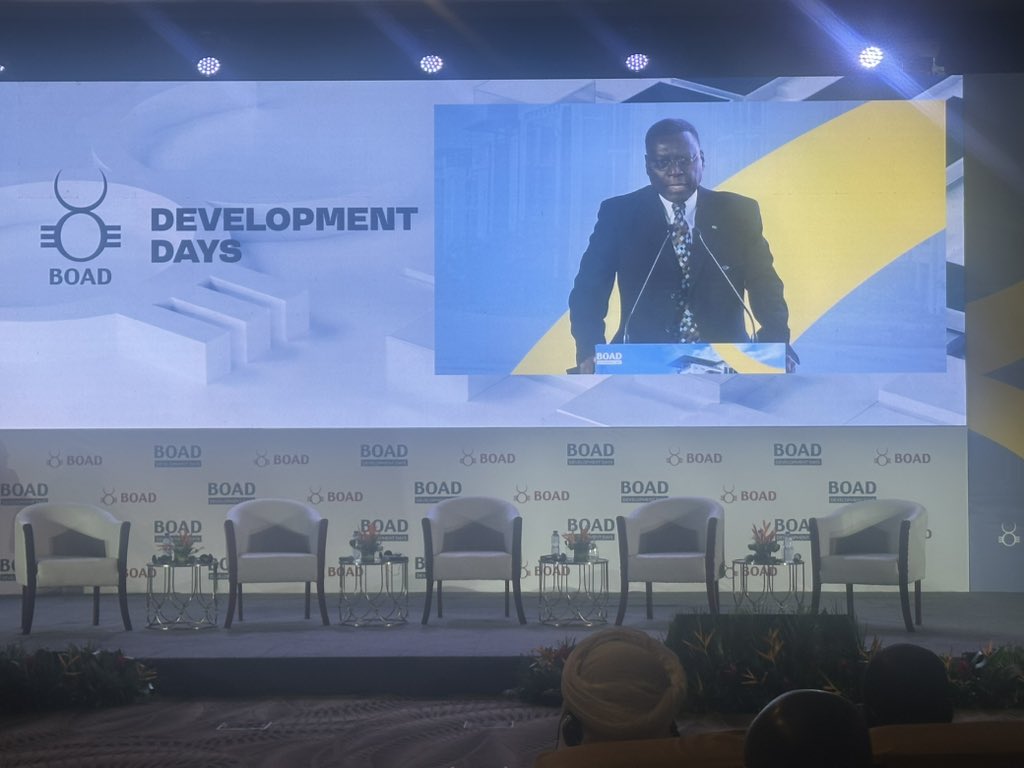
Senegalese architect Pierre Goudiaby Atepa defended, on June 12, 2026 in Lomé, a disruptive approach in urban design. At the heart of his keynote at the 2nd edition of the BOAD Development Days, titled “Designing new cities: making sustainability the standard and not the exception”, a conviction emerges: faced with demographic pressure, capital saturation, and massive housing needs, West Africa must think of its future urban centers as integrated, productive, and resource-efficient projects from their inception, and not as improvised extensions of existing cities.
For the architect, the issue is not only real estate or architectural: it is economic, land-related, energy-related, and industrial. He emphasized the need to better capture the value created by development, relying on the potential for land revaluation to finance infrastructure. In this logic, he believes, the new city should not be seen as just a housing program, but as a complete ecosystem combining housing, services, mobility, agricultural production, and collective facilities.
Pierre Goudiaby Atepa also linked the urban challenge to that of energy sovereignty. According to the Senegalese businessman, African new cities must integrate clean and local energy solutions, especially solar, from their conception, in order to reduce their dependence and permanently lower their operating costs. In the same spirit, he argued for a strengthening of regional industrial sectors in construction materials. His message is clear: while the continent has basic resources, it must enhance its capacity to locally transform steel, aluminum, or glass, so that urbanization also becomes a lever for industrialization.
Beyond advocacy, the intervention provides a strategic analysis of the upcoming decisions for the West African Economic and Monetary Union (UEMOA). And it urges governments, donors, and investors to consider sustainable housing not as an additional cost, but as an infrastructure for competitiveness, social cohesion, and resilience.
By calling for “thinking big” in urban planning, Pierre Goudiaby Atepa puts the city at the center of a broader equation: one of better organized, more inclusive growth, and more rooted in African productive capacities.

