



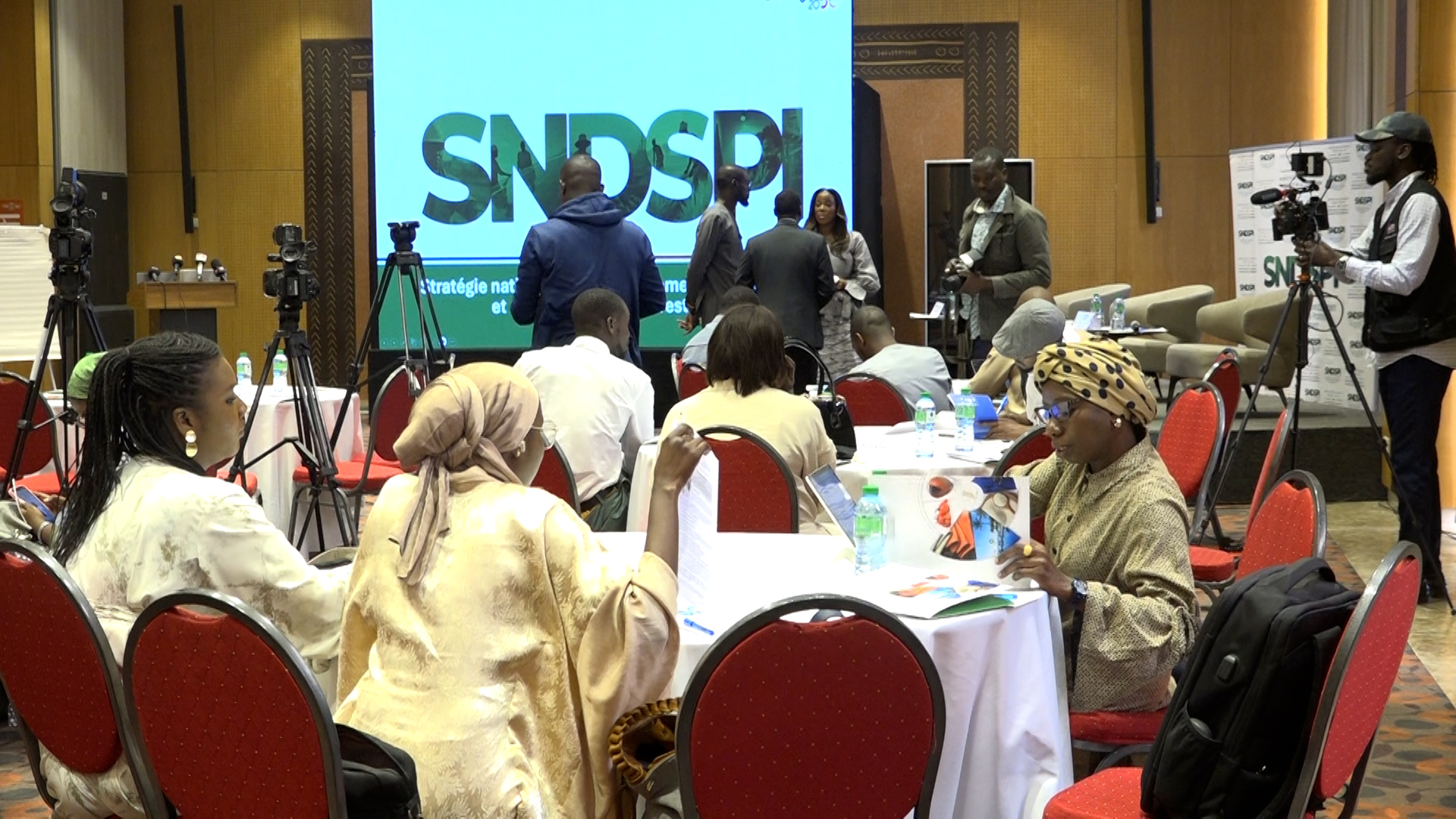
Senegal is accelerating its economic transformation by placing the private sector at the heart of its structural transformation strategy. Gathered on Monday, April 13, 2026 during a sharing workshop with the Collective of Economic Journalists of Senegal (COJES), officials from the Ministry of Economy, Planning and Cooperation detailed the ambitions of the National Strategy for Private Sector Development and Investment Promotion (SNDSPI 2025-2029), designed as a key instrument of the national transformation agenda.
A strategy to rebalance wealth creation
Designed to strengthen the competitiveness of territories and attract investments, the SNDSPI aims to develop a productive and sustainable entrepreneurial fabric capable of generating growth and jobs in all regions. The diagnosis is clear: wealth remains highly concentrated, with the Dakar region alone representing 46% of the national GDP and nearly 40% of the registered companies. However, areas like Kédougou, Kolda, or Sédhiou have entrepreneurial potential that is still underexploited.
To correct these imbalances, the strategy introduces the concept of “remarkable identities”: companies rooted in their territories and capable of structuring complete value chains, particularly in agriculture, fishing, or agro-industry.
Locally transforming to create more value
“We have a dynamic economic model, but one that creates little value. The challenge is to transform our resources locally,” emphasized Jouldée Soumaré, director of private sector development at the Ministry of Economy, Planning and Cooperation. She emphasizes the need to support economic actors towards industrial transformation: “Structuring value chains is essential to scale up, access markets, and attract financing.”
Beyond productive transformation, the SNDSPI relies on structural reforms to improve the business environment. Revision of the fiscal framework and strengthening public-private dialogue are among the priorities.
According to the Secretary General of the Ministry of Economy, Planning and Cooperation, Mouhamadou Bamba Diop, “this strategy goes beyond a mere statement of intent; it embodies a clear political will to systematically remove the constraints hindering the full development of the private sector.” He emphasizes that its development is based on a “rigorous, methodical, and inclusive” approach, involving all stakeholders.
SMEs, investment, and business climate: priority areas
Supporting SMEs is another major pillar. The high failure rate of young companies and the limited knowledge of support mechanisms illustrate the need to enhance access to information, financing, and training. Territorial devices, including Business Houses and shared service centers, should provide a comprehensive path for entrepreneurs.
For Dialigué Faye, president of COJES, the appropriation of the strategy by economic and media actors is essential: “The private sector creates wealth. It must be supported by mechanisms capable of sustainably improving the business environment.”
Through the SNDSPI, Senegal sends a clear signal to investors and international partners: that of an economy committed to an ambitious structural transformation, based on the local valorization of resources, territorial competitiveness, and the consolidation of a private sector capable of supporting inclusive and sustainable growth.

