



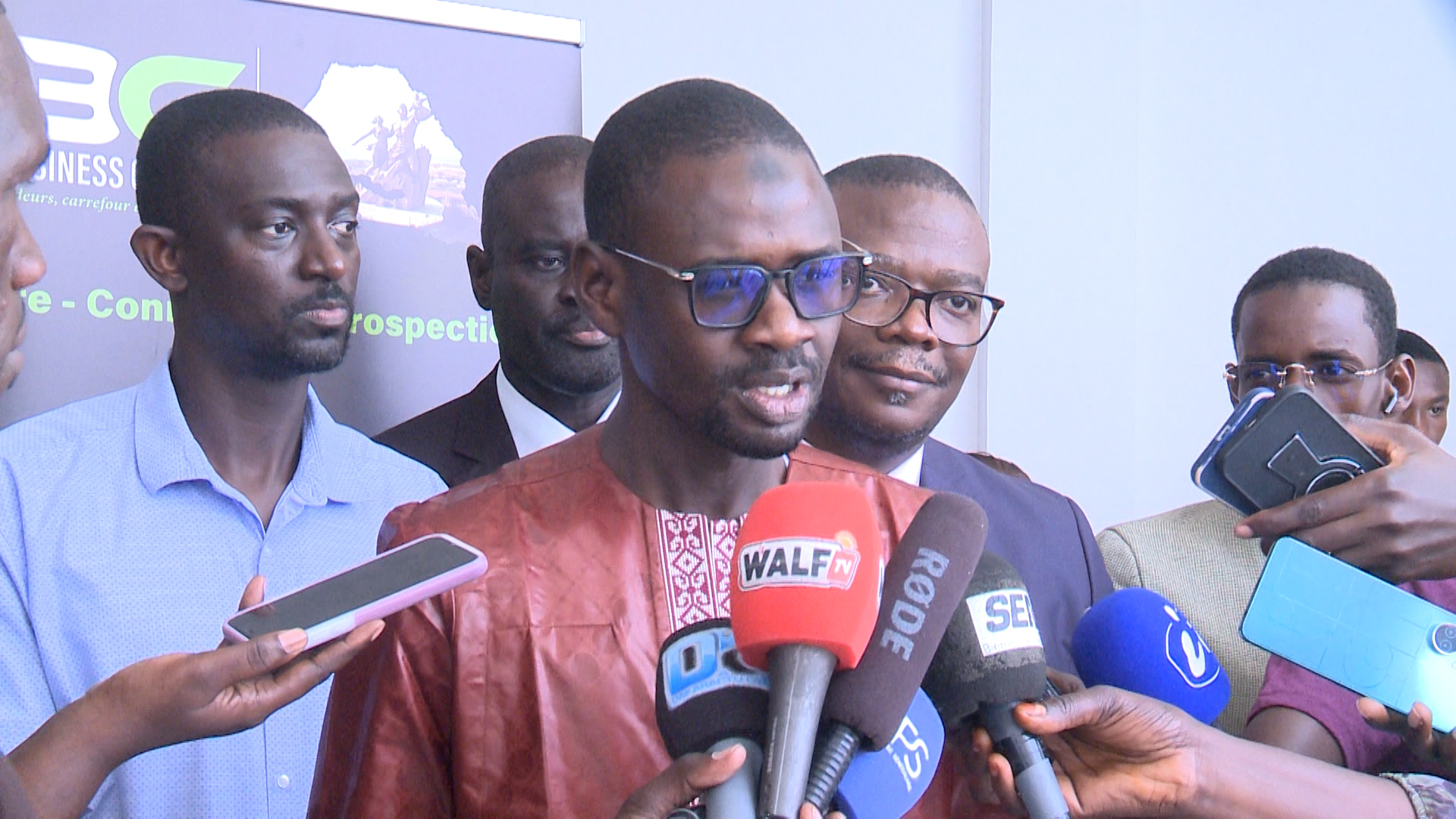
Facing the tightening conditions for accessing bank credit and the magnitude of financing needs in African economies, investment funds are gradually emerging as one of the most credible instruments to support the continent’s transformation ambitions. It is in this perspective that the second edition of the Dakar Business Connect (DBC) Forum was held on June 13, 2026 in Dakar, organized by the economic magazine “Le Marché” around the theme: “Investment funds in Senegal: a vector of public financing and a catalyst for entrepreneurship?”.
Bringing together more than 320 participants from the banking, insurance, financial, entrepreneurial, academic, and institutional sectors, this high-level meeting confirmed the growing interest in alternative financing mechanisms in a context marked by the scarcity of liquidity and the strengthening of prudential requirements imposed on banks.
The observation is now widely shared: everywhere in Africa, both states and companies are facing increasingly complex access to financial resources. Due to international prudential standards and balance sheet constraints, banking institutions are reducing their appetite for long-term financing. In this new environment, investment funds appear as essential intermediaries thanks to their interventions in equity, quasi-equity, or structured debt.
The discussions focused on two strategic panels. The first panel addressed the contribution of investment funds to the financing of public projects and infrastructure. The participants highlighted their ability to mobilize long-term resources, improve project governance, and attract other investors.
For Constantin Dabiré, CEO of the African Society for Engineering and Financial Intermediation (SA2IF), the financing needs of the continent now exceed the capacities of traditional bank financing. “The needs are becoming increasingly important while liquidity remains a major challenge in African economies. Traditional bank financing is starting to show its limits,” he said. According to him, investment funds not only provide financial resources but also an additional level of credibility that facilitates the mobilization of additional capital. “We must explore all possible avenues to finance investments and sustainably improve the living conditions of populations,” he argued.
The second panel focused on the role of funds in the development of entrepreneurship, SMEs, and startups. Through the testimony of Henri Ousmane Guèye, founder of Eyone Medical, participants were able to measure the concrete impact of venture capital on the growth of innovative companies. The leader explained that this funding had allowed his company to strengthen its organization in order to deploy digital solutions on a national scale. “Investors are looking for companies capable of creating sustainable value,” he recalled, calling for greater trust in African entrepreneurs, whom he describes as “true champions” capable of carrying sovereign solutions adapted to local realities.
As the initiator of the forum, the publisher of “Le Marché” magazine, Dr. Abdou Diaw, emphasized that Dakar Business Connect was designed as a space for dialogue between project developers, investors, financial institutions, and public decision-makers. After a first edition dedicated to securitization, the choice of investment funds, according to him, responds to a persistent lack of information on available financing solutions. “Many resources exist today, but those in need of financing cannot access them because they do not have access to information,” he lamented, advocating for a better mobilization of national savings in the service of economic development.
At the end of the exchanges, a consensus emerged: investment funds are no longer a marginal alternative but a pillar called to play a central role in the financing of Senegal and Africa. Faced with the magnitude of infrastructure needs, demographic pressure, and state budget constraints, participants emphasized the urgent need to further structure this ecosystem, strengthen financial education, and create a more attractive environment for investors. One conviction emerged: the future of African financing will depend as much on financial innovation as on the ability to mobilize patient capital capable of sustainably supporting states, companies, and economic champions of tomorrow.

