




Photo: Mory Diané (right), founder of Scanning Systems and Commissioner Ngabo Seli Mbogo, in charge of the common market of CEMAC.
Central Africa could soon rely on the expertise of a West African operator to modernize its borders. The Economic and Monetary Community of Central Africa (CEMAC) is indeed in advanced negotiations with Scanning Systems for the design, financing, and implementation of four pilot Joint Control Posts (PCJ). An operation that, if finalized, will mark an important step in the modernization of trade corridors in the sub-region and in the rise of an African actor specialized in trade facilitation infrastructures.
This project is directly inspired by two achievements that have become references in West Africa: the PCJ of Cinkansé, at the border between Burkina Faso and Togo, and Laléraba, between Burkina Faso and Côte d’Ivoire. Designed, financed, and operated by Scanning Systems, a subsidiary of the Tassec Investment Holdings group led by businessman Mory Diané, these infrastructures demonstrate that an African model for managing border posts is now capable of competing with the best international standards.
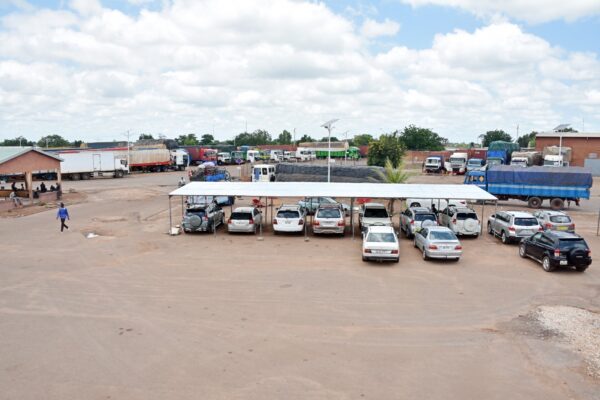
On June 18, a delegation from the CEMAC Commission, accompanied by representatives of the UEMOA, visited Laléraba to assess the performance of this new generation multimodal platform. This visit comes as the preliminary feasibility studies of the four future PCJ have already been validated, hinting at an upcoming launch of the project.
The ambition of CEMAC goes beyond simple infrastructure construction. The regional organization aims to rely on an integrated model combining design, financing, operation, and maintenance to sustainably improve trade fluidity, reduce border crossing times, and strengthen the competitiveness of logistics corridors.
The performance recorded on the Cinkansé corridor supports this strategy. In 2025, nearly 400,000 vehicles transited through, representing a 20.2% increase in one year. Most importantly, waiting times, which previously lasted several days, have been reduced to just a few hours, with a direct impact on logistics costs.
The Laléraba post also confirms the relevance of this model. Launched at the end of March 2026, it has a capacity of 800 vehicles per day. In less than three months of operation, nearly 25,000 trucks of goods have already passed through. Its financing, exceeding 13 billion FCFA, was provided by a consortium of regional banks including Société Générale Côte d’Ivoire, BNI, and Ecobank, illustrating the ability of African financial institutions to support strategic infrastructures.
For Scanning Systems, this project would represent a new stage in its continental development. Already a strategic partner of the AfCFTA, the company intends to deploy a model based on intelligent infrastructures, state-of-the-art control equipment, and financing widely mobilized from African institutions on other African corridors.
“This partnership with CEMAC is the recognition of over two decades of work. We have demonstrated that it is possible to design, finance, and operate border control infrastructures meeting the best international standards by mobilizing regional actors for the benefit of African economies. The Laléraba PCJ is a concrete illustration of this today,” says Wilfrid Flottes de Pouzols, Deputy General Manager of Scanning Systems.
At a time when logistics costs remain one of the main obstacles to intra-African trade, the experience developed by Scanning Systems appears as a replicable model. If negotiations are successful, the completion of these four new PCJ would not only consolidate the company’s expansion in Central Africa but also herald the emergence of a true African champion in border infrastructures, called to play a leading role in the implementation of the AfCFTA.

