



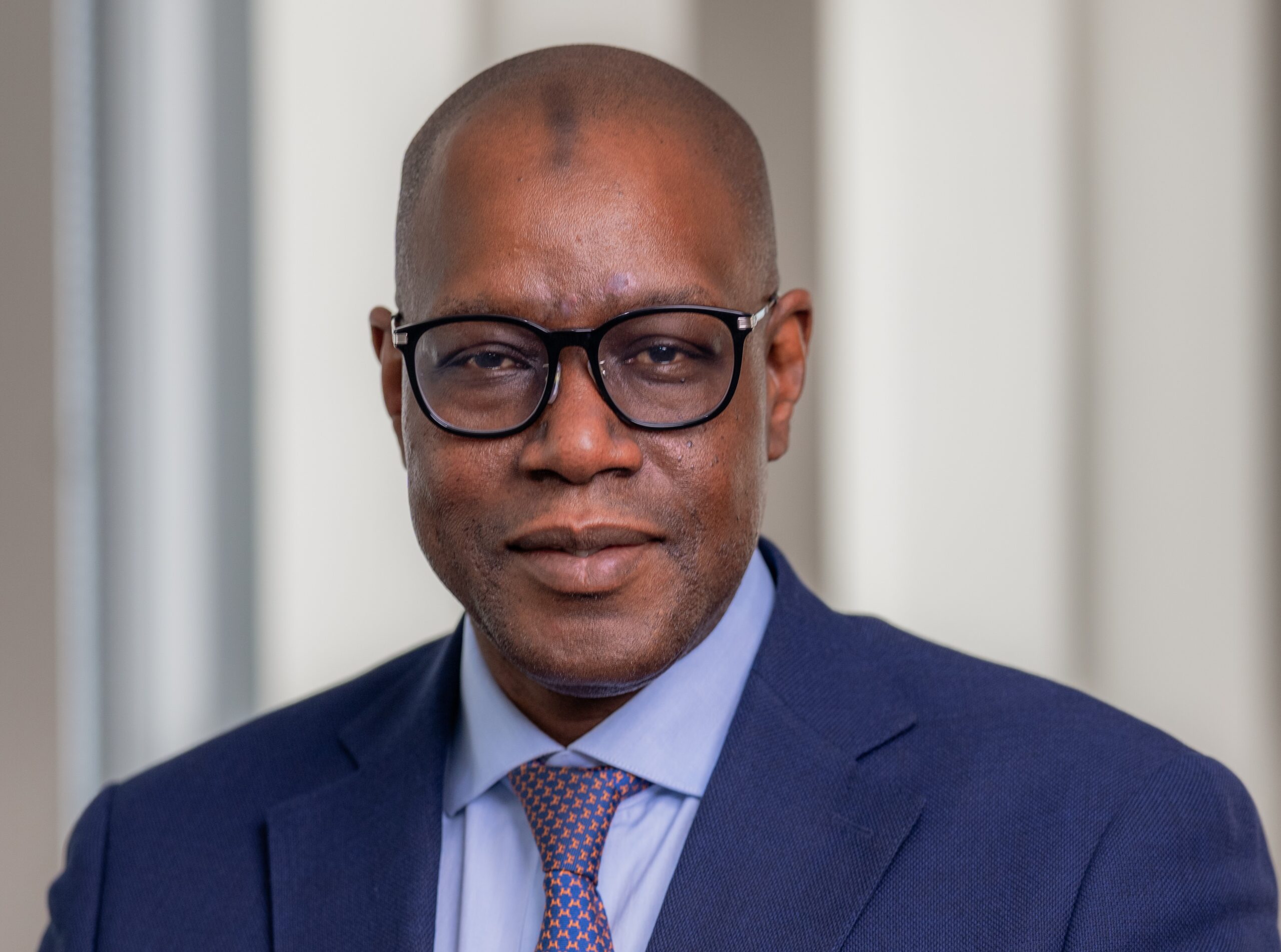
During the 2026 edition of the Africa CEO Forum, Mohamed Diop, Africa Deputy General Manager of Africa Global Logistics (AGL), spoke to Financial Afrik about the logistical challenges accompanying the continent’s economic transformation. Faced with geopolitical tensions, the rise of the AfCFTA, and the acceleration of regional trade, he discusses the strategic role of multimodal corridors, the still underutilized potential of river transport, and the necessary investments to strengthen intra-African connectivity. According to Mohamed Diop, the future of African trade lies in better-integrated infrastructure, increased digitalization of procedures, and enhanced cooperation between public and private actors.
Interview conducted by Daniel Djagoué
West Africa is experiencing increasing pressure on its supply chains, with security constraints, saturation of certain routes, and rising logistical costs. In this context, how is AGL redefining its strategy to secure and streamline regional trade today?
This question goes beyond West Africa.
Global geopolitical tensions directly impact logistics corridors: longer delays, higher fuel costs, increased insurance premiums, and disruption of trade flows. These constraints affect a continent experiencing strong growth: several African countries have seen port volume increases of over 20% between 2024 and 2025.
Investments made in recent years have allowed many terminals to reach international standards. In 2025, four AGL terminals welcomed the latest generation ships from MSC, the world’s leading shipping company, capable of carrying up to 24,000 containers. This is a significant advancement, but the port is just one link in the chain.
The real challenge lies in evacuating goods within the continent. Two types of obstacles combine: infrastructure constraints, with insufficient railway capacities, roads needing reinforcement, and security issues in certain regions; and operational constraints, such as cumbersome administrative procedures, partial digitalization, and a high number of checkpoints along the corridors.
At AGL, our role is to work with all stakeholders to offer multimodal solutions tailored to these realities. We do this in close collaboration with our clients, whether they are operators in the cotton, cocoa, or manufacturing sectors, to maintain supply chain continuity. Unfortunately, additional costs arise when alternative routes are necessary. Our priority is to manage them as best as possible while ensuring smooth trade.
AGL has just launched a new multimodal corridor between Abidjan, Bobo-Dioulasso, and Bamako. What makes this corridor different from traditional logistic routes, and what concrete benefits can economic operators expect in terms of costs, delays, and reliability?
Landlocked countries are often associated with isolation, but it should be noted that they generally have multiple access options to international markets. Mali, for example, can be served via Guinea, Mauritania, Senegal, Côte d’Ivoire, Ghana, Benin, or Togo.
In our continuous logistics innovation approach, we identified an opportunity via Bobo-Dioulasso with our partners and clients. Leveraging SITARAIL’s rail service between Abidjan and Bobo-Dioulasso, and with the support of customs authorities in different countries to facilitate the transition from rail to road, we were able to establish a particularly competitive offer in terms of lead times.
Currently, we achieve a total transit time, from arrival in Abidjan to entry into Malian territory, of less than ten days. This result has received very positive feedback from our clients and the market.
This corridor is not intended to replace existing routes. It is a complementary solution that expands the range of options for our partners and helps alleviate historical corridors. Ultimately, it could absorb between 10% and 20% of volumes destined for Mali.
River transport remains underutilized in West Africa, despite its potential to become a major lever for logistics competitiveness. How does AGL currently assess the potential of this segment, and what conditions need to be met to accelerate its development?
River transport is a real opportunity for Africa, and it is a segment that we are closely monitoring.
The continent faces significant structural challenges: sustained population growth, rapid urbanization, and increasing goods flows. In this context, developing all available connectivity solutions becomes imperative. As a multimodal logistics operator, AGL aims to explore and develop all these solutions. River transport projects, whether simple, combined, or multimodal, are of particular interest to us.
We are following initiatives involving Senegal, Mauritania, and Mali. These projects require significant investments, as well as strong coordination between states, private operators, and financial partners. The model has already proven successful in certain regions of the continent, notably between the Central African Republic and Congo.
We are convinced that the development of waterways will be an effective complement to existing infrastructure, and that river transport will eventually become a strategic corridor in several African regions.
With the rise of the AfCFTA, the quality of corridors has become an economic sovereignty issue. In your opinion, what are the main obstacles still hindering intra-African trade today?
The AfCFTA holds much promise. Intra-African trade still accounts for about 16% of the continent’s trade, compared to nearly 70% in Asia. This gap highlights the untapped potential that remains.
To achieve this, I identify two categories of obstacles.
On one hand, there are so-called “soft” constraints: administrative burdens, lack of customs practices harmonization, multiple checkpoints along corridors, limited digitalization of procedures, language barriers, and a deficit of harmonized governance. On the other hand, there are “hard” constraints: the need for massive investments in infrastructure, whether roads, railways, or support equipment, to turn corridors into true accelerators of intra-African connectivity.
Progress is real and deserves recognition. More and more countries are removing visas at the continental level, single window projects are accelerating, and joint customs offices are starting to emerge in certain areas. But we must accelerate the pace if we want to achieve the goals set by African leaders.
AGL fully embraces this momentum. In fact, at the initiative of our president and the Secretary-General of the AfCFTA, we have just signed a memorandum of understanding to contribute concretely to accelerating intra-African trade.

