



By Dr Mohamed H’MIDOUCHE
The Regional Forum on the Coffee Value Chain in Africa, held in Marrakech on 5–6 May 2026 with the support of the Organization of Islamic Cooperation — OIC — and the Islamic Development Bank — IsDB —, highlighted a strategic imperative: Africa must move beyond the export of raw commodities and build stronger value chains capable of generating local transformation, jobs, brands and productive sovereignty. Beyond coffee itself, the issue is the continent’s ability to capture more value from what it produces.
African coffee stands at a crossroads. It is an emblematic product for several economies on the continent, a source of income for millions of smallholder farmers, and a powerful marker of Africa’s diverse terroirs. Yet it continues to suffer from a well-known paradox: Africa produces coffee, but transforms too little of it; it exports raw material, but captures only a limited share of global value added.
This situation is not unique to coffee. It reflects a broader challenge facing many African agricultural value chains, including cocoa, cotton, cashew, shea, tea, tropical fruits and spices. The continent has the resources, the land, the know-how, and the men and women who produce. But transformation, packaging, certification, branding, marketing and distribution remain insufficiently rooted on the continent.
The Marrakech Regional Forum on the Coffee Value Chain in Africa had the merit of reaffirming a strategic reality: African coffee can no longer be seen merely as an agricultural export commodity. It must now be approached as a lever for light industrialisation, job creation, regional integration and economic sovereignty.
From Raw Exports to Value Creation
The central challenge is clear: Africa must gradually move away from a model mainly based on the export of green coffee and shift towards a more integrated model combining productivity gains, quality upgrading, local processing, roasting, packaging, labelling, distribution and the promotion of strong African brands.
This transition must begin at the production level. African coffee growers face many constraints: low yields, ageing plantations, limited access to appropriate inputs, the growing effects of climate change, insufficient technical support, difficulties in accessing finance, and weak cooperative structures. Without better productivity and quality at farm level, local transformation will remain fragile.
This is why soil fertility, the rational use of fertilisers and adapted inputs, land security and technical support must be placed at the heart of any value upgrading strategy. Quality coffee begins with a plot of land that is better known, better supported and better valued.
But producing better is not enough. Africa must also transform more. Roasting, grinding, packaging, certification, traceability and marketing are all segments where the continent can capture a much larger share of value added. African coffee should no longer be recognized only as a raw commodity. It must become a finished, identifiable, traceable, labelled and branded African product.
Tanger Med: A Strategic Gateway for African Coffee
In this perspective, Morocco has a major strategic asset: Tanger Med. Through its international maritime connectivity, its position at the crossroads of Africa, Europe, the Mediterranean and the Atlantic, and the logistics and industrial ecosystem it has gradually built, this port can become a genuine hub for the aggregation, sorting, quality control, labelling and redistribution of African coffee to international markets.
Such a platform would help better organize flows from producing countries, strengthen traceability, facilitate certification, improve packaging and enhance the visibility of African coffees in high-value markets. Over time, Tanger Med could help position the Kingdom of Morocco not only as a logistics hub, but also as an African platform for the valorisation, light processing, commercialization and international projection of African coffee.
This ambition is fully consistent with Morocco’s African vocation and with its role as a bridge between Africa, Europe, the Atlantic space and the wider world. It also reflects the spirit of the African Continental Free Trade Area — AfCFTA — which calls on African countries to think beyond national markets and build regional and continental value chains.
AfCFTA as an Accelerator of Transformation
The African Continental Free Trade Area offers an unprecedented strategic framework. It can help create a genuine African market for processed coffee by facilitating the movement of products, the gradual harmonisation of standards, the emergence of regional value chains and the integration of African SMEs into better structured commercial circuits.
Coffee could become one of the concrete examples of what AfCFTA can deliver when it is connected to organized value chains, committed private sector actors, mobilized financial institutions and efficient logistics platforms.
The issue is not only to open borders. It is to build productive capacity, strengthen enterprises, support cooperatives, empower women and young entrepreneurs, and develop African brands capable of circulating across the continent before competing more strongly on international markets.
African coffee consumption remains underdeveloped, even though urbanization, the rise of the middle class, changing consumption patterns and the growth of youth entrepreneurship offer considerable opportunities. African coffee must also be consumed, appreciated and valued in Africa.
Financing Agricultural Value Chains Differently
The transformation of African coffee also requires a new approach to finance. Needs vary across the different segments of the value chain: seasonal credit for farmers, working capital for cooperatives, equipment financing for processing SMEs, trade finance for exporters, support for certification, guarantees for commercial banks and technical assistance for operators.
Development finance institutions, commercial banks, guarantee funds, regional banks and technical partners must better coordinate their interventions. The objective should be to reduce perceived risk, make projects bankable and support the industrial transformation of agricultural value chains.
In this regard, project preparation funds, guarantee mechanisms, dedicated credit lines for agro-industry and risk-sharing instruments can play a decisive role. Too often, agricultural transformation projects fail not because they lack economic relevance, but because they are not sufficiently prepared, structured and accompanied.
Women, Youth and Entrepreneurs: The New Faces of African Coffee
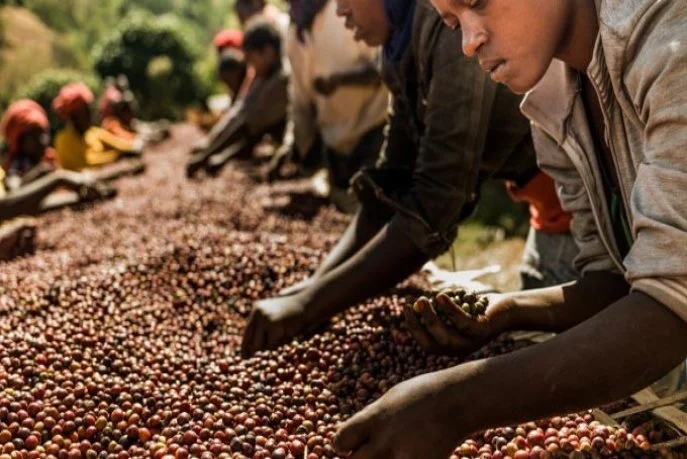
The transformation of African coffee will only be sustainable if women and young people are placed at the center of this dynamic. Women already play a crucial role in production, harvesting, sorting, artisanal processing and marketing. Young people, for their part, can bring innovation, digital tools, design, branding, modern distribution channels and new business models.
But their participation must not remain informal or marginal. It must be structured, financed and recognized. Dedicated programmes for young roasters, women processors, modernized cooperatives, agri-food start-ups and digital marketing platforms can profoundly renew the sector.
African coffee must become a space for innovation, entrepreneurship and skilled job creation. It should not remain the preserve of traditional producers or long-established exporters. It must become a value chain open to new generations.
From Marrakech to Action
The momentum created by the Marrakech Forum must now be translated into concrete action. International gatherings only make sense if they lead to operational programmes, structured partnerships, productive investments and effective follow-up mechanisms.
In particular, it is necessary to encourage networking among producing countries, the sharing of experiences, the strengthening of agricultural research, the modernization of plantations, the promotion of quality, the creation of African labels, the mobilization of appropriate financing and the development of regional commercialization platforms.
The planned establishment of a regional coffee research centre, particularly in West Africa, could represent a major step forward if it strengthens applied research, varietal adaptation, climate resilience, farmer training and productivity improvement. Over time, such an initiative could become for African coffee what major international agricultural research centres have represented for other strategic crops: a tool for knowledge, technical dissemination and scientific sovereignty.
Conclusion: Making Coffee a Lever of Productive Sovereignty
African coffee should no longer be viewed merely as an export crop. It must be understood as a complete value chain, connecting land to markets, farmers to consumers, cooperatives to industry, quality to labelling, and African territories to global commercial circuits.
The real question is therefore not only how much coffee Africa produces. It is how much value it retains, how many jobs it creates, which enterprises it helps to build, which brands it promotes, and what place it occupies in the global governance of this sector.
Through AfCFTA, logistics platforms such as Tanger Med, professional organizations such as ACRAM, African financial institutions and technical partners, the continent now has a set of instruments to change scale.
Africa must no longer only export its coffee. It must produce it better, process it more, label it, market it and have it recognized as a high-quality African product across the continent and around the world.
Only under these conditions will African coffee become not merely a source of agricultural income, but a true instrument of economic transformation, regional integration, job creation and productive sovereignty.
By Dr Mohamed H’MIDOUCHE
Economist, Author and Former International Banker
References
AfCFTA Secretariat & AGRA. (2026, February 16). The AfCFTA Secretariat and AGRA seal new partnership to fast-track intra-African trade and agricultural growth. AGRA. https://agra.org/the-afcfta-secretariat-and-agra-seal-new-partnership-to-fast-track-intra-african-trade-and-agricultural-growth/
International Center for Agricultural Research in the Dry Areas. (n.d.). About us. ICARDA. https://icarda.org/about-us
International Coffee Organization. (2024). Coffee Development Report 2022–23. International Coffee Organization. https://www.icocoffee.org/documents/cy2024-25/coffee-development-report-2022-23.pdf
Le Matin. (2026, May 5). L’Afrique trace à Marrakech la nouvelle chaîne de valeur du café. https://lematin.ma/economie/lafrique-trace-a-marrakech-la-nouvelle-chaine-de-valeur-du-cafe/344029
Tanger Med Port Authority. (n.d.). MEDHUB. https://www.tangermedport.com/en/logistics/medhub/

