



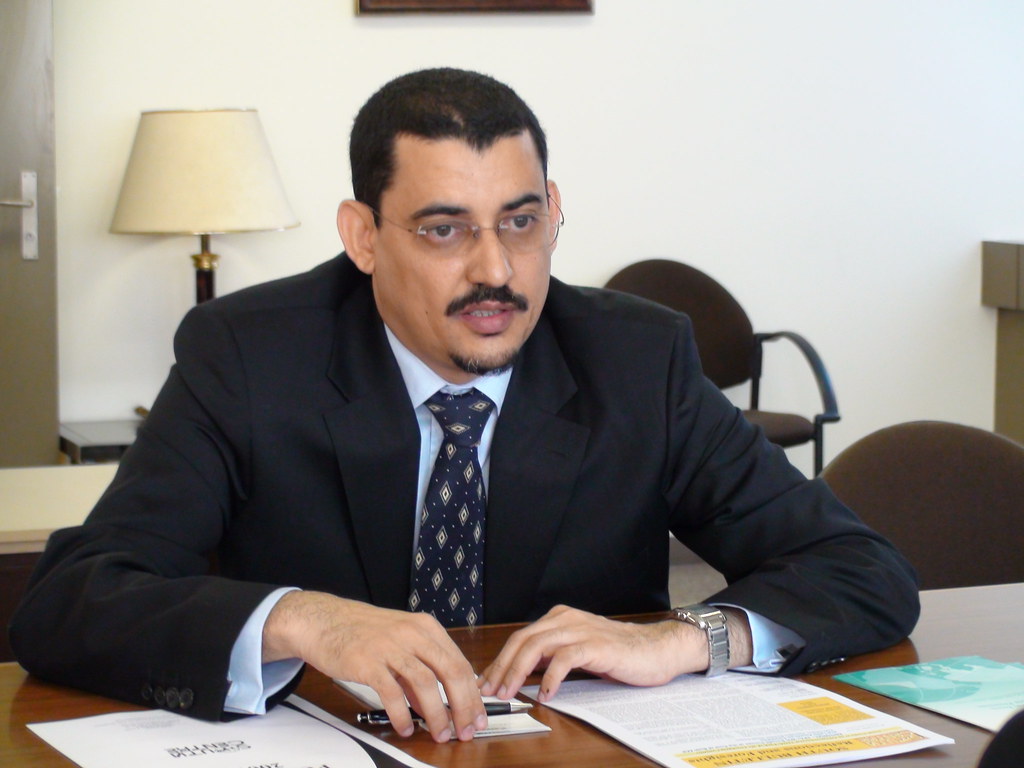
The International Monetary Fund (IMF) announced on Friday, April 3, 2026, the intention of its Managing Director Kristalina Georgieva to appoint Mauritanian Zeine Zeidane as director of the Africa department. He will succeed Abebe Aemro Selassie, whose retirement is scheduled for May 1, 2026. The announcement was made official by the IMF in a statement released in Washington.
This appointment places an experienced Mauritanian economist in a strategic position for relations between the Bretton Woods institution and sub-Saharan Africa, in a context marked by a growing demand for financing, economic policy advice, and technical support from countries in the region. According to Kristalina Georgieva, Zeine Zeidane will bring to the Africa department “a deep knowledge of the institution, sound judgment, and strong experience in economic policy.”
Currently serving as deputy director of the Middle East and Central Asia department, Zeine Zeidane currently oversees the IMF’s relations with several major Gulf economies. The IMF also highlights his role in strengthening regional strategic partnerships, including the establishment of the Fund’s regional office in Riyadh in 2024. Previously, he had held the position of deputy director in the Africa department, where he was involved in some of the continent’s most important and complex issues.
The statement also emphasizes his involvement in major internal reforms at the IMF benefiting sub-Saharan Africa, particularly on concessional lending policies and the Catastrophe Containment and Relief Trust (CCRT) during the pandemic. Before joining the Fund in 2012, Zeine Zeidane held several high-level positions in Mauritania, including Prime Minister, Governor of the Central Bank, and Economic Advisor to the President. He also worked at the World Bank and in the commercial banking sector.
With a doctorate in applied mathematics and a postgraduate diploma in macroeconomics from the University of Nice, Zeine Zeidane embodies a rare profile at the intersection of international technocracy and government experience. For the IMF, his appointment is intended to ensure continuity in steering the Africa department at a time when the region remains at the center of decisions on debt, growth, reform programs, and concessional financing needs.

