



To finance its structural transformation over the next five years, Abidjan is implementing a historic National Development Plan (PND) of 114,838.5 billion CFA francs. The particularity of this roadmap: the Ivorian state is transferring the leadership of financing to private investors, expected to contribute up to 70.2%.
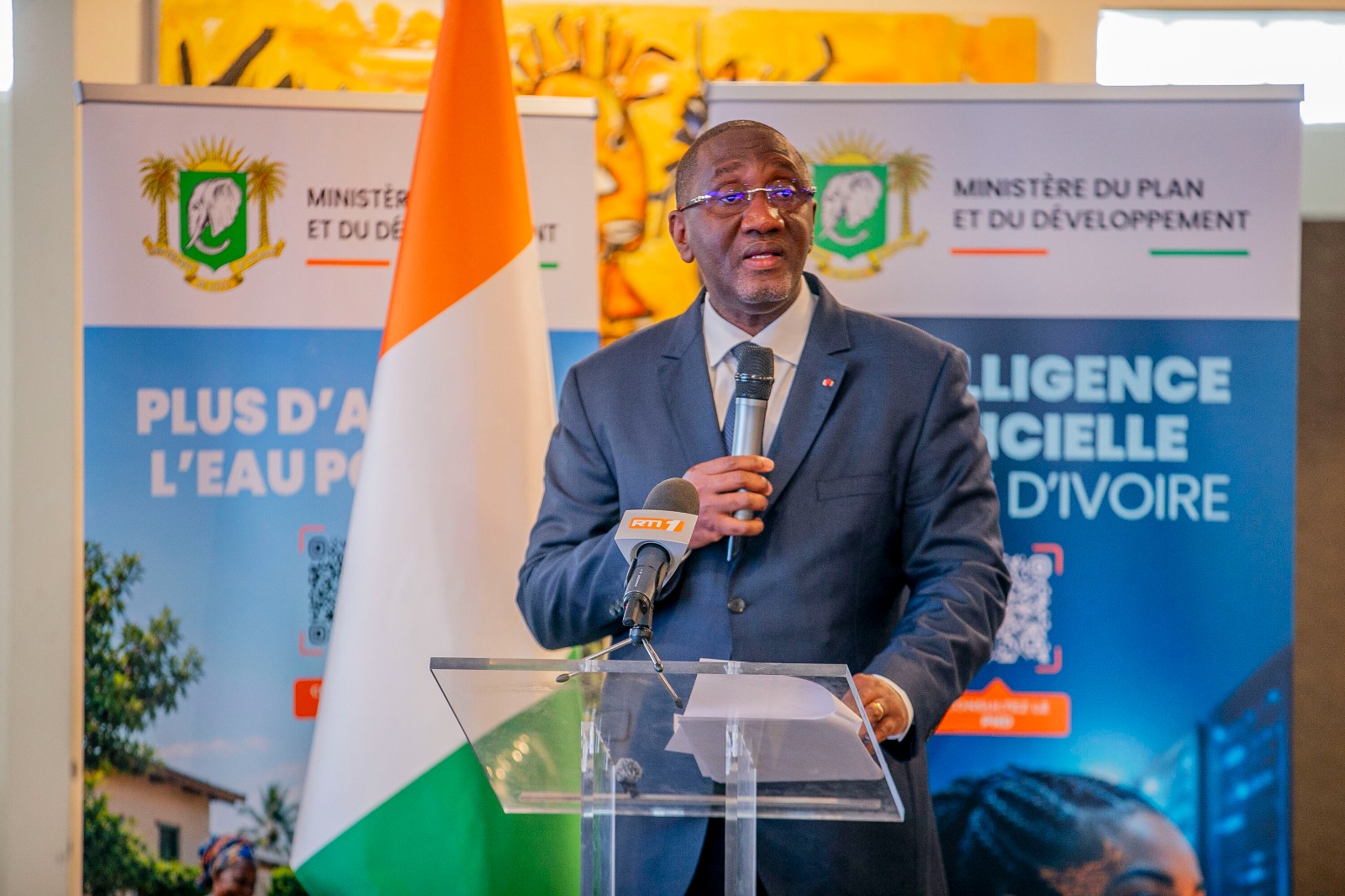
In front of a highly strategic audience composed of ambassadors, multilateral institutions, as well as accredited technical and financial partners, the Minister of Planning and Development, Dr. Souleymane Diarrassouba, officially announced in Abidjan the financial outlines of the National Development Plan (PND) for the period 2026-2030.
With a total budget of 114,838.5 billion CFA francs over five years, Ivory Coast is displaying unprecedented industrial and social ambitions. This meeting marks the official opening of the final preparations before the highly anticipated Consultative Group meeting, scheduled for July 8 and 9, 2026 in Abidjan. The immediate objective for the Ivorian executive will be clear: to mobilize 11,138.2 billion CFA francs in external financing to finalize the required scheme.
In a global macroeconomic landscape marked by the gradual drying up and contraction of official development assistance (ODA), the financing structure chosen by Abidjan represents a true doctrinal rupture. This plan reflects a deliberate and assumed political choice: to break away from exclusive dependence on sovereign or multilateral funds to make the private sector the main driver of growth.
Out of the total program budget, a titanic portion of 80,614.7 billion CFA francs will be directly sought from national and international private investors. The national public contribution is set at 34,223.9 billion CFA francs, barely 29.8% of the overall effort. This state foundation is conceived as a leverage mechanism aimed at securing, guiding, and making viable the risk-taking of private capital.
The residual need for public financing, estimated at 37,333.1 billion CFA francs, will be captured through regional and international financial markets, as well as through commitments expected during the July Consultative Group meeting.
Implementing such a comprehensive plan inevitably raises questions about the trajectory of sovereign debt. On this point, the framework set by the Ministry of Planning aims to be reassuring and rigorous. The financial trajectory integrated into the PND foresees a constant decrease in the debt/GDP ratio, projected to decrease from 57% in 2025 to 54.8% by 2030.
This expected performance comfortably keeps Ivory Coast below the 70% community threshold set by the West African Economic and Monetary Union (UEMOA), thus providing a solid guarantee of sustainability and credibility to the Ivorian state’s financial signature with markets and rating agencies.
“The PND 2026-2030 reflects our willingness to accelerate the economic and social transformation of Ivory Coast through an ambitious, sustainable, and opportunity-creating investment program. The Consultative Group will be a decisive step in strengthening the partnership between Ivory Coast and all its development partners,” said Dr. Souleymane Diarrassouba, Minister of Planning and Development.
In conclusion of his speech, the Minister made a solemn appeal to the entire diplomatic corps. He invited each partner power to actively mobilize its capital and business networks around the July meeting in Abidjan.
For the government, the massive involvement of the international community will not only be financial: it will act as a barometer of renewed confidence in the Ivorian model, essential to perpetuate the anchoring and dynamism of the private sector at the heart of this historic economic transformation.

