



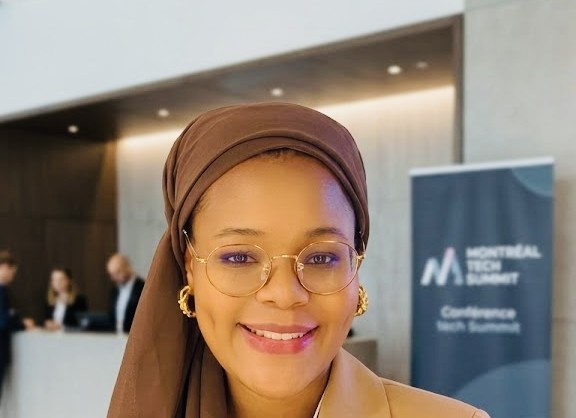
By Soukeyna LY, Energy engineer and macroeconomist; Founder of the think tank PRONA FUTURES; Montreal, June 8, 2026.
As Senegal seeks to restore its macroeconomic credibility with its financial partners, the issue of energy subsidies emerges as one of the most sensitive trade-offs in the coming years. The country no longer has time to engage in purely theoretical debates.
With public debt now estimated at over 130% of GDP (according to 2026 estimates, after the discovery of undeclared commitments), a debt service that absorbs an increasing share of state revenues, and energy subsidies costing nearly 1,800 billion CFA francs over three years, Senegal is entering a zone of tension where every macroeconomic decision has an immediate political cost and an economic impact.
Budget margins are shrinking. Social needs remain immense. Economic transformation can no longer be postponed. For comparison, these levels of subsidies exceed, in the recent period, public expenditures dedicated to certain key social sectors, illustrating the magnitude of the budgetary trade-off at stake. Energy subsidies are no longer a completely taboo subject. They have become a real problem. Maintaining them without reform is prolonging a costly, often poorly targeted expense, at the expense of investments that create growth and future revenues. Abruptly removing them would be equally dangerous. When the economy is already under pressure and the cost of living continues to rise, a poorly calibrated reform can quickly provoke social tensions and weaken confidence in the government. This is why the real question is not whether to maintain or remove subsidies, but at what pace, according to what logic, and with what transparency for the populations concerned. A reform is not justified solely by its accounting balances. It is also measured by what it clearly announces, what it protects, and what it aims to build.
This pattern is well identified: target the most exposed first, then reduce subsidies that mainly benefit wealthy households. Those who consume the most, air-condition the most, illuminate the most. The margins thus freed up should not simply be used to plug deficits. They should be reallocated to what truly transforms an economy: productive energy, structuring infrastructure, education, industry, and logistics. This is where the reform goes beyond technical adjustment and becomes a transformation strategy. The IMF has been emphasizing this for years. The Senegalese government has committed to it itself, setting a ceiling of 2% of GDP for subsidies.
Maintaining the current system without adjustment would risk reducing the available margins for productive investment and shifting the cost of imbalances onto future generations. Two avenues allow us to move away from the false choice between the status quo and social shock. The first consists of gradually phasing out generalized subsidies to move towards a progressive social tariff for electricity.
The problem with subsidies is that they seem fair on the surface. Everyone benefits from them. But in reality, those who consume the most electricity also capture the largest share of public assistance. And it is rarely the most modest households. This is why a progressive pricing would be more coherent. The first 50 kWh per month would remain subsidized, to protect essential needs. Between 51 and 150 kWh, the rate would be intermediate.
Above 150 kWh, the price would approach the real cost. The logic is simple: preserve solidarity, but avoid that it mainly finances the biggest consumers. This reform would be less abrupt than one might think. In Senegal, the majority of households consume less than 150 kWh per month. They would therefore remain protected. Morocco introduced a progressive pricing system in 2014, with a social rate for households consuming less than 100 kWh/month, and had positive results in protecting modest households. But it is not just about looking at rates. The other, more discreet but essential issue, is the losses in the electricity sector and bill collection. In Senegal, these losses are estimated at around 15-17% of production. That is considerable.
Kenya set an example by significantly reducing its network losses between 2015 and 2022, through audits, targeted investments in the network, and better bill collection. For Senegal, a serious audit of Senelec would be a starting point to identify losses and areas for improvement. If Senegal could reduce its losses from 15% to 10%, the financial situation of the sector would improve significantly, without price increases for consumers. These two reforms must be accompanied by a clear rule for allocating the savings made. Every billion saved on subsidies must be included in the budget law for structuring investments, not for current consumption. The priorities are clear: solar power plants and gas pipelines, local transformation of oil, gas, and minerals, logistics and digital infrastructure, vocational training, and basic health. The goal is to transform budgetary savings into productive fiscal capacities, and therefore into future revenues to repay the debt without new subsidies. This is where natural resources come into play.
Oil, gas, and other extractive resources should not be used as a mere budgetary compensation fund. Their role is more strategic: cushioning the transition, strengthening macroeconomic credibility, and financing investments capable of changing the structure of the economy. An allocation rule adopted by law could provide for a portion for macroeconomic stabilization, a portion for transformative investment, and a portion for intergenerational savings. This rule would ensure that the rent is not consumed, but converted into permanent capital, in accordance with Senegal’s 2022 law on the distribution and management of hydrocarbon revenues.
Senegal is faced with a methodological choice. Either it continues to manage its balances through budgetary stopgaps, or it finally organizes an intelligent adjustment, with a clear schedule, clear priorities, and a logic of transformation. The country is not lacking in resources. It lacks sequencing. And in terms of debt, energy, and growth, it is the sequence that makes the difference between stabilization and stagnation.
The reform of energy subsidies is therefore not an ideological question. It is a question of budget sustainability, economic sovereignty, and intergenerational justice. In this context, a coherent option would be to reform gradually, with method, rather than undergo more abrupt adjustments tomorrow.
Editorial note: This opinion piece is part of PRONA FUTURES’ work on energy reform, budget sustainability, and strategic allocation of natural resources in Senegal.

