



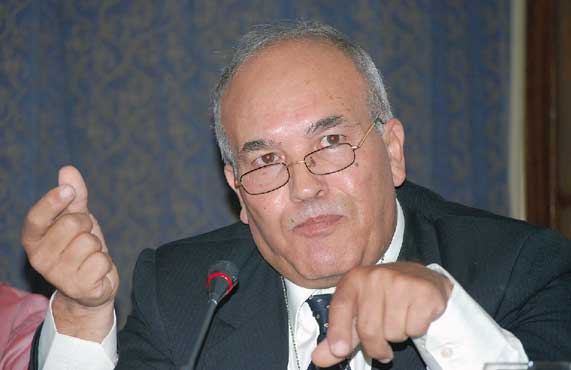
By Abderrahmane Mebtoul, University Professor, international expert, PhD in Strategic Management in 1974
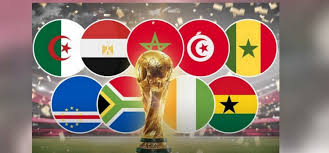
The 2026 World Cup is jointly organized by three countries: the United States, Canada, and Mexico. It is the first time in the history of the competition that three nations have come together to host the tournament, which features a record format of 48 teams. The host countries have gone all out. The infrastructure and logistics have allowed the teams to focus solely on the game. Sport, like music and culture, is a factor for bringing peoples together. If each team proudly and passionately waves its flag, with a strong desire to win, let us hope that the different matches are played in a positive sporting spirit and in joy with mutual respect, far from the conflicts that ignite the world. It is a moment of happiness and sharing.
1. However, patriotism should not be equated with chauvinistic nationalism, because citizens are proud to be American, Chinese, Russian, French, German, Spanish, Italian, South Korean. In the case of Africa, each person is proud to be African, hence the importance of productive dialogue by tolerating our differences, unanimity being a sign of the decadence of any society. Like every African, I wholeheartedly wish that our teams win. And regardless of the result of the final, it will have reconciled peoples with themselves.
With every victory, we witness in each country a fever of popular jubilation in favor of the national flag, with buildings, houses, cars, buses, and trucks decorated with flags of each country. How beautiful these little girls and how handsome these little boys are, innocent and without monetary calculations, dressed in the flag of their country. Thus, thanks to football, the world reconciles with itself and many teams, especially African ones, also reconcile their country with its emigrant community, showing that an African, whether a sportsman, intellectual, or economic operator, evolving in a different environment, away from bureaucratic hassles, thrives. We cannot bring back the “geniuses”, we must not mistake the targets, but if we first improve the fate of those who are on site to avoid their departure by their valorization and especially by the consideration assuming a reversal of value scales based on morality, knowledge, and not on rents, where alas social practices often contradict the speeches of the rulers.
2. Let us therefore warmly thank the African teams for this renewal of hope that it generates exclusively for Africa. Linked to this inseparable development process, to truly benefit from its integration into the international market, African football must absolutely build an economic model whose professionalization allows it to retain its best players for longer, assuming regulatory mechanisms that arbitrate more balanced between profit-seeking and the vagaries of competitions. The main lesson that can be drawn is that the African population in general and its youth in particular (70% of the population) is capable of miracles as long as they are given a discourse of truth through new communication and renewed governance, thanks to citizen mobilization, this dynamic youth being much more important than all the natural resources that Africa holds.
Because true patriotism will be measured in the future by the contribution of each African to the increase of their participation in local and global added value, and to the rulers a flawless morality. In fact, the African population through this mobilization thanks to football, demands more freedom, more social justice, the reward of the work of intelligence and not rents in exchange for clientelism, in short, a rule of law and democracy without renouncing its cultural values. Faced with centralized bureaucratic authoritarian measures without adhesion and consultation, self-satisfaction as a source of collective neurosis, the weakness of political and economic counterweights, society gives birth to the dominant informal sphere in Africa, which has its own rules that allow it to function, much stronger rules than those that the central power wants to impose because they are based on trust.
3. Faced with this global football event with an unparalleled mobilization, authorities should meditate with extreme attention. And yes, who said that Africans do not love their country since the lesson comes from young people who are teaching adults. The recent events and biased measures clearly show that certain segments of the public authorities (central and local), due to the old bureaucratic and administrative culture, do not have a clear understanding of the essence of the current crisis and the profound geostrategic reconfigurations that are looming.
The lesson that can be drawn from this mobilization of young people without ulterior motives is that it would be a serious political mistake for certain political parties – in power and in opposition – or for certain individuals seeking publicity to make this spontaneous mobilization an endorsement of their policy. And if there has been this immense mobilization, it is because politics is out of the game. Because, according to the saying hope keeps alive, the majority of Africans attach themselves, for lack of better, to signs of hope, and the lesson with this immigration and this massive brain drain, a country without its elite is like a body without a soul, testifying to a situation of despair that some malicious leaders try to trivialize while they constitute a deep social malaise. After the sporting euphoria, the majority of the African population will once again be confronted with the harsh economic and social reality, that is to say the level of their purchasing power, and the government must find adequate solutions for sustainable development.
In conclusion, any objective analysis cannot isolate sport from an overall vision. Africa needs a critical and fair look at its situation, at what has already been accomplished and what needs to be accomplished by 2026/30/2050. Given this immense energy of the population, Africa has all the potential to become a pivotal continent and meet the challenges of development in the face of globalization, in this constantly moving, ruthless world where any nation that does not move forward falls back. After the sporting euphoria, the majority of the African population will once again be confronted with the harsh economic and social reality, that is to say the level of their purchasing power, and the government must find adequate solutions for sustainable development.

