



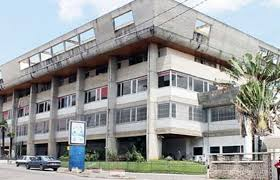
Facing persistent inflationary pressures and uncertainties in the global economic environment, the Central Bank of Madagascar decided to maintain its key rate at 12% during its quarterly Monetary Policy Committee meeting held on May 5, 2026. Through this decision, the Banky Foiben’i Madagasikara (BFM) confirms its intention to maintain a restrictive monetary policy to preserve price stability, support the credibility of the ariary, and strengthen the resilience of the Malagasy economy. This key rate hold also sends a signal to the markets and financial partners, in a context where several African economies are still facing inflationary pressures and market volatility.
After a gradual slowdown observed in 2025, annual inflation continued to decelerate at the beginning of 2026, reaching 6.1% in January before slightly rising to 6.8% in March. According to the Central Bank, this evolution is mainly explained by the rise in food prices, against a backdrop of persistent tensions in global markets. The BFM also warns of several risk factors that could fuel a new inflationary surge, including the increase in oil prices, maritime transport costs, agricultural input prices, and the indirect effects of wage increases. Despite these pressures, the institution believes that inflation should gradually slow down from 2027 onwards thanks to the maintenance of a rigorous monetary policy.
International technical and financial partners remain cautious about the country’s economic prospects. The International Monetary Fund (IMF) forecasts an inflation rate of around 8.3% in Madagascar in 2026, a level higher than the projections of the Malagasy Central Bank. The World Bank also anticipates inflation close to this threshold, mainly driven by the rise in energy and transportation costs in a context marked by geopolitical tensions in the Middle East. These forecasts reflect the challenges that the Malagasy economy continues to face despite efforts to stabilize the macroeconomic framework.
Despite this challenging international environment, some indicators demonstrate a relative strength of the Malagasy economy. By the end of March 2026, the ariary had appreciated by 10.7% against the euro and 8.9% against the US dollar, supported by the improvement in the trade balance and foreign exchange inflows related to development projects. Foreign exchange reserves now cover 7.3 months of imports, a level considered comfortable to limit external risks and support financial system stability.
However, short-term economic prospects remain fragile. The economic sentiment survey published by the BFM reports a deterioration in activities in the first quarter of 2026, as well as a growing climate of uncertainty among business leaders. In this context, the Central Bank favors a cautious approach to preserve macroeconomic balances, sustainably contain inflation, and create conditions for more stable and sustainable growth.

