



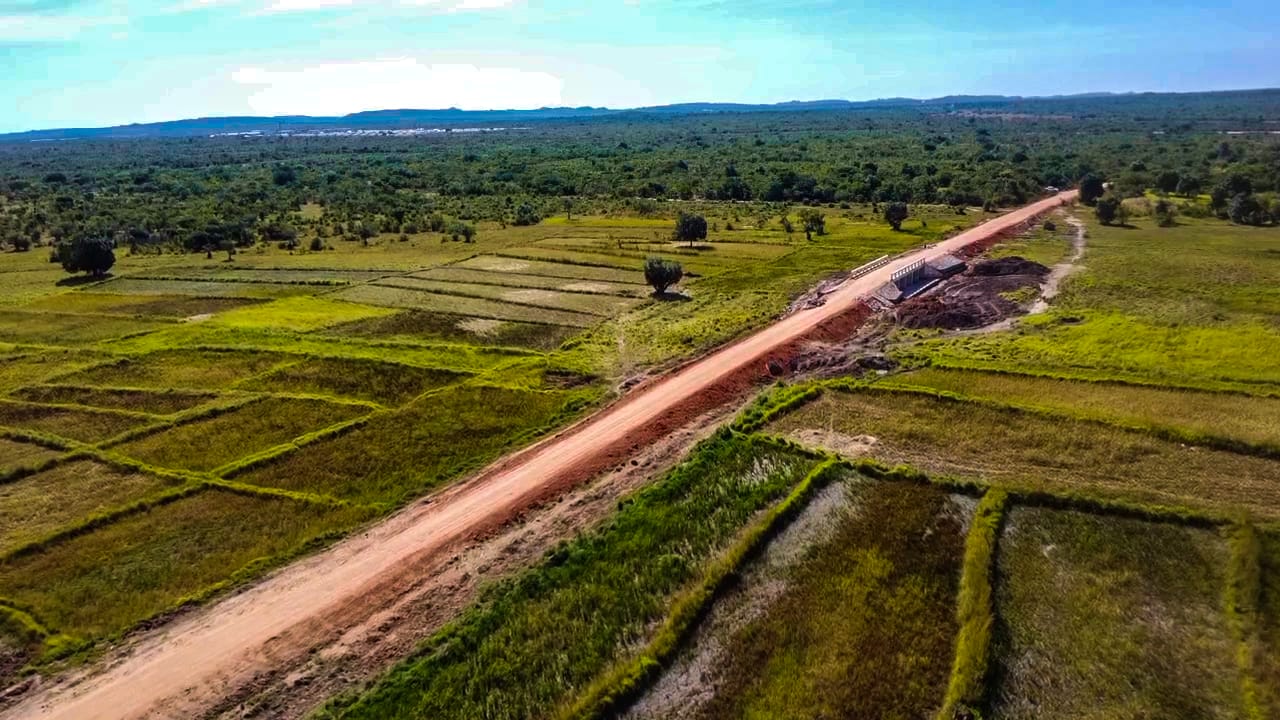
The reconstruction of road infrastructure has become an economic priority for Tanzania after significant damage caused by the rains linked to the El Niño climate phenomenon in 2024. In order to restore logistical corridors, secure trade exchanges, and restore access to essential services for the population, the Tanzanian government has secured a concessional loan of 65 million US dollars from the World Bank to finance the rehabilitation of damaged roads across the country.
This funding, granted under the “Conditional Emergency Response” mechanism, will notably allow the Tanzanian Rural and Urban Roads Agency to restore critical infrastructure affected by the floods. Assessments carried out after the storms revealed significant damage to several road sections, compromising mobility, economic activities, and connectivity between rural and urban areas.
The announcement of this financial mobilization came this week during an official visit of the TARURA advisory council in the municipality of Tabora. Officials inspected the construction of a 22-meter bridge and 290 meters of access roads along the Ndovelwa road corridor, a strategic axis spanning 20.2 kilometers.
According to engineer Seff, in charge of monitoring operations, rehabilitation works carried out nationally currently show an execution rate of around 70%. The goal set by authorities is to complete all interventions by September 2026, in a context where road infrastructure remains essential for the functioning of the national economy.
The El Niño climate phenomenon of 2024 had caused exceptionally heavy rainfall in several countries in East Africa, leading to floods and significant material damage. For Tanzania, whose road network is a strategic link for domestic and regional trade, these destructions posed a direct risk to economic growth, trade exchanges, and population mobility.
Thanks to the concessional nature of the financing granted by the World Bank, the Tanzanian government benefits from more advantageous repayment conditions, allowing it to finance this reconstruction while limiting pressure on public finances.

