



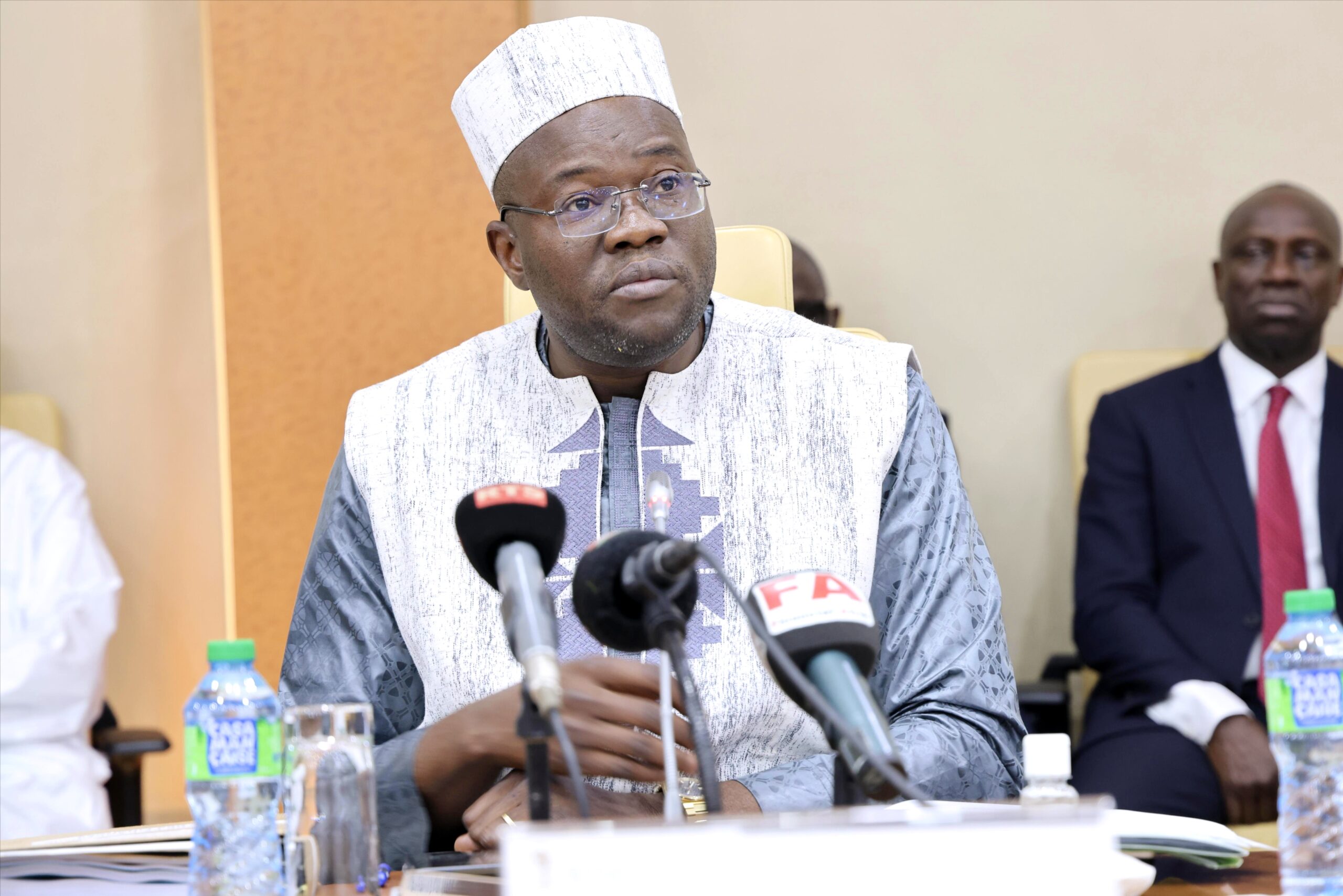
The first ordinary session of the Council of Ministers of the West African Monetary Union (UMOA) for the year 2026 opened on Friday, March 27 at the headquarters of the Central Bank of West African States (BCEAO) in Dakar. The discussions focus on the examination of reports on the economic and monetary situation of the Union as of December 31, 2025, as well as the approval of several major strategic orientations.
Chaired by Aboubakar Nacanabo, Minister of Economy, Finance and Prospective of Burkina Faso, the council will review the reports on the economic and monetary situation of the Union as of December 31, 2025. The session will also decide on the renewal of the mandate of the representatives of the member states within the Financial Stability Committee of the UMOA.
Regarding the West African Development Bank (BOAD), the ministers will also pronounce on the 2026-2030 strategic plan “DJOLIBA – the sequel”, which aims to double the financial commitments of the Bank. The institution is targeting 6,500 billion CFA francs (around 10 billion euros), compared to 3,750 billion CFA francs (almost 5.7 billion euros) mobilized during the period 2021-2025.
Under the West African Economic and Monetary Union (UEMOA), the ministers will examine the draft decisions for the adoption of development strategies for the private sector of the UEMOA and the promotion of public-private dialogue within the Union for the period 2025-2030. There will also be discussions on decisions for the adoption and implementation of the strategy to enhance the competitiveness of the member states and the private sector in the context of the African Continental Free Trade Area within the UEMOA space.
A global economic situation improving, but persistent risks
In reviewing the year 2025, the President of the Council highlighted a favorable trend in the global economy, marked by a slowdown in inflation and a easing of trade tensions. Global growth is estimated at 3.3% in 2025, stable compared to 2024, while inflation would decrease to 4.1%, against 5.8% a year earlier. However, the outlook for 2026 remains exposed to downside risks related to geopolitical tensions.
Within the Union, economic activity continues to consolidate, with a growth rate of 6.7% recorded in 2025, after 6.2% in 2024. The inflation rate for the entire year 2025 was 0%, compared to 3.5% in 2024. Financing the economy through banks increased during this period. Finally, the growth rate of credits to the economy would be at 5.6% at the end of December 2025, after 4.5% a year earlier.
Despite these encouraging indicators, the outlook remains dependent on the international environment, regional security challenges, and the impacts of climate change.

