



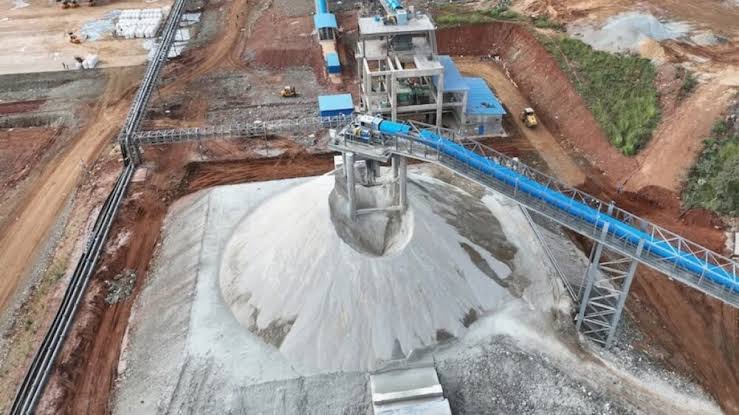
Bikita mine, located in the Masvingo province in southeastern Zimbabwe, is pursuing a $400 million investment program to upgrade its production to higher value-added products. This program aims to support Zimbabwe’s strategy of locally processing a greater share of its mineral resources.
In a company statement, Bikita Minerals stated its intention to shift from exporting concentrates to producing lithium chemical precursors, including lithium sulfate used in battery manufacturing. The first phase of the project is expected to start operating in the second quarter of 2027, with an announced annual capacity of 60,000 tonnes.
The project is led by the Chinese group Sinomine Resource Group, the owner of Bikita Minerals. Sinomine is also seeking to raise up to 5.2 billion yuan, approximately $764 million, to finance several projects in Africa, including the lithium sulfate plant in Zimbabwe and a copper mine in Zambia. The local subsidiary has indicated its intention to continue the construction of a lithium sulfate facility estimated at $400 million.
In terms of energy, documented investments around the site include a 132 kV Tokwe-Bikita power line. Other power supply infrastructures have also been deployed in recent years to secure the supply to the mining complex.
According to available data, as of December 31, 2023, Bikita mine had a mineral resource of 113.3517 million tonnes of ore, equivalent to 2.8847 million tonnes of lithium carbonate equivalent. This industrial upgrade could enhance Zimbabwe’s position in the lithium value chain as the country aims to increase the local processing of its critical minerals.

