



By Loucéni Compaoré, Ouagadougou.
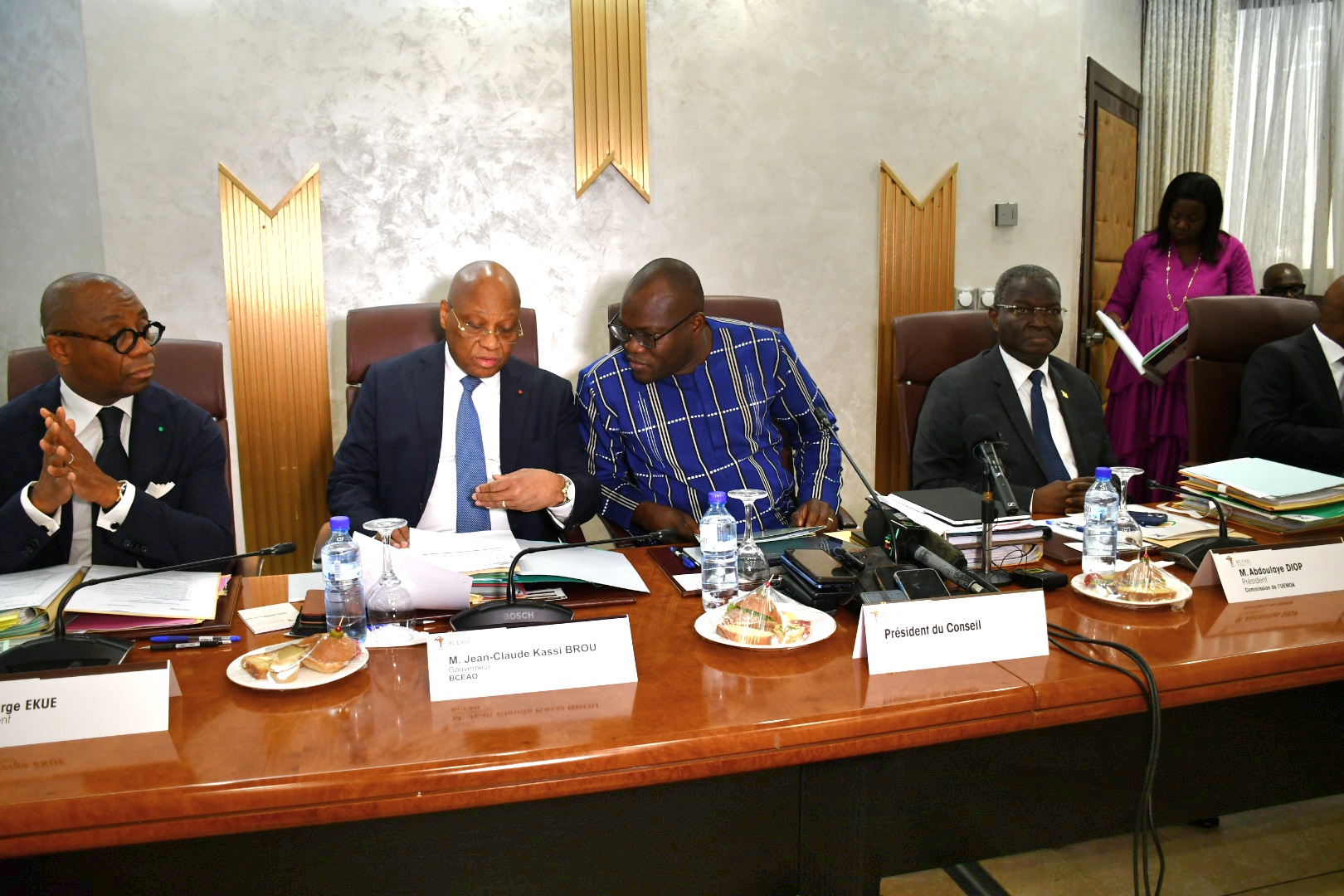
Gathered on July 3, 2026 in Ouagadougou for the second ordinary session of the Council of Ministers of the West African Economic and Monetary Union (WAEMU), the Finance Ministers of the eight member states adopted a series of decisions aimed at consolidating the economic resilience of the Union, strengthening regional financial governance, and deepening community integration. In an international context marked by geopolitical tensions, slowing global trade, and financial uncertainties, the meeting confirmed the willingness of member states to preserve macroeconomic balances while accelerating structural reforms.
Chaired by the Burkinabe Minister of Economy and Finance, Dr. Aboubakar Nacanabo, the session acknowledged a favorable regional economic situation. Ministers noted the continuation of sustained growth within the Union, driven by the dynamism of economic activity and now controlled inflation, despite a particularly demanding international environment.
The Council adopted the Multilateral Surveillance Report of June 2026 as well as the economic policy guidelines of the member states for the year 2027. These recommendations aim to continue efforts towards macroeconomic convergence, improve the quality of public finances, and preserve debt sustainability across the community.
One of the main advances of this session concerns precisely the management of public debt. Ministers approved a community framework for public debt policy and management. They also decided to create the Network of Public Debt Managers of the WAEMU, aimed at strengthening coordination between national administrations, promoting the sharing of best practices, and improving the technical capacities of the states.
Furthermore, the Council took a new step in strengthening the regional financial crisis prevention mechanism by validating the operationalization of the Financial Stability Fund of the West African Economic and Monetary Union. This mechanism complements the Union’s financial stability architecture and serves as an instrument to preserve confidence in the regional financial system.
Ministers also adopted the WAEMU Social Protection Strategy, which will now serve as a common reference for national policies to improve coverage of vulnerable populations and strengthen social resilience in the face of economic, health, or climate shocks.
In the veterinary field, the Council adopted texts related to the authorization for placing veterinary drugs on the market and monitoring, as well as the creation of a Regional Veterinary Drug Committee. This regulatory harmonization aims to strengthen the sanitary safety and quality of veterinary products across the Union.
Under the West African Monetary and Financial Markets Authority (WAMFMA), ministers approved the budget for the 2026 fiscal year as well as several decisions related to the renewal of mandates and the appointment of members to the institution’s College.
Activities of the West African Development Bank (BOAD) also featured prominently in the discussions. The Council reviewed partnership projects concluded with the International Finance Corporation (IFC), PROPARCO, and Sumitomo Mitsui Banking Corporation (SMBC), illustrating the strategy of diversifying financial resources of the regional development bank.
The session was also marked by the installation of new Council members. For Benin, Aristide Medenou, Minister of Economy and Finance in charge of Cooperation, succeeded Romuald Wadagni, elected President of the Republic, alongside Hugues Oscar Lokossou, Minister Delegate in charge of External Resource Mobilization and Debt Management. Senegal is now represented as the second member by Allé Nar Diop, Minister to the Minister of Economy, Finance and Planning, in charge of Economy, Planning, and Cooperation, replacing Abdourahmane Sarr.
At the end of this session, the Council of Ministers of the WAEMU will have laid several important milestones for the coming years: better governance of public debt, strengthening of the regional financial stability net, a community social protection strategy, and continued economic integration. These decisions directly concern nearly 150 million citizens of the Union and reflect the willingness of member states to consolidate the foundations of macroeconomic stability in an increasingly uncertain global environment.

