



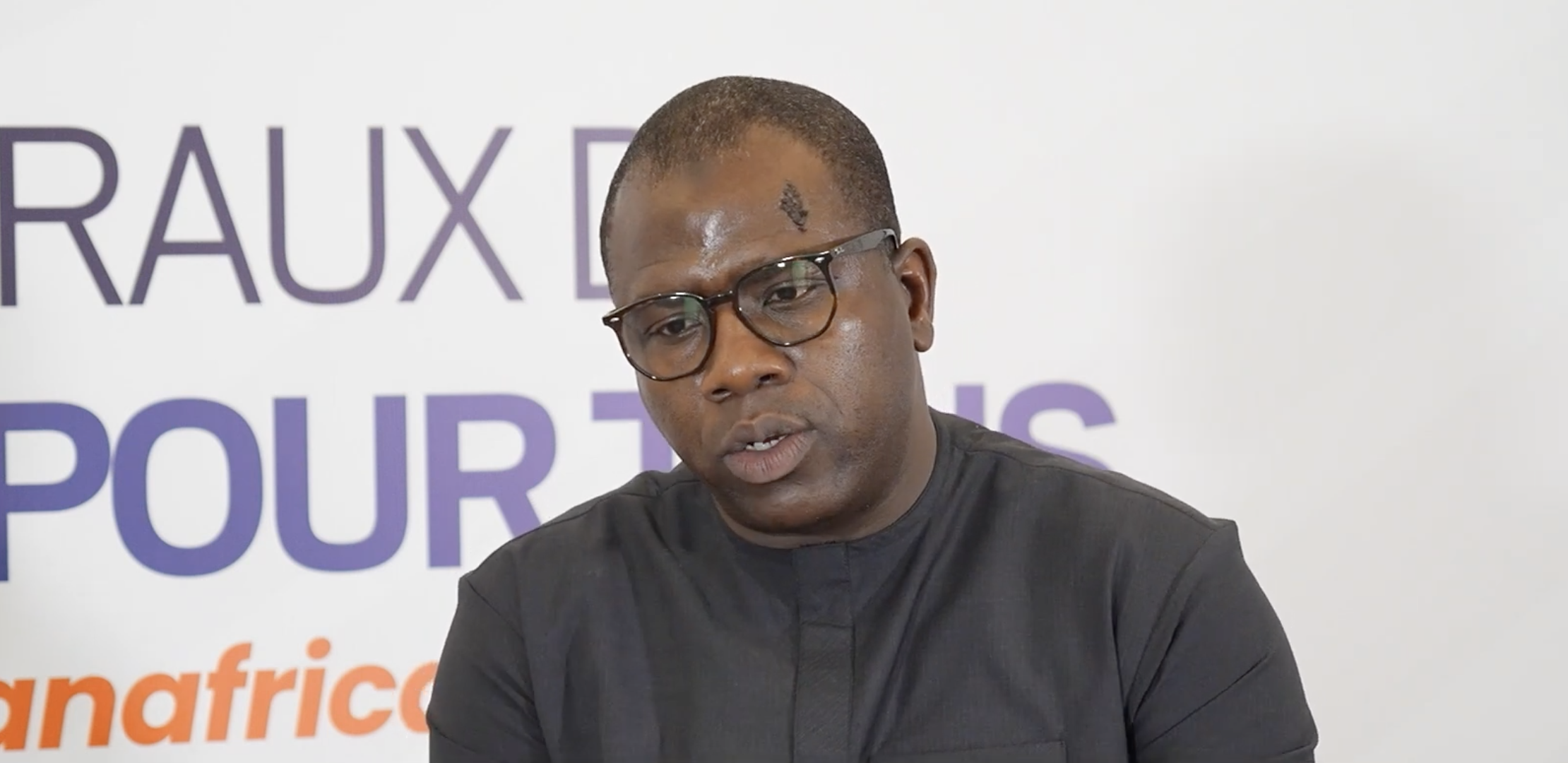
Appointed President of the Senegalese Federation of Insurance Companies (FSSA) in March 2026, El Hadj Amar Kébé takes the helm of a sector that shows brilliant financial health but remains confronted with a structural paradox. As the Managing Director of AXA Senegal, he inherits a market that has become the second largest in the CIMA zone after Ivory Coast, with a historic turnover of over 300 billion FCFA in 2025. However, despite this remarkable progress, the insurance penetration rate hovers around 1.5%, revealing the immense gap that still separates insurers from the majority of the population.
In this interview with Financial Afrik on the sidelines of the General States of Universal Insurance in Cotonou, the new President of the FSSA outlines a roadmap centered around five priorities: modernize the governance of the federation, accelerate market development, generalize digitalization, invest in human capital, and strengthen dialogue with regulators. This strategy aims not so much to manage achievements as to prepare for a profound transformation of the industry.
For El Hadj Amar Kébé, digital innovation is now the main driver of growth. Senegal has already paved the way by becoming, after Ivory Coast, the second market in the CIMA zone to fully digitize automobile insurance subscription. The results speak for themselves: this digitalization has resulted in around a 20% increase in the turnover of the automobile branch. For the executive, the challenge now goes beyond simply modernizing procedures. It is about adapting insurance to the habits of a young, hyperconnected population accustomed to the immediacy of digital services.
His diagnosis is straightforward: African insurance can no longer ask clients to adapt to its administrative constraints. It is now up to insurers to rethink their models. Otherwise, he warns, other actors, especially technological ones, could occupy a territory that traditional companies are still slow to invest in. Digitalization thus becomes as much a tool for commercial conquest as an instrument for fighting fraud and improving service quality.
But the President of the FSSA refuses to attribute the low penetration rate solely to economic constraints. He also points to a lack of education within the profession and a persistent crisis of trust. According to him, insurance remains a profession insufficiently understood, sometimes viewed with suspicion by the population. To restore its legitimacy, the sector will have to demonstrate its ability to compensate quickly, simplify procedures, and offer an impeccable customer experience. Trust thus becomes an asset as strategic as financial capital.
Beyond the numbers, El Hadj Amar Kébé advocates for a more inclusive vision of insurance. For him, the future of the sector lies not only in formal sector companies or employees, but in the millions of actors in the informal economy and rural areas, long considered difficult to insure. He also challenges this received idea: these populations, he explains, are organized, have solidarity mechanisms, and can become insured as long as products are designed with them and adapted to their economic realities.
It is precisely this belief that fuels the expectations placed in the African Pact for Universal Insurance, adopted at the end of the General States in Cotonou. In the eyes of the FSSA President, this text marks a paradigm shift: insurance is no longer to be a product reserved for a solvable minority, but a true tool of economic protection accessible to all Africans. The democratization of insurance, he asserts, involves listening to the population, co-constructing offers, technological innovation, and ongoing education.
In the background, the message is clear: after demonstrating its ability to grow, the Senegalese market is now expected to demonstrate its inclusivity. The next frontier will no longer be just about volumes, but about access. It is under these conditions that the second market in the CIMA zone can transform its commercial performance into real economic and social impact.

