



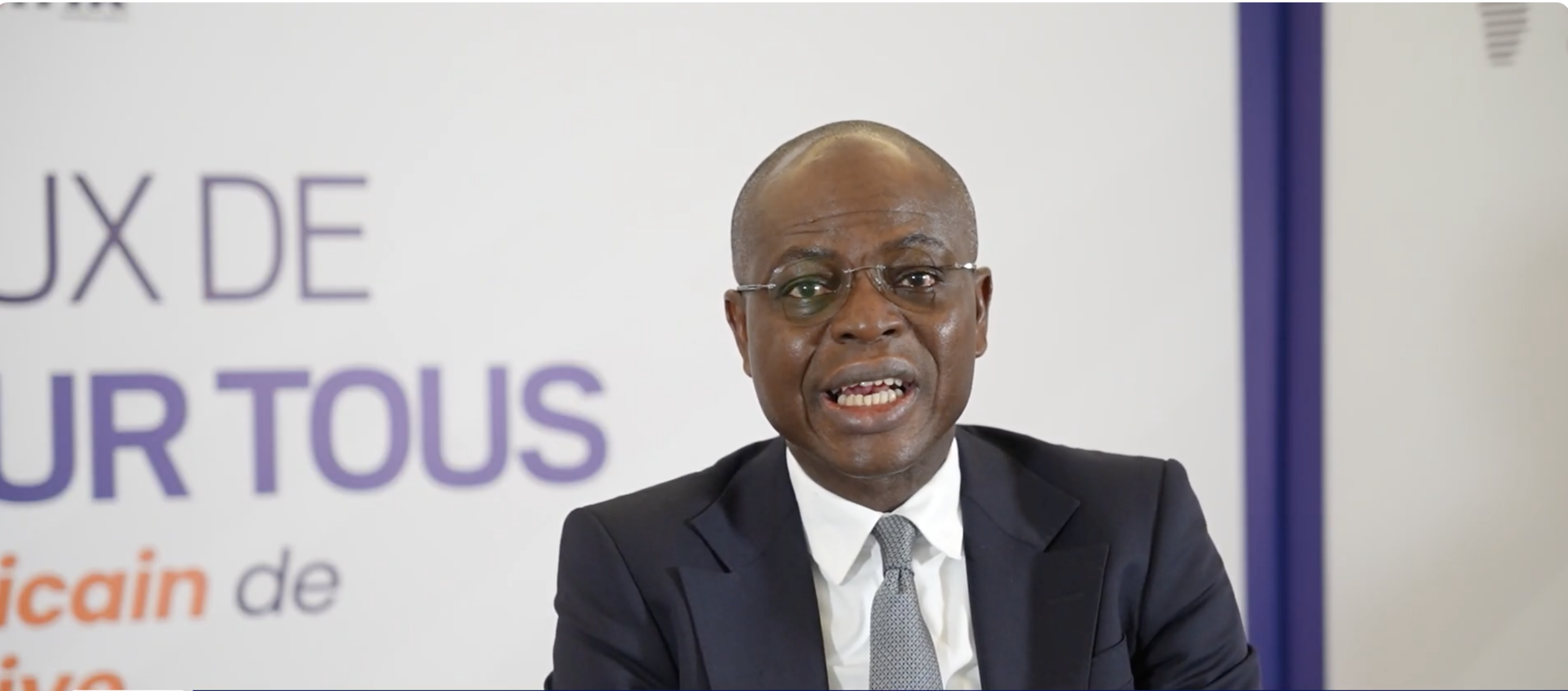
In Cotonou, the first General States of Insurance for All have highlighted a strong conviction: the future of the sector will not only be played out in trading rooms or company offices, but at the heart of villages, markets, artisan workshops, and on the mobile phones of millions of Africans. Invited to the Financial Afrik platform, Hervé Tchiakpe, president of the Association of Insurance Companies of Benin (ASA Benin), advocates for a profound transformation of the industry, centered around education, digitalization, and a collective commitment from states.
According to him, the first challenge is to change the perception of insurance, still too often seen as an administrative obligation, especially through car insurance. For the president of ASA Benin, this narrow vision masks the true nature of the profession.
“It’s not about constraint, but social protection,” he insists. Indeed, liability insurance allows an insured person to cope with damages that could ruin a family or a business. Hervé Tchiakpe illustrates his point with a concrete case: a company that compensated a claim of nearly 100 million FCFA while the annual premium paid by the insured was only 68,000 FCFA.
“If this person had to bear this burden alone, I don’t know what would have become of them,” he observes. For him, the real challenge is to further explain the principle of risk pooling. Many insured individuals feel like they are “losing their money” when they do not declare any claims. However, he reminds that the value of insurance lies precisely in the protection it offers against a potentially catastrophic event.
Another weakness of the sector is that beneficiaries of compensation rarely talk about their experience. “Those who are compensated do not talk about it enough,” regrets the president of ASA Benin, believing that these testimonials would be the best way to build trust among the population.
Beyond this cultural battle, Hervé Tchiakpe identifies the digital revolution as the main lever for the expansion of African insurance.
The paradox is striking. While 87 to 90% of the population currently use Mobile Money services in several African countries, only 1 to 2% directly subscribe to insurance products.
For the Beninese leader, this contradiction reveals a tremendous opportunity.
“How can we use digitization to help people better understand savings, foresight, and ultimately insurance?” he questions.
The answer lies in simple products, accessible through mobile phones, capable of reaching informal workers, traders, artisans, and rural populations who have long been excluded from traditional channels. Inclusive insurance can truly scale up by using the same channels that have enabled the explosion of electronic payments on the continent.
This thinking precisely informs the discussions at the General States held in Cotonou. The workshops addressed the main obstacles to the development of microinsurance: financial education, taxation, life insurance, innovation, regulation, and the protection of vulnerable populations.
For Hervé Tchiakpe, the future African Pact of Insurance for All must go beyond just insurance companies.
The text, intended to serve as a roadmap until 2040, is based on two complementary pillars according to him.
The first engages insurers themselves to adapt their products, distribution methods, and communication to conquer the still excluded populations.
The second aims to fully involve public authorities, regulators, technical and financial partners, as well as development institutions, starting with the African Development Bank (AfDB). Without this collective commitment, he believes, the ambitions of inclusive insurance will remain limited.
“If we continue to do all this alone, we are not sure to succeed,” he warns.
The president of ASA Benin also praises the involvement of Beninese authorities, recalling that the Minister of Finance personally opened the proceedings before receiving participants to discuss sector priorities. He calls on the national insurance directors present in Cotonou to replicate this dynamic with their respective governments.
In the background, Hervé Tchiakpe outlines an ambitious vision: to make insurance an instrument of social protection, financial inclusion, and economic resilience, just as digital financial services have transformed payment habits in Africa.
In his view, the insurance of tomorrow will no longer be a product reserved for formal sector employees or vehicle owners. It should accompany every citizen, regardless of their income level, through digital technologies, better financial education, and a lasting alliance between insurers, states, and development institutions.
In Cotonou, the message is clear: inclusive insurance is no longer just a sectoral objective. It now asserts itself as a project of economic and social transformation on the scale of the African continent.

