



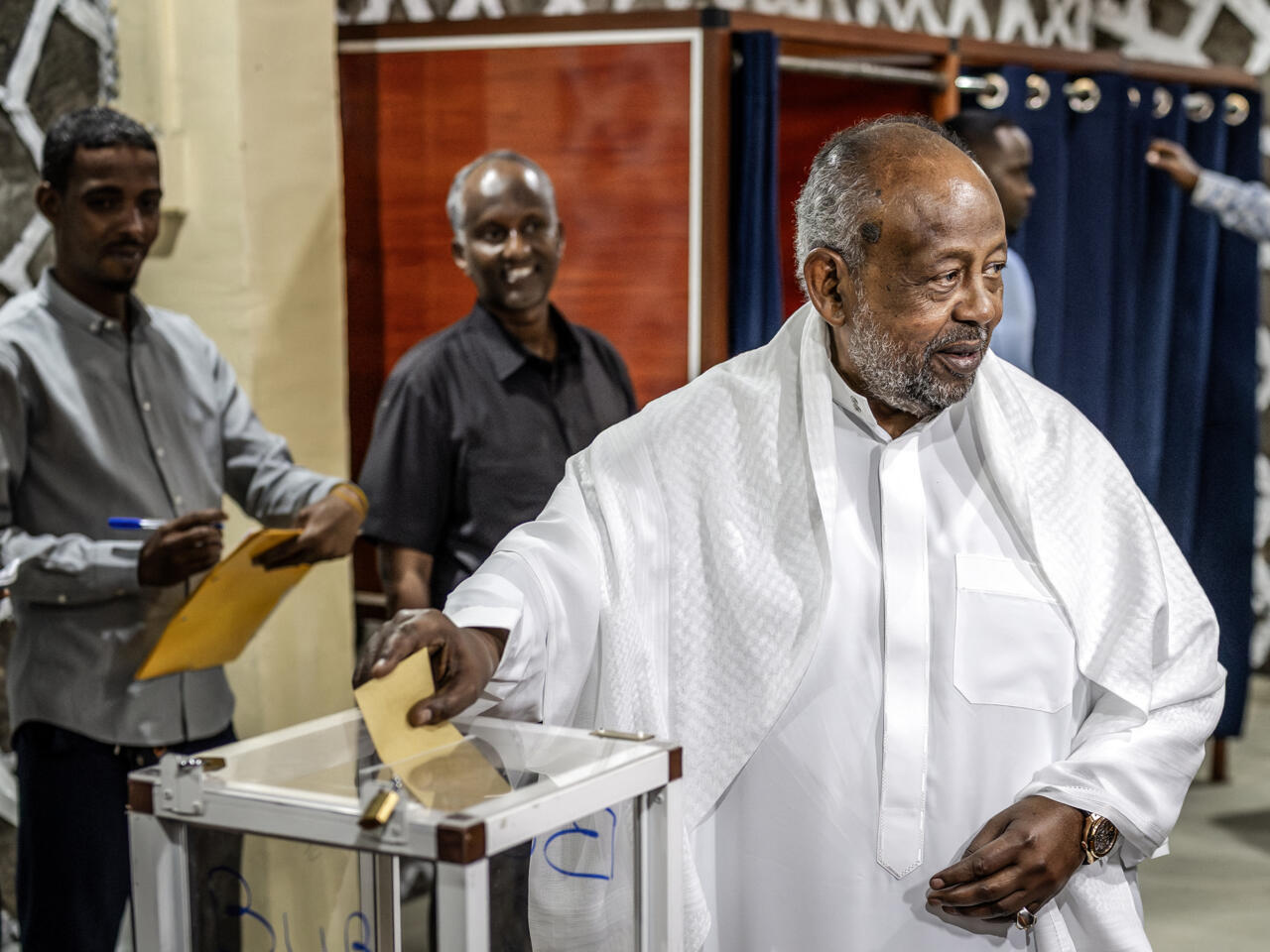
The re-election of President Ismaïl Omar Guelleh at the helm of Djibouti with 97.81% of the vote marks a new phase of political continuity in one of the most sensitive geopolitical spaces in Africa. This sixth term, confirmed after the presidential election on April 10, 2026, comes at a time of increasing influence rivalries and intensifying issues related to securing international trade routes in the region.
With an official participation rate of 80.33%, the election took place in a generally calm atmosphere, acknowledged by both the opposition and regional institutional partners, including the African Union. This political stability sends a strong signal to investors and development partners, at a time when the security of logistical corridors has become a global strategic issue.
Since coming to power in 1999, Ismaïl Omar Guelleh has made the valorization of the country’s geographical position a central lever for growth. Located in close proximity to the strategic Bab-el-Mandeb strait, a major passage connecting Asia, Europe, and the Middle East, Djibouti controls one of the world’s busiest maritime routes. This position gives the country a crucial logistical role in global supply chains, enhancing its attractiveness to economic operators and international investors.
On a territory of 23,000 km², Djibouti hosts military bases of several major powers including France, the United States, China, Japan, and Italy, generating significant revenues and contributing to the security stability of a region characterized by recurrent tensions in the Horn of Africa. This convergence of strategic interests reinforces the country’s positioning as an essential pivot between security, commerce, and economic diplomacy.
For policymakers, financial institutions, and international partners, this new term follows a logic of continuity favorable to the consolidation of investments in port, energy, and logistical infrastructure. The absence of major political uncertainty, combined with the opposition’s quick recognition of the results, helps maintain a conducive business climate and international cooperation.
In the medium and long term, Djibouti’s ability to preserve this balance between institutional stability, regional security, and economic expansion will be crucial in consolidating its status as a strategic hub. In a world marked by the reconfiguration of trade routes and the rise of geopolitical rivalries, Djibouti appears more than ever as an essential platform for global trade flows and a key partner for investment and sustainable development initiatives.

