



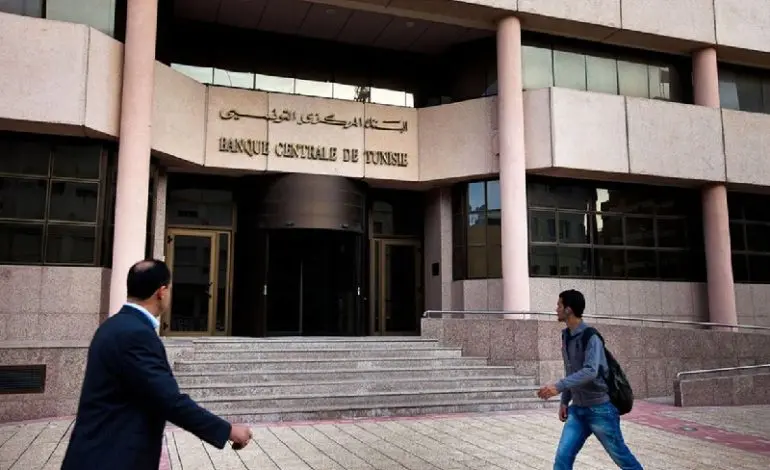
The Central Bank of Tunisia recorded a net profit of 1.15 billion dinars (approximately 370 million USD) in 2025, compared to 1.36 billion dinars (approximately 438 million USD) a year earlier, representing a decrease of 15.4%. This decline is explained by the decrease in revenues, which amounted to 2.07 billion dinars (approximately 667 million USD) compared to 2.44 billion dinars (approximately 787 million USD) in 2024. The decrease mainly comes from the contraction of income from interventions in the money market, investments, and foreign exchange operations.
Other revenues and provision reversals partially offset this decline, but did not fully compensate for the decrease in main sources of income. Meanwhile, expenses decreased to 919.9 million dinars (approximately 296 million USD) from 1.08 billion dinars (approximately 348 million USD) in 2024, due to lower interest expenses and foreign exchange operations. Personnel and operating expenses remained relatively stable, while provisions decreased.
In terms of monetary operations, the outstanding balance of interventions in the money market slightly increased to 8,264 million dinars (approximately 2.66 billion USD) (+1.4%), supported by the increase in Treasury bond repurchase agreements at six months (+30.3%) and the main refinancing operation (+12.8%), which now represents 64.1% of bank funding. Conversely, 24-hour lending facilities decreased significantly (-46.3%) and one-month refinancing operations disappeared in 2025.
Currency in circulation continued to grow strongly, reaching 26,876.8 million dinars (approximately 8.66 billion USD) (+19%), with banknotes accounting for nearly 98% of the total. Foreign exchange reserves decreased by 8.2% to 25,134.4 million dinars (approximately 8.10 billion USD), affected by a deficit in Treasury flows in a context of constrained external financing, despite contributions from international loans and improved foreign exchange earnings, particularly from tourism and remittances.
The Central Bank also faced significant repayments of external debt, including the 2015 Eurobond as well as obligations to the IMF and other creditors. However, foreign exchange reserves remain the main asset item (44.5%), mainly composed of securities (63%) and bank deposits (25%).

