



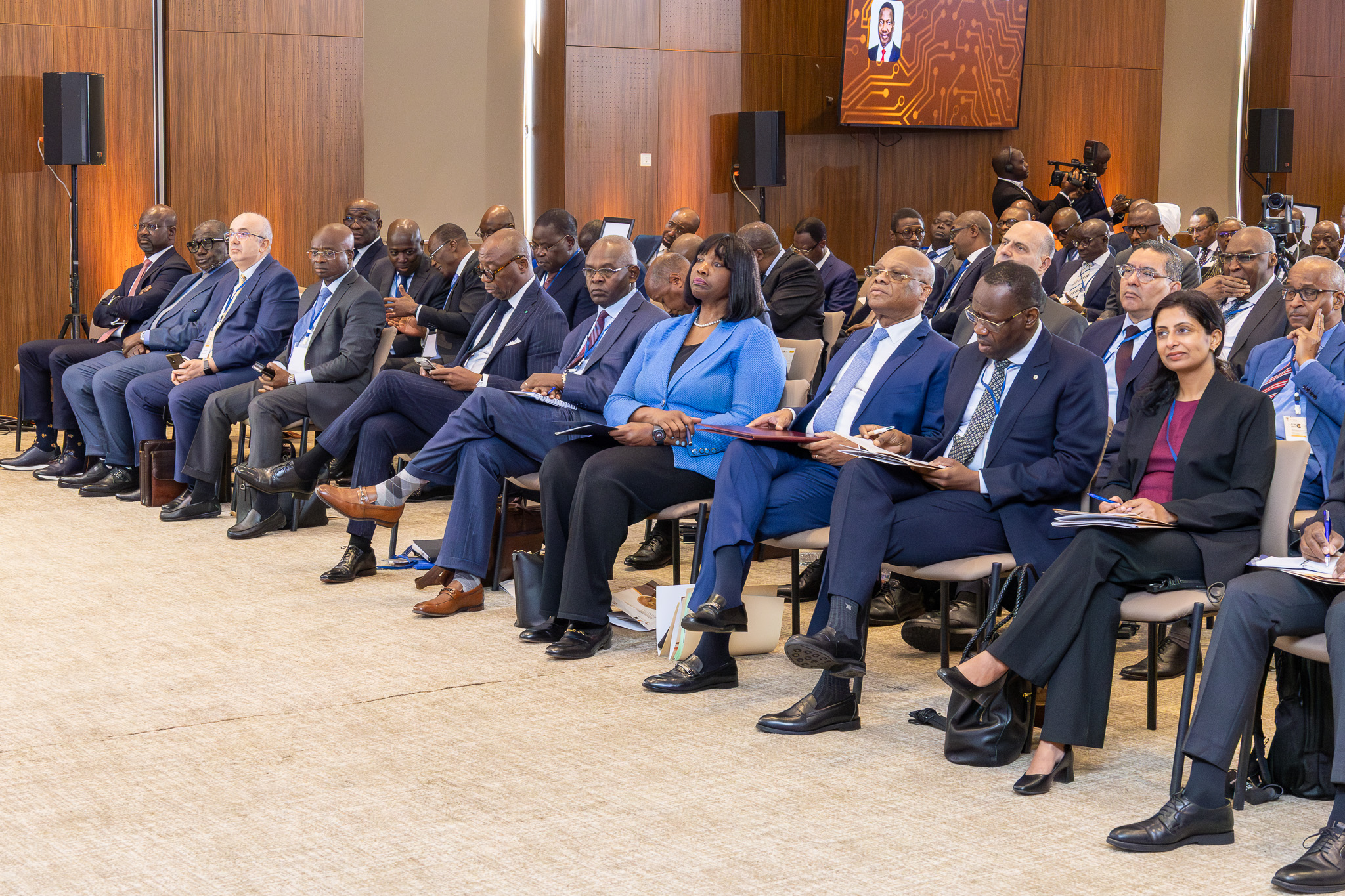
The international conference on crypto-assets and digital innovations, under the theme “Crypto-assets and digital innovations: opportunities and challenges for monetary and financial stability”, opened on Friday, May 8 in Dakar. Organized by the Central Bank of West African States (BCEAO), this event brings together experts, decision-makers, and financial sector stakeholders to deepen reflections on the strategic and operational issues related to these innovations, with the aim of strengthening institutions’ capacity to fulfill their mission of monetary and financial stability.
Crypto-assets, stablecoins, digital payment platforms, and the increasing digitalization of financial services are profoundly transforming traditional financial systems. These developments improve payment efficiency, foster innovation, enhance financial inclusion, and disrupt traditional regulatory frameworks.
“However, they come with significant risks that must be managed with vigilance: high volatility of crypto-assets, cross-border flow dimensions, cybersecurity issues, consumer protection, as well as increased risks of money laundering and terrorism financing. These innovations can also have implications for monetary policy conduct and financial stability, requiring enhanced anticipation,” emphasized the governor of BCEAO, Jean-Claude Kassi Brou.
In this context, he recalled that several African central banks have taken actions to regulate the digital transformation of the financial sector. BCEAO, for its part, is implementing structuring initiatives to support this transformation in a secure, inclusive, and innovation-friendly framework.
On his part, the Senegalese Minister of Finance and Budget, Cheikh Diba, emphasized the need for a collective response to these challenges. He noted that while digital innovations offer promising prospects, they also entail significant risks, including the development of unregulated finance, crypto market volatility, fraud, cyberattacks, and threats to monetary sovereignty. According to him, these challenges call for enhanced regional and international cooperation and continuous adaptation of regulatory frameworks.
Towards programmable finance and redefining trust
For Bertrand Milot, president and co-founder of Bradley & Rollins and a cybersecurity researcher at the University of Montreal, digital finance has become a critical global infrastructure. It requires increased international cooperation, robust regulation, and enhanced cybersecurity, in a context where trust, stability, and innovation are now inseparable pillars of the modern financial system. “In the West African Monetary Union (UMOA), the rapid growth of electronic money, with 248 million accounts in 2024, illustrates this profound transformation of financial practices, which requires better oversight,” he concluded.
Finally, researcher Michel Ruimy points out that the global finance is entering the era of programmable finance, where financial services increasingly rely on code and digital protocols. Crypto-assets and blockchain are evolving towards a full-fledged financial infrastructure, notably through asset tokenization. This evolution transforms the notion of ownership, now becoming more algorithmic, while shifting trust from institutions to computer code, introducing new systemic risks.
In this new paradigm, central banks seek to preserve monetary sovereignty through digital currencies, while traditional banks become technological players exposed to new risks. Regulation and control of digital infrastructures thus emerge as major strategic issues for financial stability and economic sovereignty.

