



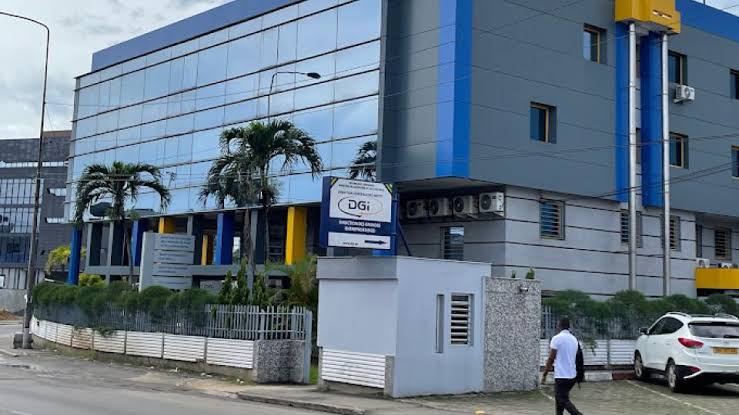
In its 2025-2027 Strategic Plan, the General Directorate of Taxes (DGI) of Gabon aims to increase its revenues from 1,002.2 billion CFA francs (nearly 1.75 billion USD) in 2023 to 1,349.7 billion CFA francs (approximately 2.25 billion USD) in 2027. This represents a projected increase of 347.5 billion CFA francs (nearly 606 million USD).
This envisioned performance aims to support the increasing financing needs of the state while reducing its dependence on oil revenues. The Gabonese tax authority also aims for a 20% increase in non-oil revenues by 2027, signaling a desire to diversify sources of budgetary income.
Unlike a traditional increase in tax rates, the Gabonese government is choosing a different path. The tax administration is focusing on improving its internal performance through four main axes. The first axis includes enhanced governance, modernized taxpayer services, more efficient agents, and an expansion of the tax base.
Digitalization is the second key lever of this reform. The DGI aims to digitize all of its core activities by 2027 to better collect information, track taxpayers, and secure revenues. The full deployment of Digitax, along with new telepayment solutions and the mobile application Mobitax, will support this transformation. An electronic document management system and interconnection of tax centers complete the setup.
The third strategic pillar is the automation of information exchanges between administrations. The DGI seeks to connect its systems with those of Customs, the Treasury, the National Social Security Fund (CNSS), and the National Health Insurance and Social Security Fund (CNAMGS). The National Investment Promotion Agency (ANPI), the National Order of Chartered Accountants of Gabon (ONEC), and the Chamber of Commerce are also among the targeted partners.
This data sharing is intended to quickly identify inconsistencies in declarations, as well as to facilitate the identification of under-taxed taxpayers and economic activities still escaping fiscal registration.
There is also a focus on strengthening internal control and professionalizing audit missions. Mapping out tax risks and modernizing collection tools complement this framework. Improved governance of performances consolidates the entire system.
For the Gabonese authorities, the challenge goes beyond simple budget collection. It is about turning the tax administration into a true financing lever for national development. This stated ambition aims to support state projects without increasing the tax burden on businesses and households. It remains to be seen if the technical implementation will keep pace with this ambitious roadmap.

