



By Andy Shima
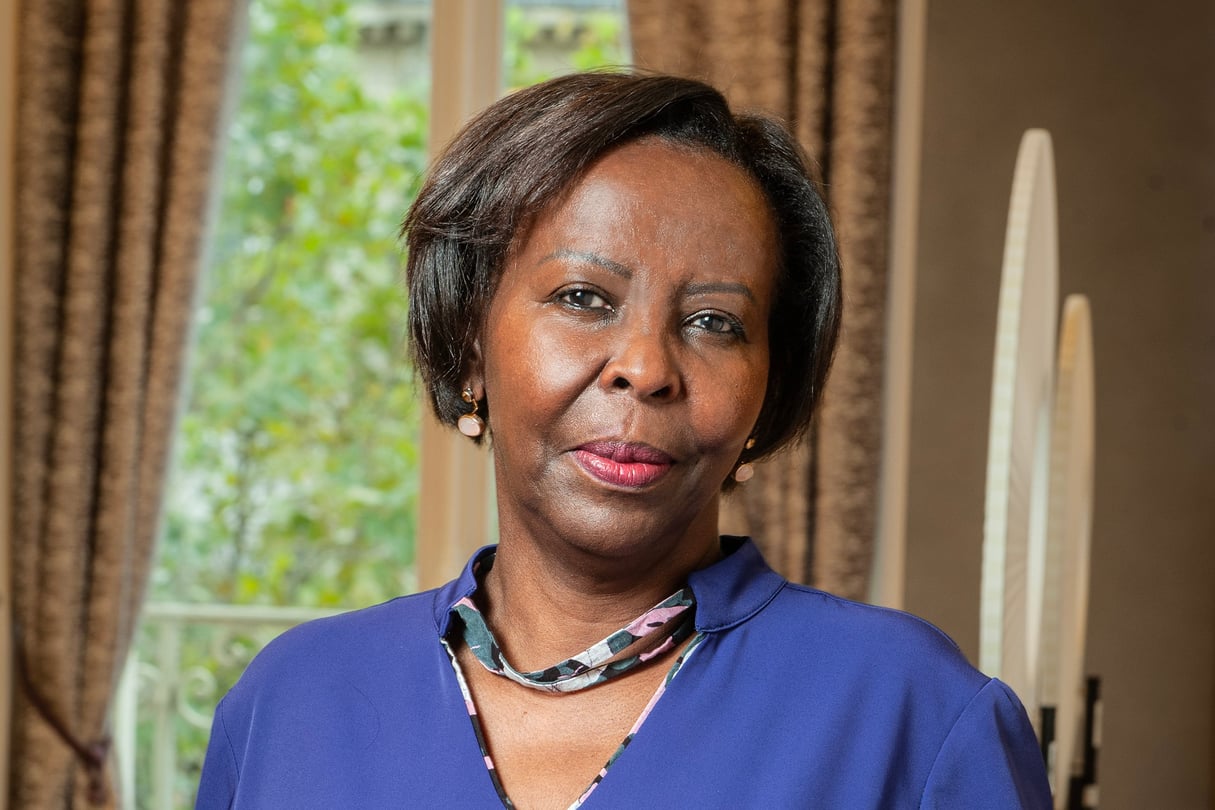
At a time when geopolitical tensions are weakening international balances and multilateralism is regularly challenged, institutions inherited from the post-war period seem to be seeking a new impetus. In this uncertain landscape, the International Organization of La Francophonie is trying to reinvent itself, gradually shifting from a space centered on language to a broader actor in political, economic, and digital cooperation. At its helm, since 2019, Louise Mushikiwabo has been imprinting a vision that gives momentum and ambition to an institution in full mutation.
The contemporary world is going through a deep phase of recomposition. Armed conflicts are multiplying, rivalries between major powers are hardening, and international institutions struggle to assert their authority. The system founded after the Second World War, intended to guarantee an order based on common rules, appears today weakened.
International law, built gradually through treaties, conventions, and multilateral agreements, is increasingly being put to the test by the return of power dynamics. International organizations, foremost among them the United Nations, are often accused of inefficiency, slowness, or powerlessness in the face of contemporary crises. Yet, it is precisely in these times of tension that the question of dialogue between states becomes central. Despite the fractures, economic, diplomatic, and human exchanges continue to rely on institutional frameworks that, even if weakened, remain essential.
From the League of Nations to the contemporary multilateral architecture
The idea of a structured international order is not new. After the First World War, the creation of the League of Nations marked the first attempt at collective organization for peace. It was especially in 1945, at the end of the Second World War, that the current architecture of multilateralism was established with the birth of the United Nations. Around this foundation, specialized organizations in Health, Education, Culture, Development, Agriculture, Commerce, etc., gradually developed. This system is based on a simple principle: no state, no matter how powerful, can alone address global challenges. It was also a way to extend a hand to the countries of the South. During the Cold War, despite the division of the world into two antagonistic blocs, this institutional balance generally held. Tensions were high, but dialogue channels remained open, allowing for a certain maintenance of international stability.
The birth of a Francophone cooperation space
It is in this post-war context that another dynamic emerges, that of La Francophonie. Originally, it was not a global political project, but an initiative for cultural and technical cooperation between states sharing the use of the French language. The starting point dates back to March 20, 1970, in Niamey, Niger, with the creation of the Agency for Cultural and Technical Cooperation (ACCT), which later became the International Organization of La Francophonie. This initiative was led by four heads of state whose vision went far beyond just linguistic issues: Hamani Diori of Niger, Habib Bourguiba of Tunisia, Norodom Sihanouk of Cambodia, and Léopold Sédar Senghor of Senegal. Beyond their very different national contexts, these leaders shared a common conviction that the French language could become a tool for cooperation, dialogue, and the circulation of ideas between continents. Gradually, this organization evolved, expanded, and became structured. It moved from a technical framework to a full-fledged political and diplomatic institution.
From the ACCT to the International Organization of La Francophonie
Over time, the ACCT transformed and expanded its missions. It gradually became the International Organization of La Francophonie, which now brings together 90 states and governments spread across several continents, with 396 million French-speaking people. These figures make La Francophonie one of the largest spaces for multilateral cooperation in the world.
Its role is no longer limited to promoting the French language. The institution now intervenes in diverse areas such as Democracy, Education, Culture, Youth, Sustainable Development, and Governance. At its helm, the organization has been led by four successive Secretaries-General. These are, Boutros Boutros-Ghali, Abdou Diouf, Michaëlle Jean, and Louise Mushikiwabo. Unlike many international organizations, the founding texts of the OIF do not set a limit on the number of terms for the Secretary-General. Each renewal depends primarily on the trust granted by the member Heads of State and Government.
That said, this institutional continuity reflects an important reality: La Francophonie is not a static organization but a space in constant redefinition.
Elected at the Erevan-Armenia Summit in 2018, Louise Mushikiwabo took over the helm of the institution in 2019, in a particularly delicate period for multilateralism and for Francophone Africa in particular.
Taking office in a world in crisis
When Louise Mushikiwabo took office, the world was already facing multiple tensions, political crises in several Francophone regions, challenges to multilateralism, rising international rivalries, and questioning the role of international institutions. Very quickly, an event disrupted all international agendas: the Covid-19 pandemic. This global crisis tested states, economies, and international organizations, revealing both their vulnerabilities and their capacity for adaptation. It is in this extremely unstable context that the new Secretary-General must define a course of action.
From the beginning of her mandate, Louise Mushikiwabo initiated a reflection on the role of La Francophonie in the contemporary world. The challenge is clear: to move from an organization primarily focused on language and culture to an actor capable of engaging in the major debates of the 21st century. This transformation is not achieved through a sudden rupture but through gradual adjustments, reorganization of priorities, emphasis on new strategic axes, and a desire to anchor the institution in current economic, digital, and social realities. One of the stated objectives is to enhance the visibility and concrete utility of La Francophonie among populations, especially young people and women, in a Francophone space experiencing rapid demographic growth.
A Francophonie seeking to make a difference
With the arrival of Louise Mushikiwabo, the International Organization of La Francophonie enters a phase of deliberate repositioning. The challenge is no longer just to defend the French language but to demonstrate that the Francophone space can also be a space of action, solutions, and influence in a fragmented world. In a context where international institutions are often criticized for their slowness, the OIF seeks to distinguish itself through a more cross-cutting approach: Diplomacy, Economy, Digital, Youth, and Governance become intertwined axes rather than separate domains.
Louise Mushikiwabo did not just administer an organization. She gave it direction, visibility, and ambition. She understood that the French language could no longer live solely in books or lecture halls; it also had to conquer markets, invest in digital technology, participate in the revolution of artificial intelligence, and become a lever for innovation, employment, and development for hundreds of millions of young people worldwide. At a time when many international institutions struggle to convince, La Francophonie, quietly but methodically, is gradually reshaping its horizon. It brings together, dialogues, creates bridges where others build walls.
A mediation diplomacy in a tense world
The economic and strategic turning point of La Francophonie
In recent years, La Francophonie has faced several political crises in its traditional sphere of influence, especially in Africa. Some situations have led to suspensions or diplomatic positions aimed at defending the principles of democracy, the rule of law, and institutional stability. Without coercive power, the OIF acts mainly through mediation, dialogue, and diplomatic pressure. This posture may seem limited, but it is consistent with the logic of La Francophonie, to be a space for consultation rather than an instrument of coercion. This discreet diplomacy is exercised in a world where balances are increasingly unstable, and where multilateral organizations must deal with increasingly assertive national sovereignties.
One of the major developments of Louise Mushikiwabo’s mandate lies in the desire to strengthen the economic dimension of La Francophonie. Historically perceived as a cultural organization, La Francophonie now seeks to structure a genuine Francophone economic space by connecting states, companies, investors, and entrepreneurs. This orientation has translated into the promotion of the Francophone economy, a concept aimed at promoting trade between French-speaking countries, encouraging intra-Francophone investments, and integrating young companies into international value chains. The goal is clear: to make the French language not only a cultural vector but also an economic and professional lever in a globalized world.
Digital, Artificial Intelligence, and Youth: The new fields of La Francophonie
The other major transformation concerns digital technology and emerging technologies. Under the impetus of its current leadership, the OIF has multiplied initiatives to strengthen the presence of the French language in the global digital space. This includes support for the creation of French-language content, the development of digital skills in member countries, and the promotion of a Francophone technological ecosystem. The strategic stakes are high! In a world dominated by major technological platforms and predominantly Anglophone content production, the survival and influence of the French language also depend on its ability to exist in future technologies. Artificial intelligence thus becomes a new area of focus. The question is no longer just cultural but also economic and geopolitical. What place for non-English languages in AI models, data, algorithms, and global information systems?
At the same time, youth and women have become cross-cutting priorities. The stated goal is to enable a new Francophone generation to not just be spectators of global transformations but actors in them.
An organization in continuous mutation
Today, the Francophone space brings together about 93 states and governments, including members and observers, spread across several continents. This diversity is both a richness and a constant challenge. Managing such a heterogeneous organization involves dealing with very different, sometimes contradictory political, economic, and cultural realities. La Francophonie is not just a linguistic space. It has gradually become a diplomatic and strategic space where issues of influence, cooperation, and development intersect. However, this organization has long been perceived as secondary in the international landscape, often relegated behind other institutions considered more influential geopolitically or economically. In this context, the OIF seeks to strengthen its relevance by focusing on targeted, visible, and measurable actions, rather than a purely declarative approach.
Visible results but an ongoing debate
Like any international organization, La Francophonie is subject to criticism. Some observers believe that its influence remains limited compared to other major international institutions. Others highlight the constraints related to its intergovernmental structure, which limits its direct action capacity. But its defenders emphasize another observation: in a world where linguistic and cultural divides can become lines of division, La Francophonie remains a rare space for intercontinental dialogue. It helps maintain bridges between states that, without it, would sometimes have few structured cooperation frameworks.
Louise Mushikiwabo’s mandate is therefore part of a dynamic of progressive transformation. It is not a sudden revolution but a strategic repositioning, giving La Francophonie a more visible place in contemporary challenges. This mutation is based on a central idea: “The French language should not only be a cultural heritage but also a tool for the future.” In this perspective, La Francophonie becomes a space where diplomacy, economy, innovation, and human development intersect.
At a time when many international institutions struggle to adapt to the rapid pace of global transformations, La Francophonie is trying to redefine itself without denying its identity. It plays a different role, that of a space for connections, circulation, and cooperation in an increasingly fragmented world.
Once again, in this trajectory, Louise Mushikiwabo embodies a period of transition marked by strategic choices aimed at integrating the International Organization of La Francophonie into the challenges of the 21st century and giving it a respected voice in the Concert of Nations. This earned her a re-election by acclamation and ovation at the 18th Summit held in Djerba-Tunisia, for the reforms initiated, a sign of recognition from the member states and governments.
Beyond debates, criticisms, and sterile political interpretations, a reality remains. An international institution is judged by its ability to evolve, bring together, and make sense in an uncertain world. And perhaps that is where the essence lies. Not in the noise of controversies, but in the persistence of a common space where states, peoples, and cultures continue to dialogue.
So, as we observe this movement, one thing becomes increasingly clear. La Francophonie has become a lady who commands respect. And those who are now giving it this new impetus deserve, in turn, without excess but with fairness, a clear salute: Hats off, Madam!

