



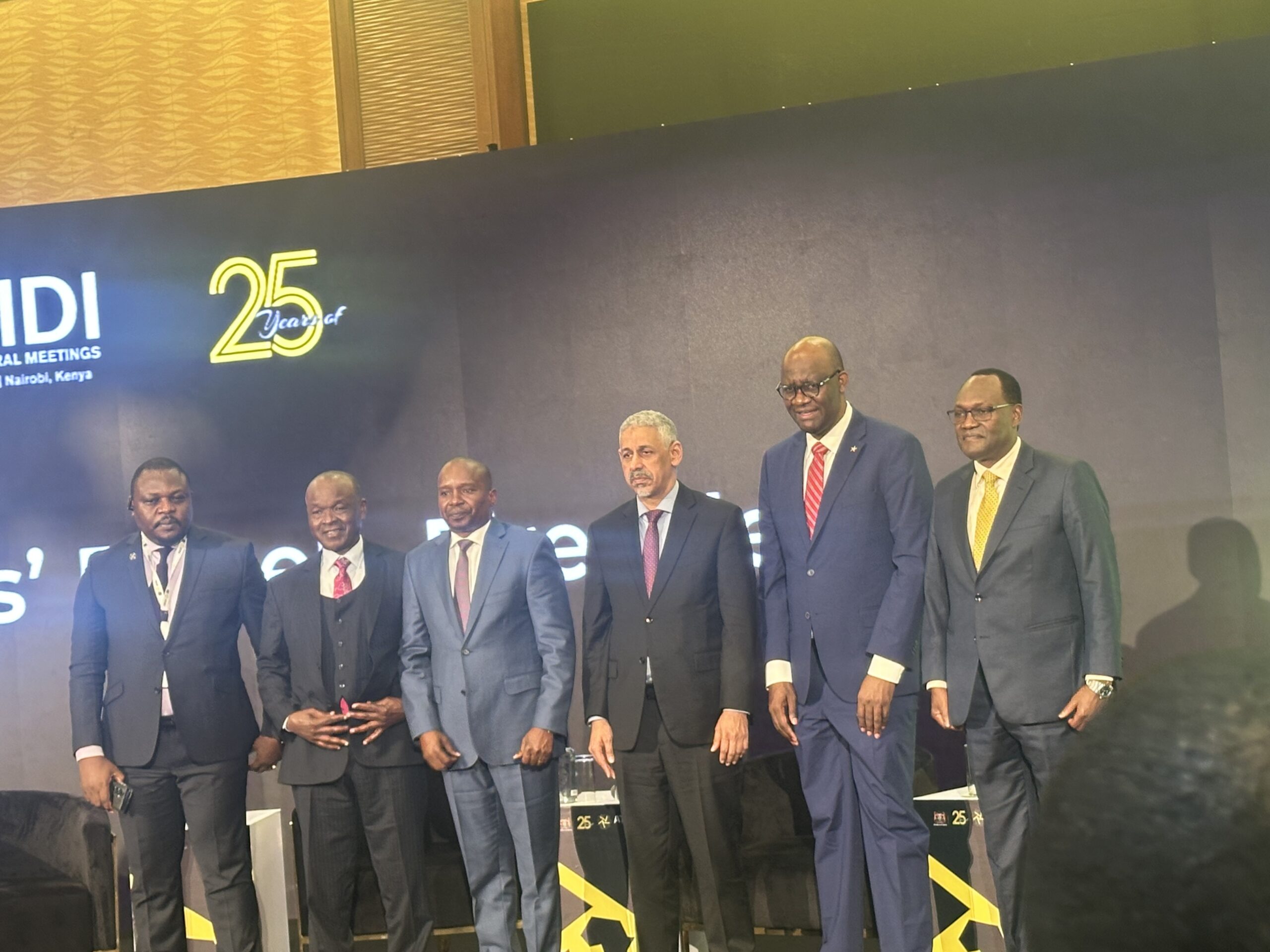
The CEO of ATIDI, Manuel Moses, took advantage of the 26th General Assembly of the institution, held in Nairobi, to open a new chapter in its history. Beyond the assessment of the first twenty-five years, he presented the outlines of ATIDI 2.0, a strategy aimed at making the agency a central player in the new African financial architecture.
His message is clear: African solutions are now mature enough to meet the financing needs of the continent. Founded in 2001 by seven member states, ATIDI now brings together 24 member states and 14 institutional shareholders, with the arrival this year of the German public bank KfW Development Bank, which he sees as a symbol of the growing confidence of international investors in the institution.
To support this ambition, Manuel Moses highlighted the financial performance of 2025. In an international context still marked by uncertainties, ATIDI’s total exposure reached $9.2 billion, up from $8.9 billion the previous year. Net profit increased by 20% to $71.4 million, assets exceeded $1.06 billion (+20%), and equity stood at $883 million, up 12%. These results, according to him, confirm the agency’s ability to support more structuring projects on the continent.
The CEO also emphasized the constant expansion of ATIDI’s range of interventions. Beyond guarantees against political and credit risks, the institution now supports energy transition, intra-African trade, SME financing, and develops new instruments, including in Islamic finance. He notably mentioned the Regional Liquidity Support Facility (RLSF) for renewable energy projects, coverage of the Lake Turkana wind farm, the Regional Customs Transit Guarantee Scheme to facilitate regional trade, and the PoRSA mechanism to strengthen financing for small and medium enterprises.
For Manuel Moses, this evolution explains the international recognition that ATIDI now enjoys. The institution was mentioned by Kenyan President William Ruto, supported by the French President, the German Chancellor, and the President of the African Development Bank, Sidi Ould Tah. Above all, the final communiqué of the G7 called for strengthening ATIDI as a risk-sharing mechanism capable of mobilizing more private capital in Africa. This recognition, according to him, comes with increased responsibility to meet the continent’s investment needs.
This ambition now involves a change in financial scale. Manuel Moses recalled that ATIDI is committed to a substantial increase in its capital, with the goal of raising its equity to $2 billion, up from the current $883 million. Several shareholders have already announced their contribution to this effort. Kenya will increase its participation from $25 to $65 million. The African Development Bank confirmed an investment of $125 million. Côte d’Ivoire committed to providing $50 million, while KfW Development Bank joined the institution’s capital with a subscription of $32 million. For the CEO, these commitments demonstrate the trust placed in ATIDI and will give it the means to support more structuring projects as part of the continent’s economic transformation.
“The best is still to come,” concluded Manuel Moses, asserting that the next quarter century of ATIDI will be that of a more powerful institution, better capitalized, and called upon to play a decisive role in financing African development.

