



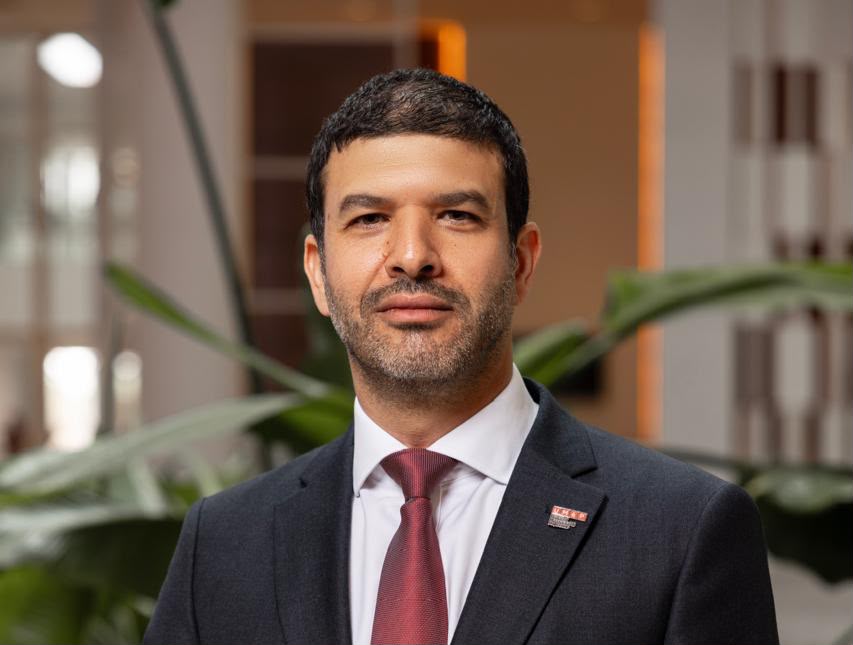
“Africa must produce its own science to conquer its technological sovereignty”
In a context where Africa is accelerating its investments in infrastructure, but remains heavily dependent on technologies and knowledge produced abroad, Mohammed VI Polytechnic University aims to establish a new development model based on research, innovation, and entrepreneurship. In this interview with Financial Afrik, its president, Hicham El Habti, discusses the university’s ambition to build African scientific sovereignty, the challenges of artificial intelligence, the valorization of research, and the levers to transform knowledge into a driver of competitiveness and economic transformation for the continent.
Africa is investing heavily in infrastructure, but remains technologically and scientifically dependent. How does UM6P intend to concretely contribute to reducing this dependence and building a true continental scientific sovereignty?
Scientific sovereignty is based on three complementary dimensions. The first concerns research and computing infrastructures. In this regard, UM6P has Toubkal, the most powerful supercomputer in Africa, and has recently inaugurated the CoreLabs, a high-level multidisciplinary scientific platform that allows researchers to locally perform analyses that were previously done abroad due to lack of suitable equipment. The second dimension is the scientific capabilities themselves, being able to design one’s own research protocols, develop methodologies, and produce original knowledge, rather than reproducing approaches developed elsewhere. Finally, the third dimension is the scientific agenda. Sovereignty implies the ability to define research priorities based on the needs and realities of the African continent, rather than exclusively following agendas set by others. This vision underpins UM6P’s action: to contribute to strengthening the scientific and technological sovereignty of Morocco and, more broadly, Africa. The strategic partnership between UNESCO, the OCP Foundation, and UM6P, endowed with over 6 million dollars for the period 2025-2028, is aligned with this ambition. Beyond funding university programs, it aims to enhance African capacities for knowledge production in five strategic areas: artificial intelligence, higher education with Campus Africa, African history, heritage, and ecosystem restoration.
UM6P is often cited as a hybrid model between university, research center, and development actor. What is its economic model today and to what extent is it replicable in other African countries?
UM6P’s model is based on a principle that can be described as patient capital, similar to what enabled the emergence of “land-grant universities” in the United States in the 19th century: long-term structural financing, backed by a leading economic actor, which frees the institution from the short-term cycle of annual funding. Furthermore, it is observed worldwide that the most influential universities have become much more than places for knowledge transmission. They structure innovation ecosystems, attract investments, incubate companies, and directly contribute to industrial policies.
UM6P follows this logic by combining teaching, fundamental research, innovation, entrepreneurship, venture capital, and territorial development, notably through initiatives like InnovX, UM6P Ventures, or StartGate, the university’s Startup campus.
This approach breaks away from the traditional university model, often dependent on public funding and relatively disconnected from the economic fabric.
This model is not intended to be replicated identically, but it represents a transferable principle, provided that each national context identifies a partner capable of offering this patient horizon.
As artificial intelligence reshapes global value chains, what strategy is UM6P adopting to position Africa not just as a consumer but as a producer of AI solutions tailored to its realities?
After raw materials, then infrastructure, the next global competition revolves around data, computing power, AI models, and talents capable of developing them. Today, major AI models are almost exclusively designed in the United States or China, based on data, languages, and cultural references that rarely reflect African realities. Yet, Africa represents the largest youth population in the world and generates rapidly growing data volumes. With AI Movement, the first UNESCO Category II center dedicated to artificial intelligence in Africa, and the initiatives around an African AI governance, including the Rabat Consensus on Artificial Intelligence in June 2024, UM6P aims to foster African reflection on the uses, governance, and production surrounding this AI technology revolution. Similarly, the Campus Africa program, developed with UNESCO and the OCP Foundation as part of the aforementioned tripartite partnership, seeks to structure researcher and knowledge circulation on a continental scale to reduce the fragmentation of African scientific ecosystems.
How does UM6P structure its partnerships with major industrial and financial groups to transform academic research into industrializable projects that create value in Africa?
In a value chain, an institution can either be an executor of what others have designed, or rather a position that allows it to conceive, patent, and industrialize locally. The relationship between UM6P and the private sector illustrates this second path. The knowledge produced by university researchers directly feeds into a new industrial strategic curve, which requires effective transfer. To make this logic systemic, UM6P encourages its researchers to valorize their intellectual property, develops scientific incubators close to laboratories, and invests in cutting-edge infrastructures like CoreLabs, a multidisciplinary scientific platform that brings together high-tech equipment in imaging and material characterization, biosciences, and analytical chemistry. Open to researchers, industry, and academic partners, it enables the entire experimental cycle to be carried out locally – from observation to result validation – with equipment that was previously rarely accessible in Africa.
The goal is twofold: to reduce the continent’s dependence on foreign laboratories for advanced analyses, while accelerating the transition from scientific discovery to industrial innovation. Our DNA is impact. And we are convinced that science matters not only for what it publishes but also for what it transforms in people’s lives. It is an ambition of upgrading, embraced as such, and built patiently with our partners.
The continent continues to face a significant brain drain. What concrete policies is UM6P implementing to retain, attract, or bring back African talents trained internationally?
Each year, Africa produces more engineers and researchers, but continues to lose a significant portion of its talents to major global scientific hubs. Long seen from the perspective of “brain drain,” several studies show that the issue no longer lies solely in the return of skills, but in their ability to remain connected to the continent’s innovation ecosystems. This is also the approach favored by UM6P. Beyond its partnerships with MIT, Columbia, EPFL, or HEC Paris, the university is deploying an internationalization strategy with its Global Hubs established in France, Canada, and the United States. These hubs are designed as intermediation platforms between the world’s most successful innovation ecosystems and African development priorities. They facilitate collaborative research, technology transfer, access to international funding, mobility of researchers and entrepreneurs, as well as connections with venture capital networks and scientific diasporas. In parallel, UM6P Associates aims to bring together Moroccan researchers, entrepreneurs, experts from the diaspora, and international partners sharing a common ambition for Africa’s development.
By 2030, what concrete indicator will show that UM6P has succeeded in its mission beyond Morocco, with a measurable impact on African economy and innovation?
By 2030, the true measure of UM6P’s success will be less about its position in international rankings, and more about the concrete impact it has generated on African economies and societies. This is the essence of our Vision 2030, a bottom-up approach collectively built by all members of our community to make impact the main evaluation criterion of our action. It is based on three complementary ambitions: producing research that generates scientific advancements, intellectual property, and practical solutions for the continent; educating graduates with the technical, human, and leadership skills necessary to transform their communities; and building Africa’s largest entrepreneurial ecosystem to convert knowledge into socio-economic value.
If, by 2030, our research leads to technologies adopted by African industries, if our graduates hold leadership positions in the public and private sectors, if our entrepreneurial ecosystem fosters high-impact companies, and if the intellectual property produced at UM6P contributes to addressing Africa’s major challenges, then we can consider that we have succeeded. Our ambition is not just to build a world-class university; it is to demonstrate that an African university can become a driver of scientific sovereignty, innovation, and economic transformation for the entire continent.

