



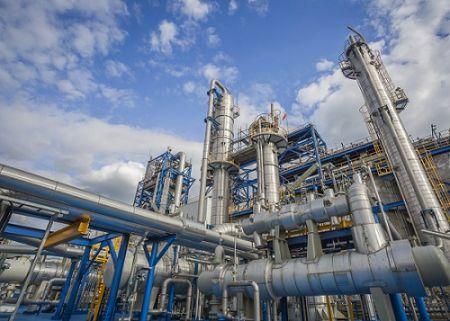
With an estimated investment of $1.1 billion, Zambia launched construction work on an oil refinery in Ndola on April 10, the main industrial center of the Copperbelt province, near the border with the Democratic Republic of Congo. Through this structuring project, the authorities intend to reduce their dependence on imports and ensure, by 2028, full coverage of the national demand for petroleum products.
The project is led by the Zambia Petrochemical Energy Company (ZPEC), a joint venture between the Chinese group Fujian Xiang Xin Corporation and the Industrial Development Corporation (IDC), the operational arm of the state in industrial investments. This initiative is part of a broader strategy to secure energy supply, in a context where the country still relies entirely on imports of refined fuels.
According to Energy Minister Makozo Chikote, the future refinery will have a processing capacity of 3 million tons per year, or about 60,000 barrels per day. This level of production should meet all domestic needs, while also providing leeway for potential exports to regional markets.
The stakes are high as the country’s energy bill remains high. In 2024, Zambia imported nearly $2.11 billion worth of refined petroleum products, mainly from Singapore, Tanzania, and the United Arab Emirates. The future industrial complex will also integrate high value-added production units, particularly for liquefied petroleum gas (LPG), bitumen, and lubricants, supporting the mining and industrial sectors.
On a socio-economic level, the project is expected to generate more than 2,200 jobs during the construction phase, and approximately 600 direct jobs and over 2,000 indirect jobs in the long term. The authorities also emphasize the need to strengthen skills transfer and local training to develop national expertise in petrochemical professions.
On a continental scale, this initiative is part of a dynamic to strengthen refining capacity in Africa. While Nigeria remains at the forefront with the Dangote refinery in Lekki (650,000 barrels per day), other countries such as Algeria, Libya, and South Africa also have significant infrastructure. In this landscape, Zambia now aims to position itself as a regional player capable of securing its domestic market while opening up to exports.

