



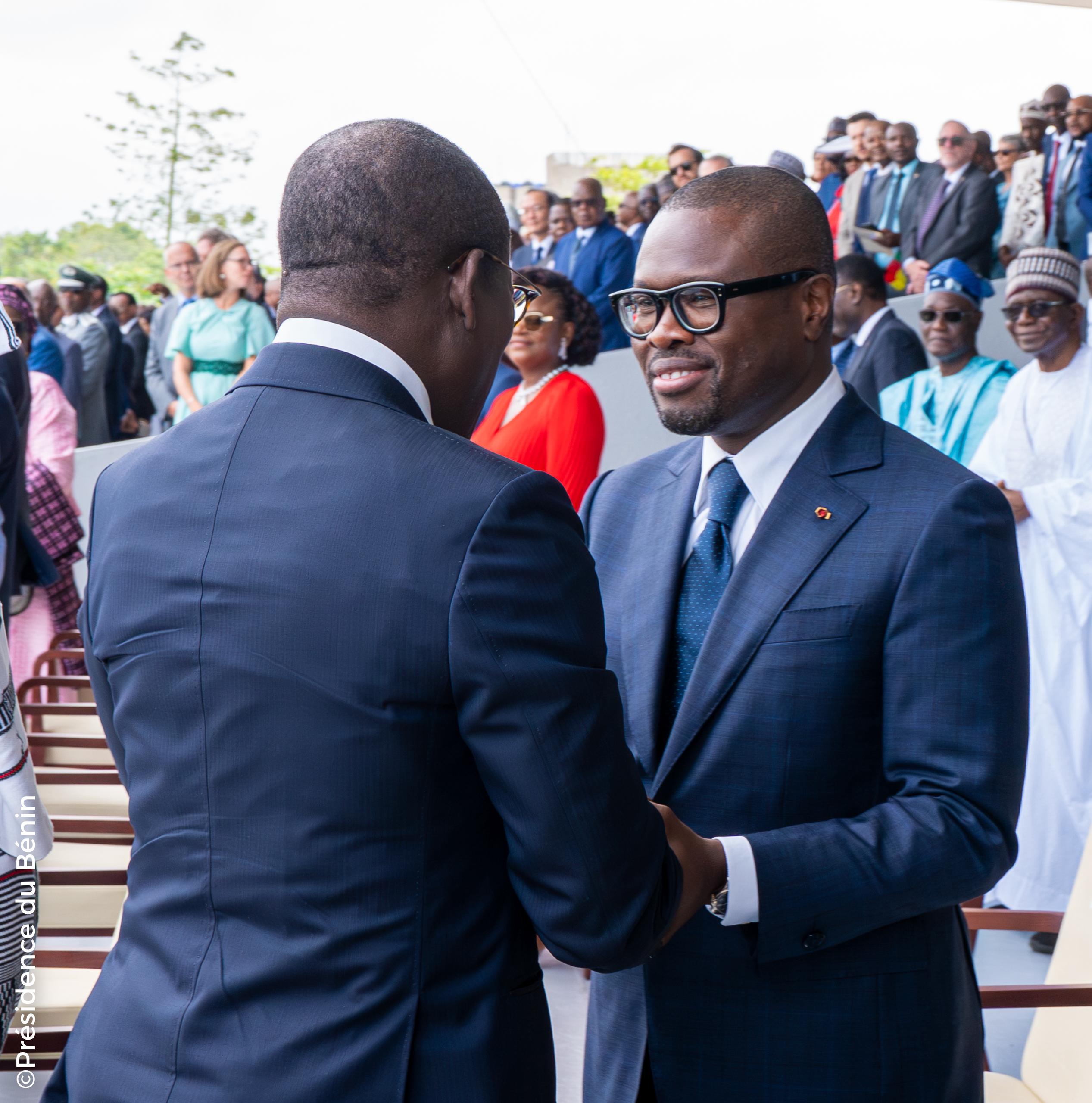
The day after the announcement of the major trends by the Autonomous National Electoral Commission (CENA), Romuald Wadagni delivered his first statement as elected president on Tuesday, April 14, marked by a tone that was both measured and unifying.
Describing himself as “humble” in the face of the election results, the future successor of Patrice Talon praised the commitment of voters, both in Benin and in the diaspora, as well as the role of the electoral institutions whose professionalism he commended. He also acknowledged the gesture of his opponent, Paul Hounkpe, who congratulated him even before the official announcement of the results, seeing it as a sign of democratic maturity.
In a speech focused on national cohesion, Wadagni interpreted the extent of his victory as “a reflection of a need for national unity” in an uncertain international context. He emphasized the need to transform this electoral support into a “national consensus”, promising to take it into account in the exercise of his future duties.
The elected president thus follows a logic of continuity, stating his intention to build on the “solid foundations” laid by his predecessor. His ambition: to continue the transformation of the country to build “a modern Benin guaranteeing well-being for all its citizens”.
According to the provisional results communicated by CENA, Romuald Wadagni, Minister of Finance since 2016, was elected with 94.05% of the vote, against 5.95% for Paul Hounkpe. The turnout rate was 58.75%, confirming significant voter mobilization for this decisive election.

