



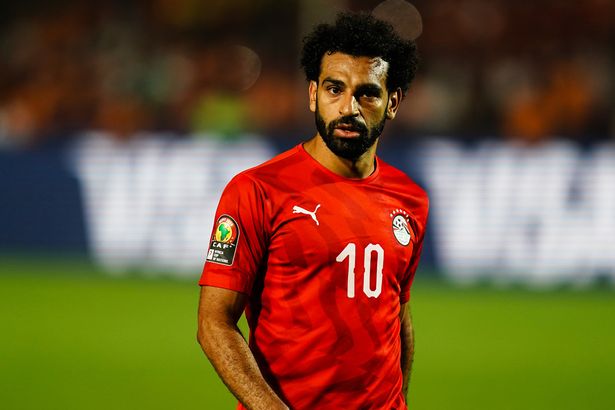
On the field, the match seems balanced between the 27th (Australia) and the 29th (Egypt) in the FIFA rankings. In national accounts, it is much less so. In terms of major aggregates, Australia operates in a different league than Egypt. The numbers.
The World Bank shows, for Canberra, a gross domestic product of 1,800 billion dollars compared to 365.25 billion for Cairo. In other words, the Australian economy weighs nearly five times that of Egypt, even though the continent-country has only about 27.6 million inhabitants, compared to 118.4 million for the most populous country in the Arab world.
The contrast appears much clearer when wealth is measured per capita. GDP per capita reaches $65,129.7 in Australia, compared to $3,085.8 in Egypt. In other words, an Australian has, on average, a level of production per capita more than twenty times higher than that of an Egyptian. This picture alone summarizes the development gap between an advanced economy, driven by services, raw materials, and high productivity, and an emerging country driven by a huge domestic market but still hindered by investment needs, monetary tensions, and fragile social balances.
However, recent dynamics tell a less unbalanced story. Growth stands at 1.4% for Australia, compared to 4.4% for Egypt according to the latest values highlighted by the World Bank. Egypt is growing faster, a sign of real catch-up potential. But this acceleration comes at a price: inflation remains much higher, at 14.1%, while Australia hovers around 2.9%. The same logic applies to the labor market, with unemployment at 6.8% in Egypt compared to 4.1% in Australia. On one side, a mature economy, slower but more stable; and on the other, a more nervous, younger economy, but also more exposed to price and financing shocks.
In essence, this eighth match pits two almost opposite economic realities against each other: Australia has financial size, wealth per capita, and macroeconomic stability; Egypt has the demographic mass and a higher growth rate, but still needs to translate this momentum into broader and more sustainable prosperity.
Before kick-off, the numbers give a clear advantage to the Socceroos over the Pharaohs in Excel spreadsheets. The question remains whether, as is often the case in football, the field will agree to contradict the statistics.

