



NATION BRANDING AND SOFT POWER: WHY AFRICAN COUNTRIES MUST TAKE CONTROL OF THEIR NARRATIVE
In the era of the attention economy, a country’s reputation has become a strategic asset as valuable as its natural resources.
STRATEGIC OPTIMISM
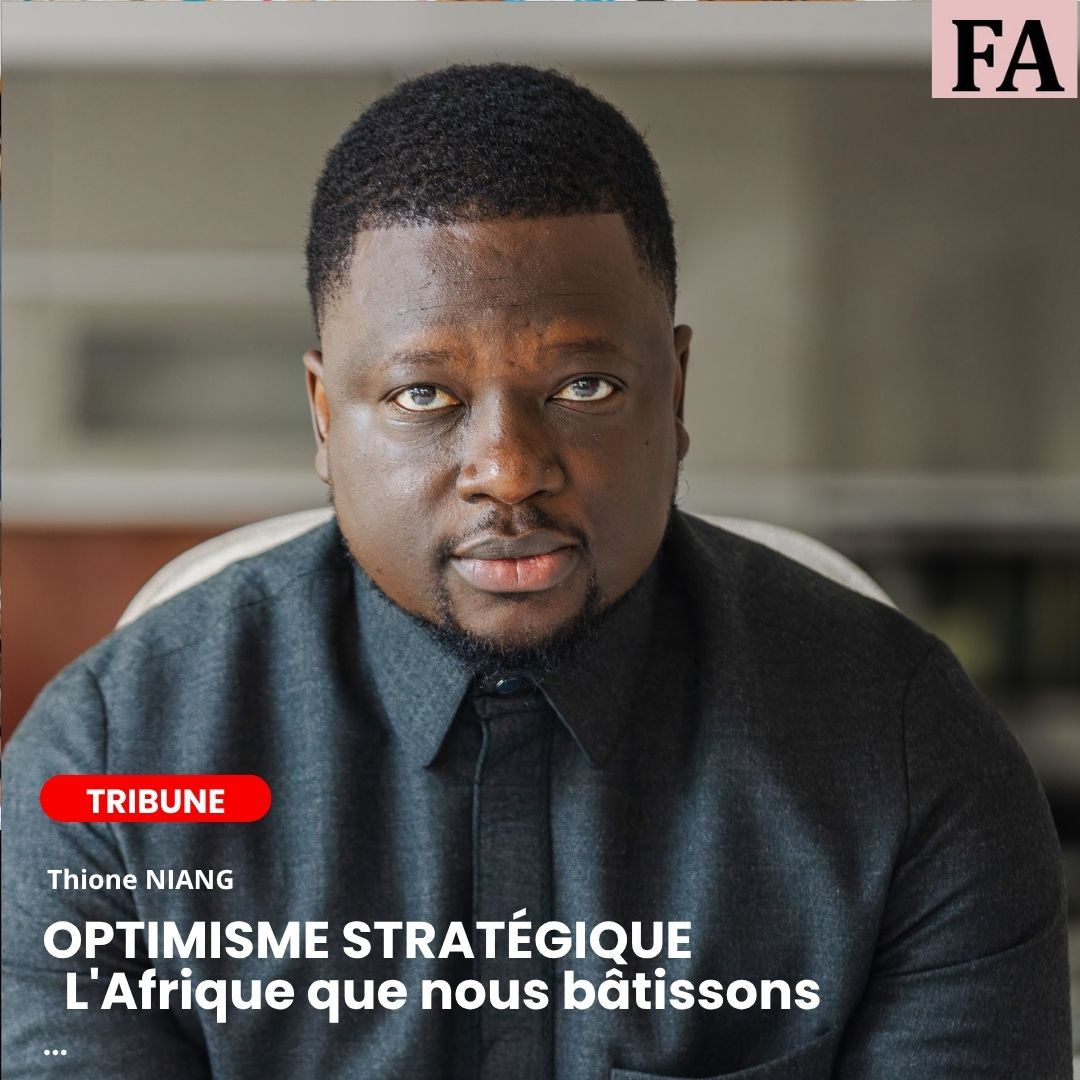
The Africa we are building – By Thione Niang
“Thinking Africa. Inspiring action. Building the future.”
Africa possesses the greatest natural wealth on the planet, the youngest population in the world, and exceptional economic potential. Yet, despite these undeniable assets, many of our countries continue to be defined by narratives constructed elsewhere. For decades, we have exported our raw materials while letting others shape our image. In a world where perception influences decisions as much as economic indicators, this reality is a true hindrance to our development.
The next major project of African transformation lies not only in infrastructure, mining, energy, or technology. It also lies in our ability to control our image, tell our own story, and influence the world through our identity. This is the essence of Soft Power, the ability of nations to attract, convince, and inspire through their culture, heritage, values, diplomacy, innovation, education, sports, artists, and entrepreneurs.
Today, reputation has become a currency. A positive image attracts investors, reassures partners, stimulates tourism, and attracts talent. A country’s brand is now a true economic lever. This is precisely the goal of Nation Branding, which is not about producing a simple communication campaign, but about building a strong, coherent, and credible national identity capable of enhancing a state’s influence and competitiveness on the international stage.
Every nation tells a story. The only question is who tells ours. If we do not do it ourselves, others will do it for us, often focusing only on our crises and difficulties, while ignoring our successes, creativity, youth, and remarkable resilience.
Several African countries have understood this and have made their image a strategic advantage. The case of Rwanda is telling. With its “Visit Rwanda” campaign launched in 2018 and supported by sponsorship partnerships with major clubs like Arsenal, Paris Saint-Germain, or Bayern Munich, the country has transformed its international perception. The results are measurable: tourist revenues increased from $438 million in 2017 to $647 million in 2024, and tourism has become the country’s top source of foreign currency, accounting for nearly 10% of GDP and supporting around 386,000 jobs. An image, patiently built, has translated into revenue, jobs, and investments. Senegal, on the other hand, relies on its stability, democratic tradition, cultural influence, and “Teranga” – the legendary hospitality elevated to a national value – all assets that it must now fully convert into economic and diplomatic attractiveness. Benin, finally, demonstrates that a historical and cultural heritage, enhanced by its museums, sites, and festivals, can become a true engine of development.
Guinea is also writing a new chapter in its history, and I have witnessed it directly. Alongside Minister Djiba Diakité, I participated for three years in the reflection and implementation of a Nation Branding strategy. I remember the beginnings of this work: convincing some international partners to visit Guinea was often a challenge. Perceptions were narrow and did not reflect the country’s real potential or ambitions.
Today, the dynamics are different. Planes arrive filled with visitors, hotels are fully booked, and investors from all over the world come to explore opportunities in a rapidly transforming economy. This evolution is based, of course, on reforms, structuring projects, and a clear political vision. But it also relies on one essential thing: the ability to change the narrative. Because when the narrative changes, perception changes – and investment follows.
However, a real tension must be named. Nation Branding is not a veneer. An image that surpasses reality never lasts: investors verify, partners compare, and a narrative not backed by concrete results turns against those who carry it. The true strength of a national brand lies not in communication, but in the coherence between what a country says about itself and what it actually achieves. The narrative is only valuable if it tells of a transformation taking place.
That is why this responsibility cannot rest solely on governments. Nation Branding is everyone’s business. Every entrepreneur who exports a local product, every artist who performs internationally, every athlete who represents the national colors, every student abroad, every journalist, every influencer, every member of the diaspora – every citizen becomes an ambassador for their country.
In an age where social networks give everyone a global audience, how we talk about our countries directly influences how the world perceives them. It is legitimate to denounce difficulties; it is equally essential to highlight successes, innovations, entrepreneurial initiatives, artistic creations, and economic opportunities shaping today’s Africa.
The 21st century is the era of the competition of narratives. Nations are no longer just competing for markets or resources; they are competing for attention, influence, and trust. African countries can no longer let others define their identity for them.
Perhaps our greatest wealth is not only beneath our feet, but in our ability to inspire the world through our vision, creativity, and history. Nation Branding and Soft Power have become instruments of economic sovereignty, diplomacy, and development – a strategic investment to attract capital, develop tourism, stimulate exports, and strengthen confidence in our economies.
The time has come for every African to become the guardian of their country’s image. Because every publication, every business created, every innovation, and every story told contribute to building the brand of our nation.
And perhaps the greatest African revolution of tomorrow will not only be economic.
It will be narrative.
Because a people who control their narrative also control their destiny.

