



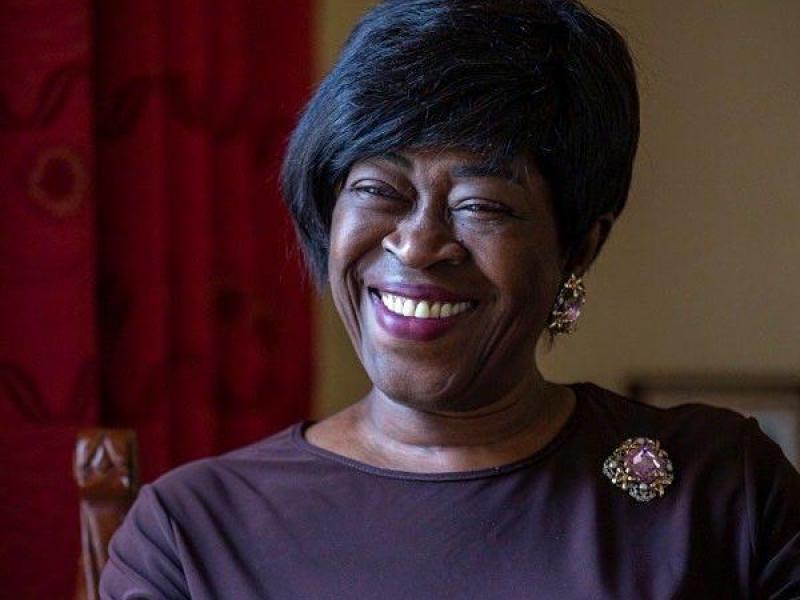
Juliana Amato Lumumba, candidate from the Democratic Republic of Congo for the position of Secretary-General of the International Organization of La Francophonie, believes that “Francophonie must become an economic power”. Read her article.
When we talk about Francophonie, we spontaneously think of a language, a shared history, a community of values. We often forget that it also constitutes one of the largest economic spaces in the world.
With nearly 390 million speakers, 20% of global merchandise trade, and over 16% of global GDP, Francophonie is already an economic reality. However, it does not yet act as such.
At a time when economic balances are shifting, trade tensions are increasing, and technological innovations are disrupting our development models, we can no longer be content to just look at this potential. We must transform it into collective power.
This ambition is all the more necessary as the center of gravity of Francophonie is shifting.
By 2050, nearly 90% of Francophones will live in Africa. This evolution is not just a demographic change, it shapes the economic future of our common space.
Across the continent, a new generation of entrepreneurs, innovators, and creators is emerging with solutions adapted to the major challenges of our time. Dynamic ecosystems are developing from Dakar to Abidjan, from Tunis to Kinshasa. Thousands of young companies are already inventing the Francophone economy of tomorrow.
Faced with this momentum, our responsibility is clear: to build more bridges, facilitate exchanges, accelerate the circulation of talents, and create a true Francophone market capable of creating value for all its members.
Our first wealth is our talents.
The strength of Francophonie lies above all in the women and men who bring it to life.
I think first of our diaspora. These millions of women and men who create businesses, invest, open markets, and connect our economies. Their contribution goes far beyond the financial transfers they make every year. They possess a unique understanding of the economic realities of the North and the South and are a formidable integration lever. I wish for them to be fully recognized as strategic actors in our economic development.
I also think of women entrepreneurs. In many Francophone countries, they lead activities that structure entire sectors of the economy. However, access to financing remains a major obstacle. Removing this barrier is not just a matter of equality, it is an economic imperative.
Finally, I think of our youth. Francophonie has never had so many young talents. It has never had such innovation potential. These young people have the ideas, energy, and audacity needed to transform our economies. Our responsibility is to give them the means to succeed.
Circulating talents to circulate opportunities.
Ideas have no borders. Talents should not have more either.
Yet, today, too many Francophone entrepreneurs, researchers, students, or creators face administrative obstacles that hinder their projects.
An integrated economic space requires better circulation of those who create value. That is why I advocate for the creation of an exchange program dedicated to entrepreneurs, innovators, and creators.
This measure would send a strong signal: that of a Francophonie that facilitates concrete exchanges and gradually transforms its economic ambition into reality.
Succeeding in the digital shift.
The third condition for our success is digital.
Artificial intelligence, data economy, and disruptive technologies are already reshaping economic power relations. Countries that will master these transformations will be the ones creating the jobs, companies, and innovations of tomorrow.
The Francophone space cannot remain a spectator.
We must strengthen cooperation between our innovation ecosystems, support research, assist our entrepreneurs, and massively train young people in future skills.
We must also ensure a prominent place for French in the digital world. Because the language issue is also an economic sovereignty issue. Producing content, developing tools, and designing technological solutions in French is a strategic challenge for our collective future.
Francophonie can no longer be satisfied with accompanying the world’s transformations. It must contribute to shaping them.
It has the talents, markets, creativity, and energy necessary to achieve this. It is now up to us to transform this potential into economic power.
This is the project I carry to build a Francophonie that creates more wealth, more opportunities, and more future for its citizens.

