



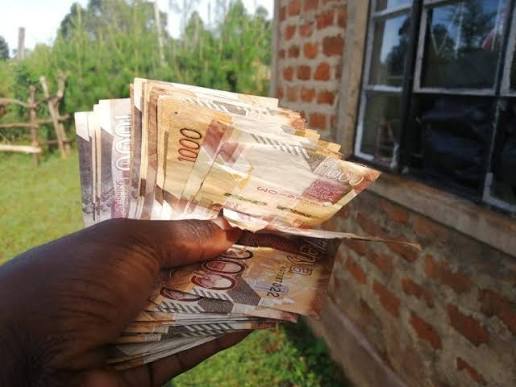
Kenya has reached a new milestone in the economy of family transfers. According to the 2025 Remittances Household Survey Report, published in mid-June 2026 by the Central Bank of Kenya (CBK), the National Bureau of Statistics (KNBS), and their partners, Kenyan households received 931.8 billion shillings between June 2024 and May 2025, a record level that confirms the growing importance of the diaspora in financing daily life. The United States remains by far the largest source of these flows, accounting for 43.5% of the total, ahead of Germany and Australia.
Beyond the amount, the report highlights the transformation of transfer channels. While banks retain the top spot in value, accounting for 43.7% of the amounts, mobile money is emerging as a significant pillar of the system with 33.2% of the flows. Especially when it comes to the channel used in the most recent transaction, mobile money takes the lead with 46.5%, ahead of banks (34.9%). The report explains this dominance by its strong penetration in both urban and rural areas, its real-time execution speed, and lower costs compared to other solutions.
This breakthrough of mobile money is not just a technical detail: it reshapes the very use of diaspora funds. The study shows that rural households make up the majority of beneficiaries, while 82.5% of recipients already have a mobile money account, compared to only 55.4% for bank accounts. In practice, the mobile phone becomes the main gateway for money coming from abroad, facilitating quick access to resources in areas where banking infrastructure is less dense. In a country where 42.3% of households see these transfers as additional income, and 22.3% as their main source of livelihood (official data), mobile money appears as the tool that turns the diaspora into immediate support for consumption.
The report also reveals a clear gender disparity in the use of these resources. Women are more likely to direct remittances towards food expenses and household goods (78.6%, compared to 66.7% for men), clothing, and household expenses. Men, on the other hand, more often allocate these funds to education (36.1%, compared to 27.2% for women), health expenses, and agriculture.
This contrast highlights that diaspora transfers not only support consumption but also reflect very different social and family choices.

