



Too vast to be ignored, too novel to be understood
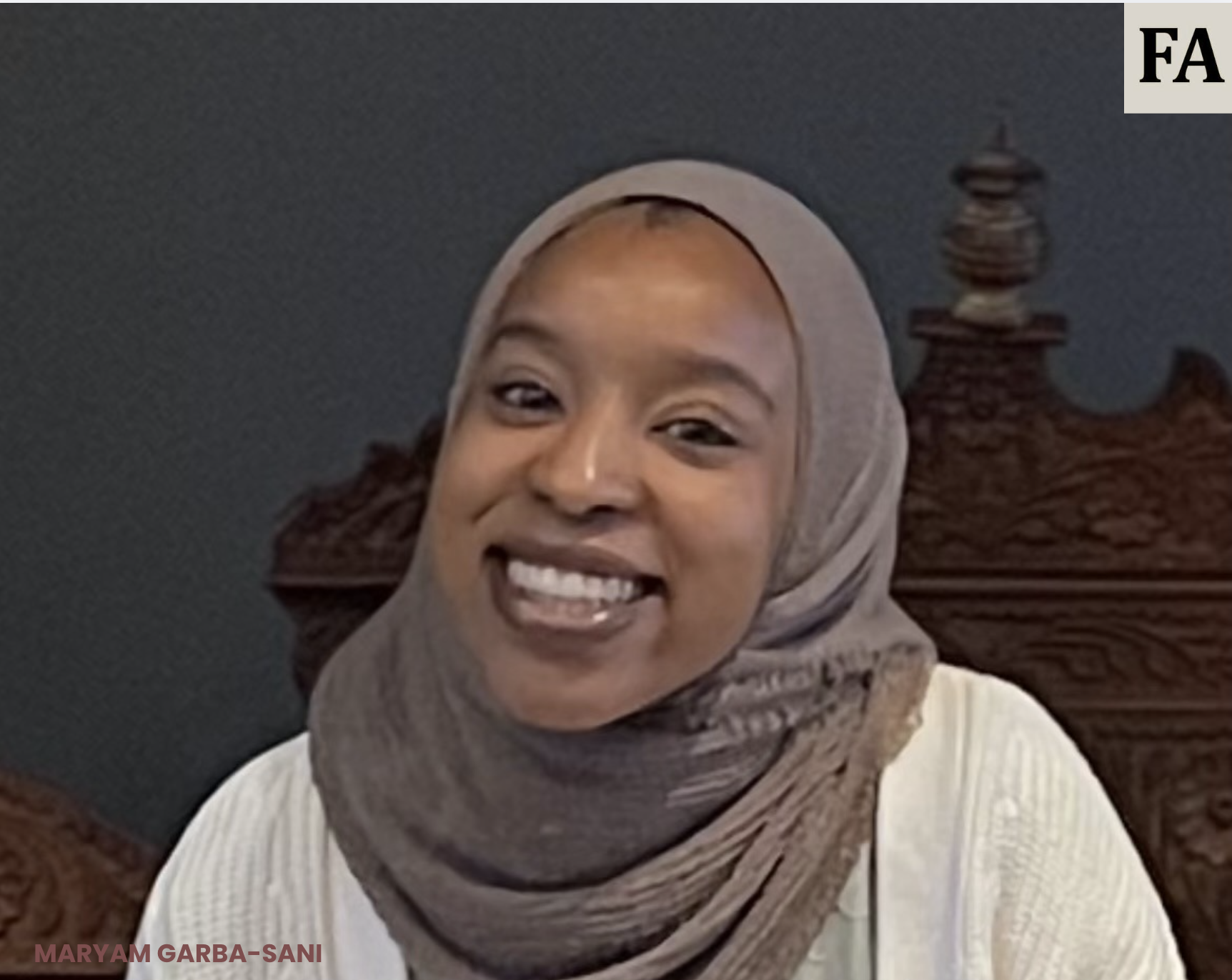
By Maryam Garba-Sani*
Simplicity, in the absence of complexity, prompts humans to complicate things. Let’s take the example of a mirror: used as a medium of exchange or for a specific purpose, it produces a different effect than when we simply look at ourselves. After checking our appearance, we start to question internally, wondering if we are truly real.
One of the themes that runs through this writing is rooted in this observation. Innovators are more interested in product innovation than process innovation. Some argue that standardized processes work better; they are less messy, more efficient, and generally operational. However, by insisting on standardization, one may overlook or stifle signals indicating that things are not working.
A healthy system requires its different components and actors to communicate effectively, while allowing each other the space to do their work (provided they do it well). If forced intervention becomes necessary to support the whole, it is already a sign of failure but it is also often a sign that, to preserve the value of what remains, things must change.
This brings me to the topic at hand: Sharia-compliant venture capital in Africa, at the intersection of conventional venture capital and Islamic principles. Liminal spaces are those places where unexpected beauty resides, forcing us to acknowledge and deal with more than one identity at a time. And this dynamic becomes even more complex when the identity order we prioritize does not match the one others choose to attribute to us.
While this remains true in this case, a Sharia-compliant fund is not a separate species. In many cases, it is a conventional venture capital fund with some variations to align with Islamic principles. These are often supervised by a Sharia advisor or committee appointed for this purpose. The fundamental mechanisms (equity base, risk sharing, long-term horizons) naturally align with Sharia principles. What changes are the contours—the fund infrastructure, investment criteria, instruments used, and exit strategies.
The premise remains the same, rooted in Pareto’s law, a small number of investments generate the vast majority of returns. The others barely break even or lose money. In general, the fundamental mechanisms of the venture capital model based on equity (backed by assets), risk sharing, and ethical entrepreneurship naturally make it a Sharia-compliant device. The licensing and regulatory requirements applicable to Sharia-compliant funds are also similar to those in place for conventional funds.
That being said, some modifications are necessary compared to the conventional structure to ensure Sharia compliance. The main ones are:
- Fund structure: using mudaraba, musharaka, wakala models
- Sector filters: a Sharia-compliant fund cannot invest in sectors considered non-compliant, such as gambling, tobacco, interest-based finance
- Absence of interest: this has an impact on the distribution waterfall for LPs, and on the fund’s strategy for GPs
- Absence of excessive uncertainty: contracts must be clear and transparent, detailing the rights and obligations of each party
- Absence of preferential treatment, although preferred shares are not yet the norm in the African context
- Fund contracts: documents must clearly state that the fund is established for Sharia-compliant purposes and that the structure and investments will be monitored accordingly
Addressing a technical subject (finance) at a time when attention is scarce is already risky. Add a philosophical dimension (Islamic jurisprudence) and you risk preaching in the desert. Wrap it all up in a sector losing momentum (venture capital) in an emerging market (Africa) and the effect could be the opposite. Just know that most people will seek to laugh at you, rather than laugh with you.
Nevertheless, I have decided to persist for three reasons:
