



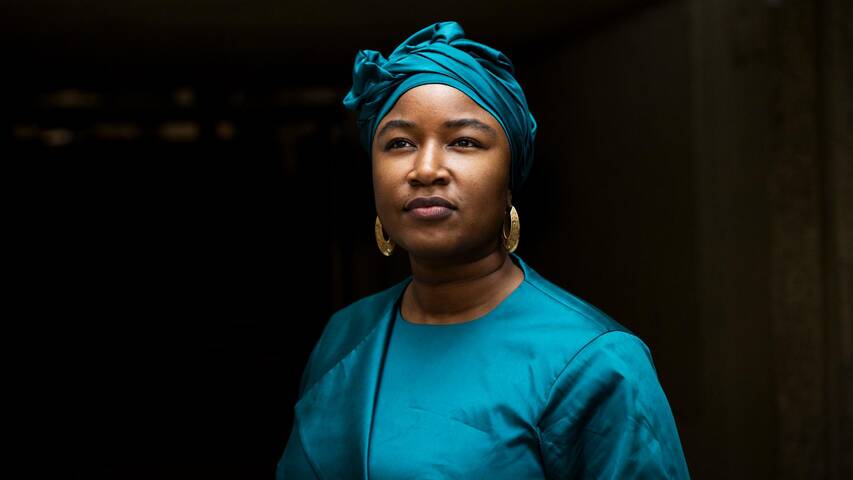
By Seynabou Dia Sall*, Founder & CEO, Global Mind Consulting, Strategic Advisory & Public Affairs. Africa – Europe – Middle East.
Africa is not only evaluated on its economic performance. It is equally judged on how these performances are perceived, interpreted, and translated into trust. This perception directly influences the cost of capital, investment decisions, institutional credibility, and ultimately, the maneuvering room of states.
Mastering its narrative is therefore not a luxury or an exercise in image. It is a major economic and strategic issue, at the heart of the competitiveness and sovereignty of the continent.
In my work with public decision-makers, financial institutions, and African leaders for over twenty years, I observe a constant: transformations exist, but they are often misread, misunderstood, or undervalued due to a lack of a structured and mastered economic narrative.
The narrative is not communication. A persistent misunderstanding still weakens the African approach to narrative: equating it with storytelling or branding. The narrative is not about telling a seductive story. It is about making real choices readable, making informed decisions, and a consistent trajectory over time.
Investors, rating agencies, and financial partners do not operate on emotion. They operate on coherence, predictability, and execution capability. The narrative is the framework within which these signals are understood—or ignored. It does not create economic reality; it conditions how this reality is evaluated, modeled, and financed.
An unstable narrative increases perceived uncertainty, raises the cost of capital, and shortens engagement horizons. Conversely, a readable narrative does not eliminate risk; it makes it calculable, and therefore fundable.
Even today, Africa largely suffers from a narrative constructed outside the continent, dominated by instability, legal insecurity, and institutional fragility. This narrative persists even as facts evolve, creating inertia that penalizes real performance.
This inertia has a clear cost: high risk premiums, imbalanced negotiations, more constrained access to financing, and chronic undervaluation of ongoing transformations. Reforms are underway, but their scope remains partially invisible due to a lack of a credible, consistent, and assumed economic narrative.
Yet, some African trajectories show a simple mechanism: the narrative becomes powerful when it extends from real and deliberate choices.
Rwanda did not start by improving its image. It first reformed its administration, clarified its regulatory framework, and strengthened its economic governance. The narrative came later as a translation of an assumed reality: efficiency, predictability, and execution capability.
Morocco offers another lesson. By assuming a clear economic positioning—industry, exports, regional platform—and embedding it over time, the country built a credible narrative because it was aligned with a readable strategic trajectory. Branding did not replace strategy; it made it intelligible.
Benin illustrates, on another level, how the narrative can become a full-fledged strategic lever. By structuring its country brand around a clear and consistent identity, it made nation branding a projection tool: affirming an identity, uniting a common narrative, and enhancing its attractiveness in a competitive international environment. When thought out at the institutional level and structured, the brand country becomes a strategic asset in the service of soft power, trust, and long-term investment.
These trajectories show that, regardless of the mobilized register or starting point, the narrative is effective only when it extends from clear and assumed choices.
It must be said plainly: narrative without reforms is a dead end. No image strategy compensates for unpredictable justice, regulatory instability, or hesitant governance. Investors do not penalize the absence of discourse; they penalize the inconsistency between announced decisions and their actual execution.
A credible narrative is based on a simple equation: visible reforms, measurable results, and consistency over time.
Mastering the narrative is not a matter of communication. It is a political and institutional responsibility. A state imposes its narrative when it decides clearly, executes consistently, and assumes its choices.
Where the decision is clear, the narrative prevails. Where it hesitates, the story fragments. In terms of narrative, ambiguity always costs more than silence.
This requirement applies to states, as well as public institutions, regulators, development banks, and African businesses. Those that align governance, transparency, reporting, and financial communication strengthen their credibility and facilitate access to capital. It is the same battle: to converge reforms, execution, and narrative so that African transformation is not only real but also readable, understood, and fully valued.
Some recent initiatives show that this collective dynamic is no longer theoretical. The unprecedented mobilization of resources by African financial instruments, supported by more sophisticated mechanisms and increased involvement of countries on the continent, marks a change in posture.
Here, the narrative ceases to be declarative. It becomes institutional, measurable, and operational. Economic sovereignty is not stated; it is organized.
Mastering the narrative must now be treated as a strategic asset, integrated into economic and institutional decisions. Firstly, strict alignment between initiated reforms, communication, and observable results is essential. Any discrepancy weakens credibility and raises the cost of trust.
Secondly, African decision-makers must master the codes of international economic discourse, based on comparable data, solid indicators, and explicit trajectories.
Finally, Africa would benefit from assuming more common positions on major economic and geostrategic issues. Shared positions transform the narrative into an instrument of negotiation, rather than just a reputation tool.
Not mastering its narrative means accepting higher financing costs, seeing its reforms misunderstood, and letting others determine the value of its trajectory.
Mastering the narrative is not about embellishing African reality. It is about ensuring that its real transformations are understood, recognized, and integrated into meaningful decisions.
As long as Africa does not treat its narrative as a strategic asset, it will continue to bear the cost—without capturing the value.
About Seynabou Dia Sall*
Seynabou Dia Sall is the founder of Global Mind Consulting. For over twenty years, she has been assisting African public and private decision-makers on strategy, institutional credibility, and economic positioning issues, at the intersection of reform, investment, and impact storytelling.

