



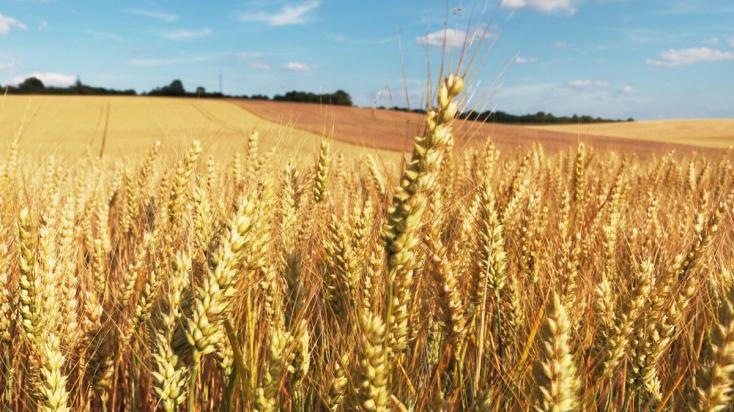
The Cameroonian government intends to implement, starting in January 2027, a three-year action plan to restructure the local wheat sector, with a total estimated amount of 30.9 billion CFA francs (approximately 53.8 million USD). The announcement was made following a workshop held on June 24, 2026 in Yaoundé. This meeting brought together stakeholders in the sector around the Minister of Agriculture and Rural Development (Minader), Gabriel Mbaïrobé.
According to these stakeholders, this restructuring plan is based on three pillars. Namely “the production of certified seeds, support for wheat producers, and the establishment of storage, processing, and marketing infrastructure”. For Minader and his counterparts on June 24, 2026, this new plan aims “to create a more complete chain, from seed to market, in a country still heavily dependent on imports to supply its flour mills and industries producing bread, pasta, and biscuits”.
Participants in the Yaoundé workshop estimate that, for its implementation, “this program will require the use of 4,500 hectares to produce approximately 9,000 tons of certified seeds”. Ultimately, the goal is to “support a commercial production estimated at 180,000 tons of wheat over the duration of the plan, which will be carried out in the regions of the Far North, North, Adamawa, West, and Northwest, identified as favorable areas for this crop”.
It is worth noting that this is not the first plan to improve wheat production in Cameroon. Therefore, the designers of the upcoming plan intend to capitalize on the achievements of the Wheat Production and Transformation Project in Cameroon. This plan, implemented by the Institute of Agricultural Research for Development (IRAD), cost the Cameroonian state 10 billion CFA francs (approximately 17.4 million USD).

