



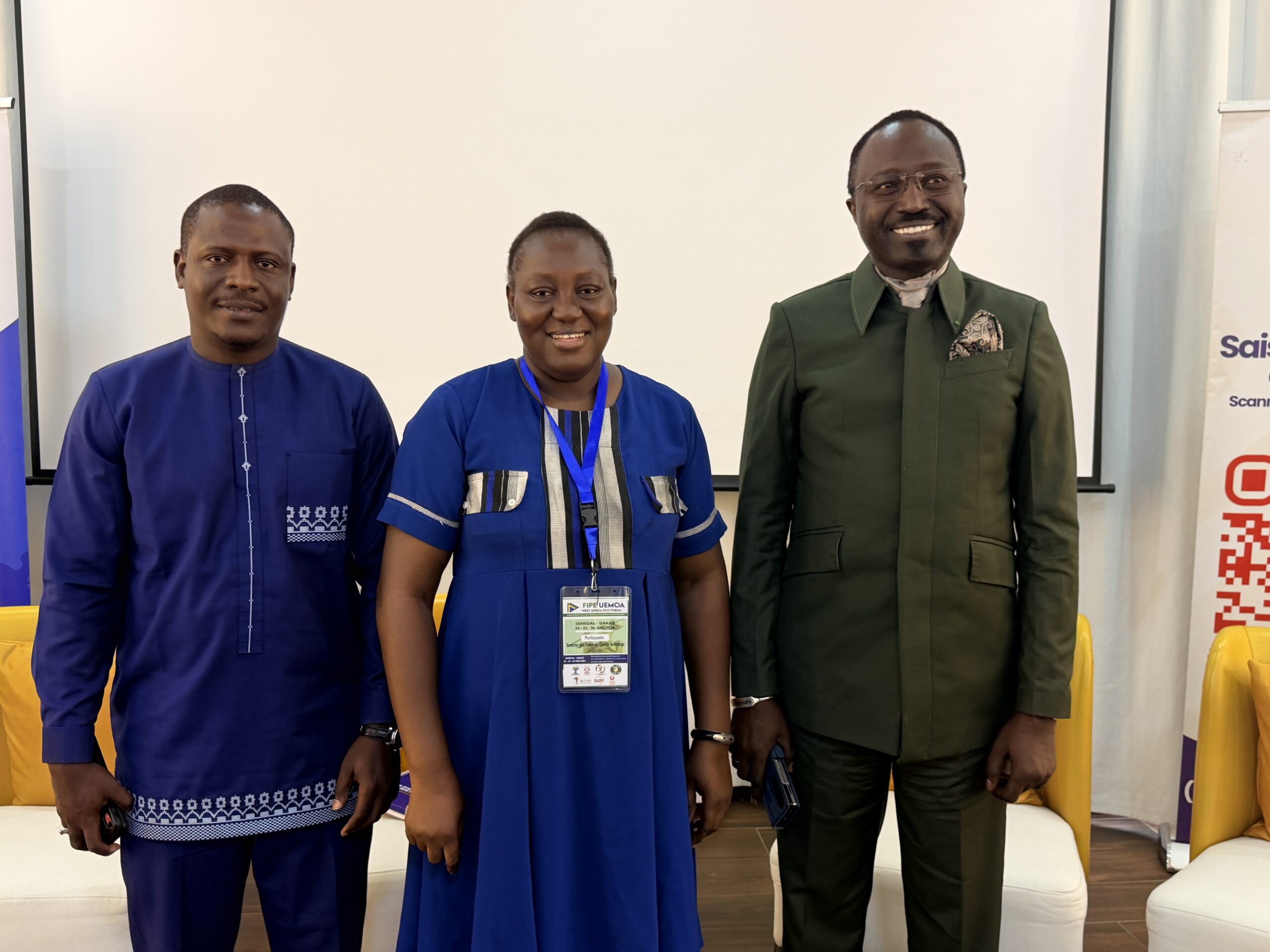
Issues related to intra-UEMOA trade and the African Continental Free Trade Area (AfCFTA), including regulatory harmonization and trade development, were central topics at the first International Forum of Economic Press of West Africa (FIPE-UEMOA), held from June 24 to 25, 2026 in Dakar, under the theme: “Innovating for the economic future of West Africa.”
Bringing together experts in international trade, regional economic integration, and trade negotiations, as well as representatives from civil society, this panel highlighted the necessary reforms to strengthen regional economic integration.
According to Momar Ndao, president of the Consumers Association of Senegal (ASCOSEN), several obstacles still hinder the development of intra-African trade, including logistical difficulties, administrative barriers, and transportation costs. He believes that logistics remains the main limiting factor for the competitiveness of African economies.
The president of ASCOSEN emphasized the need to adopt a consumer-centered approach. In his view, there can be no trade without demand. Integration policies must therefore take into account consumer interests, especially in terms of product quality, prices, and rights protection.
He also stressed the importance of expanding regional markets to stimulate demand and offer more choices to consumers. According to him, consumer organizations should be more involved in decision-making processes related to the AfCFTA.
Regarding market opening, Momar Ndao believes it is not about closing borders, but rather about enhancing the competitiveness of local producers. He advocates for harmonizing quality standards on an African scale, as well as providing increased support to national industries so they can compete on the continent.
Finally, he reminded that consumers are often price-driven. Therefore, the competitiveness of local products necessarily involves reducing production costs and improving productivity.
AfCFTA: an advanced yet incomplete integration
On the other hand, Mounir Alioune Kane, an expert in trade and negotiation, recalled that the AfCFTA is the result of a long integration process initiated since the Abuja Treaty of 1991. However, he believes that despite institutional advancements, its implementation remains largely unfinished.
According to him, African states managed to quickly conclude negotiations due to strong political will, but the practical conditions for application are not yet met. He specifically mentions the case of Senegal, which has not fully engaged in its commercial exchanges within the framework of the AfCFTA.
The expert also discusses the challenges faced by the Guided Trade Initiative, launched to test AfCFTA mechanisms before its full-scale deployment. After a first phase involving seven countries, the second stage has not really taken off.
He also draws attention to the competition risks for West African economies, stating that countries like Morocco, South Africa, or Egypt have more competitive productive capacities and could quickly gain significant market shares on the continent.
He recalls that fears expressed in the past regarding a possible accession of Morocco to ECOWAS are now reflected in the context of the AfCFTA.
A central issue: preparing the private sector
For Mounir Alioune Kane, the main challenge is no longer negotiating agreements, but preparing the private sector. With the AfCFTA now a reality, companies must structure themselves to take advantage of the opportunities offered by the continental market.
He also advocates for better coordination of positions within regional economic communities, especially UEMOA and ECOWAS, to strengthen African countries’ weight in trade negotiations.
In conclusion, he warns that countries that do not prepare for continental competition risk becoming more dependent on African imports, while seeing their trade deficits widen. For him, the central issue is now to make African companies competitive enough to benefit from the African single market, rather than just being subjected to it.

