



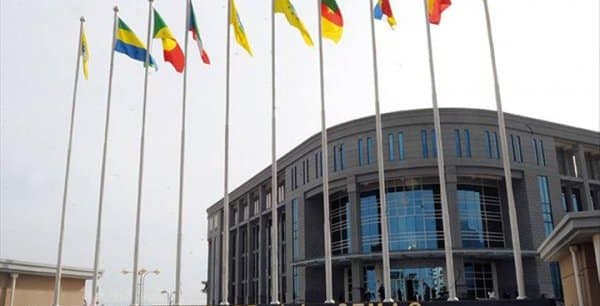
During a meeting held on July 17, 2026 in Brazzaville under the chairmanship of the Governor of the Bank of Central African States (BEAC), Yvon Sana Bangui, the Board of Directors of the Deposit Guarantee Fund for Central Africa (FOGADAC) reaffirmed its ambition to increase its intervention reserve to 1,000 billion CFA francs (approximately 1.7 billion USD) by 2036. This information was revealed in the press release issued at the end of the Brazzaville session.
The document specifies that “the intervention reserve now stands at 345.8 billion CFA francs (approximately 595 million USD), steadily increasing.” This, with an investment portfolio of 207 billion CFA francs (approximately 356 million USD) generating 8.38 billion CFA francs (approximately 14.5 million USD) in revenue in the first half of 2026. The Board of Directors sees this as “confirmation of the relevance of its financial strategy.”
This increase in power comes after a long period of institutional inertia. Created by regulation of the Central African Banking Commission (COBAC) in 2009, FOGADAC remained inactive for sixteen years due to the lack of adoption of the necessary implementing texts for its operation. It was not until the first meeting of its Board of Directors, held on June 24, 2025 in Bangui, and the session of its board of directors on October 6, 2025 in Malabo, that its effective operationalization was confirmed.
On the ground, the Fund has already demonstrated its usefulness. It intervened to compensate clients of the Gabon Housing Bank in 2019, and then those of the Gabonese Development Bank, which has been in liquidation since the end of 2022, up to a ceiling of 5 million CFA francs per eligible person. These precedents illustrate the role of the Fund, which covers the six member states of the Economic and Monetary Community of Central Africa (CEMAC) against the risk of bank failure, relying on contributions from credit institutions themselves.
To support this trajectory, the Board of Directors has also strengthened its internal governance. It approved the creation of an Investment Committee responsible for overseeing the reserve investment policy, as well as a new signature delegation mechanism on the Fund’s accounts, aimed at further securing financial operations.
However, at this stage, it is not yet possible to affirm whether this decade-long trajectory will withstand the banking tensions that the sub-region regularly faces, between doubtful debts and forced recapitalizations. The credibility of FOGADAC will therefore be measured less by its numerical ambitions than by its ability to intervene quickly in the event of the next banking failure.

