



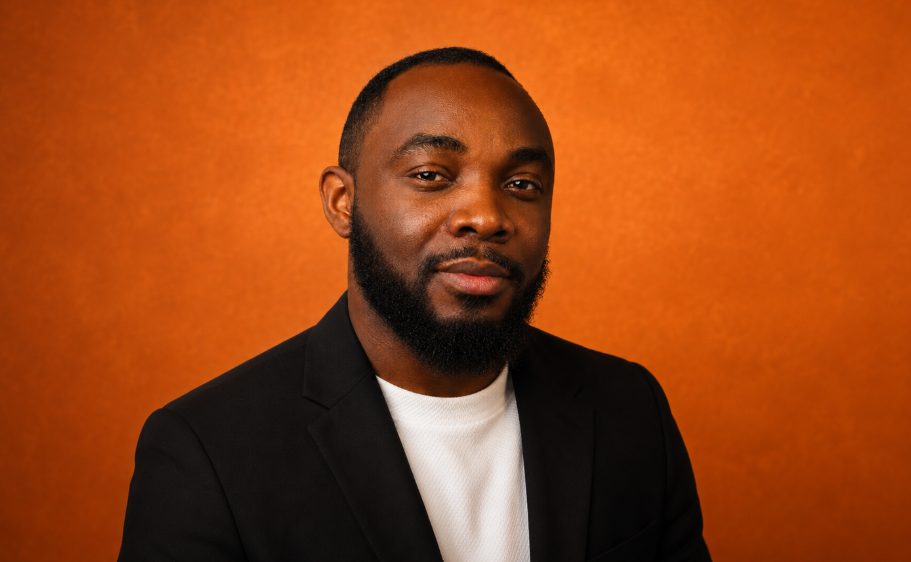
“At a time when Africa is seeking its place in global governance of artificial intelligence, the question of digital sovereignty cannot be limited to political declarations or major international summits. For Kuate Joël Parfait, engineer, entrepreneur, and author, this sovereignty is first and foremost played out on the ground, in SMEs, local skills, and practical uses of technology. Contrary to purely institutional approaches, this article defends a pragmatic vision: it is through training, productive investment, and the adoption of AI by small businesses that Africa can become a full-fledged player in the digital world.”
By Kuate Joël Parfait*
In a sewing workshop in Douala, a manager with twelve employees uses artificial intelligence to write her invoices and manage her cash flow. She may not phrase it this way, but she has just taken a more concrete act of digital sovereignty than many official declarations.
This is where I place the debate.
In recent weeks, two global coalitions have formed around the governance of artificial intelligence, one led from Beijing, the other from Washington. Ten African countries have joined the first. None, to date, are part of the second. This positioning matters. But it is not enough.
A charter signed in Shanghai does not change the reality of an SME that lacks the skills, tools, and confidence to use artificial intelligence in its daily operations. Sovereignty negotiated in summits needs to be built in Douala, Cotonou, Abidjan. Without the latter, the former remains a diplomatic exercise.
I have observed this for seven years, training over six hundred organizations between Europe and French-speaking Africa. The real challenge is not in the summits. It lies in three blind spots, often mentioned separately and almost never addressed together.
Train, don’t just equip
There is much talk about infrastructure: undersea cables, data centers, sovereign computing. All of this is necessary. But a data center without local skills to operate it is an empty shell.
By 2030, 230 million jobs in sub-Saharan Africa will require digital skills. This implies training or retraining nearly 650 million people, according to the International Finance Corporation. At the same time, 12 million young Africans enter the labor market each year, with around 3 million formal jobs created, according to projections by the Brookings Institution.
The gap does not only affect young graduates. It also affects SME leaders in their forties or fifties who have never had access to AI training tailored to their sector. Yet, they are the ones who decide, every day, whether to adopt a tool or leave it aside. The training that makes a difference is not from top schools. It is the one that reaches the merchant, the artisan, the workshop manager.
The diaspora: a capital, not just a heart
The diaspora is often talked about in terms of pride or nostalgia. Rarely in terms of investment capital.
Remittances from the diaspora to Africa now exceed $100 billion annually, according to the World Bank. This amount surpasses official development assistance and competes with foreign direct investments to the continent. It is the continent’s largest external financial flow, and the least oriented towards productive investment.
A tiny fraction of this sum currently funds digital equipment or AI training for the family SMEs that this diaspora already supports, often on a daily basis. The potential is immense. The real challenge is to transform a gesture of family solidarity into a structured technological investment lever: diaspora bonds, dedicated funds, local support.
AI in the fabric, not just in discourse
According to the African Development Bank, SMEs make up nearly 90% of the African economy and account for over half of the continent’s employment. They are the real economy. Not the unicorns making headlines, as important as they may be for the continent’s image.
Yet, the gap in AI adoption remains huge. According to Microsoft, the use of generative AI averages 27% in Northern countries, compared to 15% in Southern countries, with most African countries still below 10%. It’s not a matter of interest. It’s a matter of access, language, cost, and trust.
An SME does not need a sophisticated sovereign language model to start. It needs a tool in its language, on its scale, and someone to show real-time time savings in its accounting, customer follow-ups, and inventory management. It is at this level that I have seen, training after training, the shift occur. Not in a discourse on digital transformation. But in a spreadsheet that suddenly fills itself.
I dedicated a chapter of my book, “Africa and Artificial Intelligence,” to this belief: the continent does not need to import an AI doctrine. It needs to produce its own, SME by SME, sector by sector.
The choice that remains to be made
Digital sovereignty is not a state achieved by declaration. It is an accumulation: a skill acquired, an SME trained, a diaspora redirected towards investment rather than just consumption, line by line, transaction by transaction.
Geopolitical blocs will write the major rules of the global game. But they will not train the workshop manager in Douala. That work belongs to other actors: trainers, diasporas, local institutions, the SMEs themselves.
It is SME by SME that Africa will become an actor in artificial intelligence, or a spectator. This choice is not made in a summit room. It is made every day, in every business on the continent.
*Kuate Joël Parfait is an engineer, entrepreneur, AI and big data consultant, certified trainer, and author. Based in Brussels, he leads Digital House Company and the CAURIS DIGITAL incubator in Yaoundé. Over seven years, he has trained over six hundred organizations in Belgium, supporting institutional bodies on artificial intelligence, digital transformation, and regulatory compliance.
Holder of a Master’s degree in software architecture and big data, he is the author of “Africa and Artificial Intelligence: Towards a Sustainable and Innovative Future” (2024), and regularly speaks as an international lecturer on issues of digital sovereignty and applied artificial intelligence, between Europe, Canada, and French-speaking Africa.
Press contact: hello@dhcompany.pro
LinkedIn: linkedin.com/in/joelparfaitkuate”

