



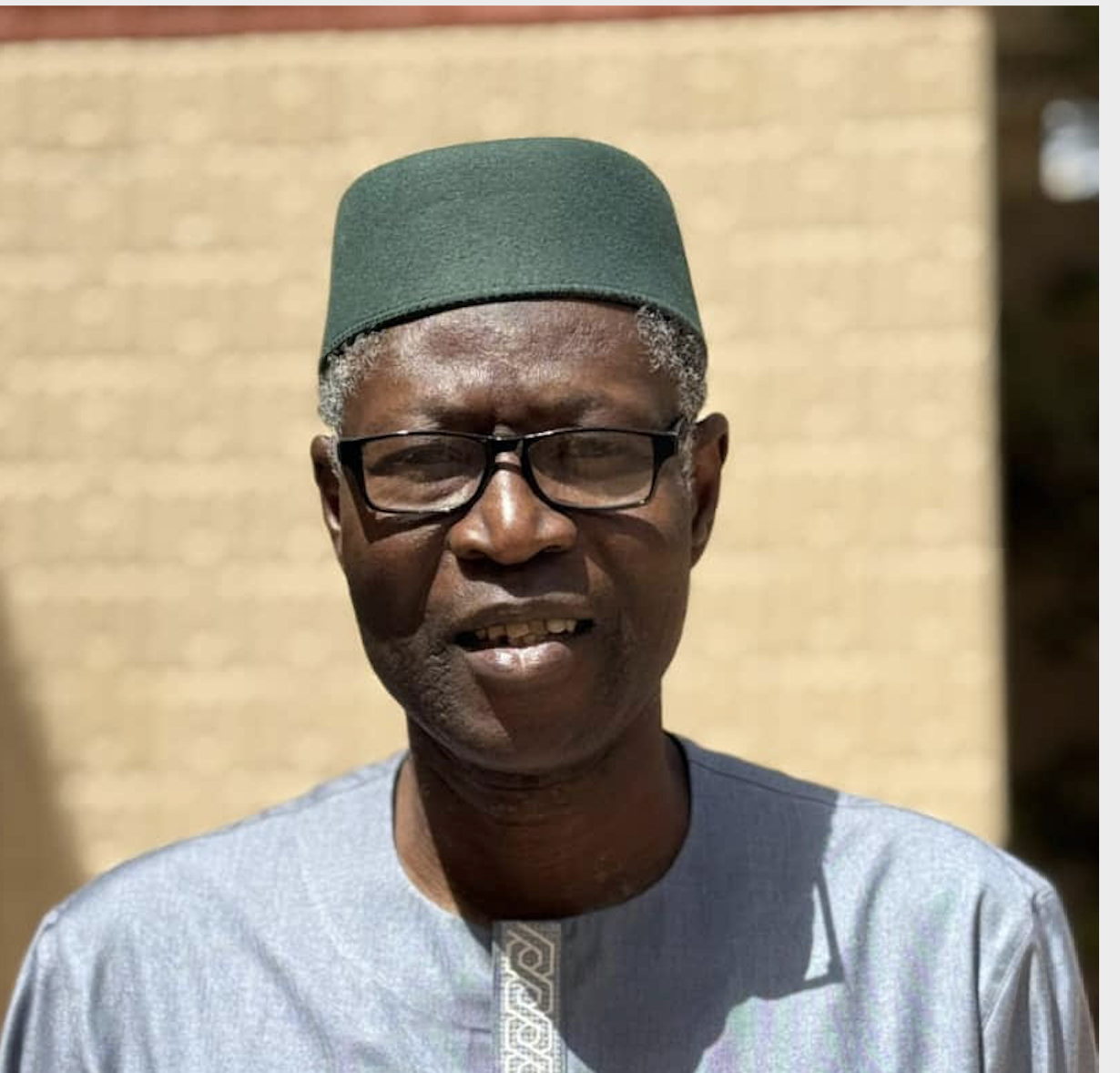
Professor Amath Ndiaye, FASEG – UCAD.
The Multi-year Budget and Economic Programming Document (DPBEP) 2027-2029 marks a return to a certain realism in the management of public finances. By postponing the objective of reducing the budget deficit to 3% of GDP to 2029, the Government adopts a more credible trajectory considering the magnitude of budget imbalances and financing constraints facing Senegal.
However, this budgetary realism is accompanied by a significant revision of growth ambitions. The Vision Senegal 2050 framework and its National Development Strategy (SND 2025-2029) aim for an average annual GDP growth rate between 6.25% and 6.5%, with a target of 6.5% for the period 2025-2029. In contrast, the DPBEP now projects an average growth rate of 3.2% between 2027 and 2029, nearly half the pace.
* A more realistic budget strategy, but without a real break *
The DPBEP does not represent a real break in debt strategy even though it is more realistic by pushing back the 3% budget deficit target to 2029 instead of 2027. This will allow for a more economically and socially bearable budget adjustment.
It also includes significant reforms in public finances, modernization of tax and customs administration, digitalization, and governance. However, it remains relatively unambitious in policies aimed at sustainably stimulating the private sector.
Measures to support business financing, especially SMEs, remain limited. Credit guarantee mechanisms, long-term financing lines, bank refinancing focused on priority sectors, strengthening of BNDE, FONSIS, and DER/FJ, as well as measures to improve SME access to the regional financial market or public procurement are underdeveloped.
* A still heavy debt and a worrying economic and social cost *
Beyond deficit reduction, the DPBEP highlights another major concern: the increase in public debt and especially the growing burden of its service on public finances.
The central government debt stock increased from 23,667 billion CFA francs at the end of 2024 to 25,198.5 billion CFA francs at the end of 2025, representing a 6.5% increase in just one year.
Even more worrying is the evolution of interest charges. According to the DPBEP, debt interest would represent 25.1% of tax revenues in 2027, 23.8% in 2028, and 18.1% in 2029. In other words, nearly a quarter of tax revenues would continue to be absorbed by interest payments at the beginning of the period.
This burden is even more worrying as, over the period 2024-2026, debt interest amounts to more than the cumulative budgets of the Ministries of Health, Agriculture, Higher Education, Research, and Innovation. For a developing country facing significant needs in health, education, food security, research, and employment, this represents a considerable economic and social cost.
These figures show that the real challenge lies not only in reducing the budget deficit but also in restoring debt sustainability. The more the debt burden absorbs a significant portion of tax revenues, the less room the state has to finance public policies and necessary investments for development.
* Making the private sector the engine of growth *
The main weakness of the DPBEP lies in its growth prospects. An average growth of 3.2% until 2029 appears insufficient to meet the employment challenge. In a country where the working-age population is rapidly increasing, a sustainable growth of 6.5 to 7% would probably be necessary to significantly reduce the unemployment rate.
Fundamentally, budget adjustment is, by nature, unfavorable to short-term growth. By reducing public deficits, the state inevitably slows down domestic demand. The success of this strategy therefore requires the private sector to gradually take over from the state as the engine of investment, whether through private investments or public-private partnerships (PPPs).
Furthermore, the Senegalese growth model can no longer rely as much as before on external demand. Hydrocarbons have significantly contributed to growth since the start of their exploitation, but oil production seems to have reached its cruising level, and gas alone probably cannot sustainably support an acceleration of activity.
In these conditions, it becomes essential to stimulate local production to substitute imports, by further supporting the formal and informal private sector. This includes better access to credit, strengthening guarantee mechanisms, increased mobilization of development banks, establishment of long-term financing for productive investments, and targeted support to sectors with high multiplier effects, including construction, industry, agriculture, agro-industry, and export services.
Budget consolidation is a necessary condition for restoring major macroeconomic balances, but it alone does not constitute a growth strategy. The real challenge will be to succeed in transitioning from growth driven by public expenditure and hydrocarbons to sustainable growth led by a dynamic, well-funded private sector capable of putting Senegal back on the growth trajectory set by Vision Senegal 2050.
About Prof. Amath NDiaye / FASEG-UCAD
Prof. Amath Ndiaye is a prominent Senegalese economist, holding a PhD in Economics from Cheikh Anta Diop University in Dakar (2001) and a 3rd cycle PhD in Development Economics from the University of Grenoble, France (1987). Since 1987, he has been teaching at the Faculty of Economics and Management at Cheikh Anta Diop University in Dakar. A recognized expert, he has collaborated with prestigious institutions such as the African Development Bank, the World Bank, and the IMF, specializing in exchange rates, economic growth, and institutional development. He was an expert member of the steering committee of the African Union Commission for the Creation of the African Central Bank. Prof. Ndiaye is the author of numerous influential publications, particularly on exchange rate regimes and economic growth in West Africa. Fluent in Wolof, French, and English.

