



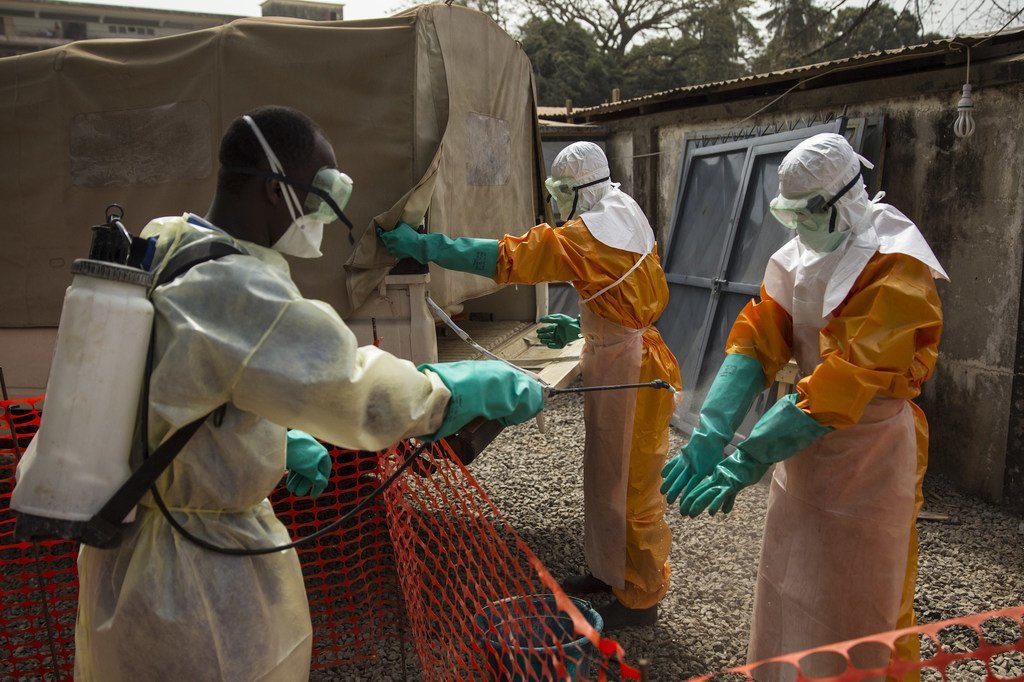
In the face of the resurgence of the Ebola virus in the Democratic Republic of the Congo, health authorities and international partners are accelerating the mobilization of financial, logistical, and medical resources to contain the spread of the epidemic. Ebola, one of the deadliest viruses in the world, causes severe hemorrhagic fevers with a high mortality rate in the absence of rapid care. The current resurgence is concerning due to the risks of transmission in several provinces in the East of the country and cross-border movements in the Great Lakes region.
An international emergency financial support
According to the latest data released on Tuesday, May 19, 2026, over $25 million has already been mobilized to support the response. The Africa Centres for Disease Control and Prevention (Africa CDC) has unlocked $2 million to strengthen emergency health interventions. The U.S. Department of State, on the other hand, announced $13 million through the pooled humanitarian funds of the Office for the Coordination of Humanitarian Affairs (OCHA) for the DRC and Uganda.
During a briefing on the Congolese National Radio-Television (RTNC), Health Minister Roger Samuel Kamba, virologist Jean-Jacques Muyembe, Communication Minister Patrick Muyaya, and Africa CDC Director General Jean Kaseya presented the epidemiological situation. The areas of Mungwalu, Bunia, Rwampara, and Nyakunde in Ituri are among the main affected localities; Butembo and Goma are also affected. The provisional toll includes 32 confirmed cases, 69 patients under care, 543 probable cases, and 136 probable deaths under investigation.
Logistical reinforcements and expertise deployed in the field
On the logistical front, the World Health Organization (WHO) has delivered nearly 12 tons of emergency supplies to the DRC. In parallel, 4.7 tons of medical supplies and specialized equipment were transported from Nairobi to Bunia with air support from the United Nations Organization Stabilization Mission in the DRC (MONUSCO). This initiative aims to strengthen prevention, infection control, and rapid response in the most exposed areas.
Through the HEPRR project, the World Bank has deployed 19 experts to Bunia to support the coordination of interventions, epidemiological surveillance, laboratory analyses, clinical care, and risk communication. Co-discoverer of the Ebola virus in 1976 and Director General of the National Institute for Biomedical Research (INRB), Jean-Jacques Muyembe warns of the risk of rapid spread beyond Congolese borders if the response is not strengthened without delay.

