



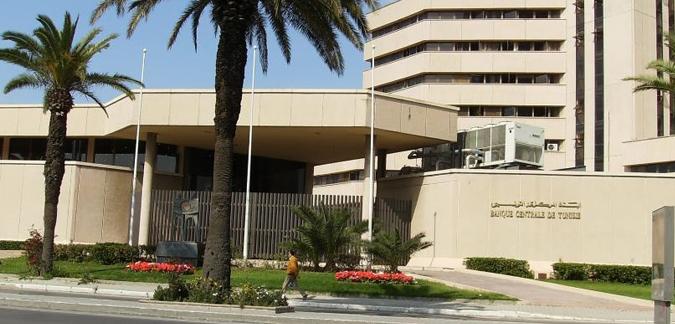
On February 11, 2026, the Board of Directors of the Central Bank of Tunisia (BCT) decided to maintain the key rate unchanged at 7.00%. This decision was made after analyzing several indicators, including the evolution of the inflation rate.
According to the BCT, it was necessary to continue supporting the ongoing disinflation process in order to bring inflation back to its long-term average. Updated data shows that inflation has decreased to 4.8% in January 2026, after stabilizing at 4.9% over the previous three months.
“This decrease was favored by the slowdown in inflation of administered price products, which fell to 0.6% from 0.8% in December 2025, in a context marked by the freeze of most significant administered prices in the consumption basket,” the regulator noted.
Furthermore, the pace of increase in prices of fresh food products slowed down in January 2026, reaching 10.3% compared to 11.2% the previous month, thanks to an improvement in the supply of several products. However, underlying inflation “Excluding prices of fresh food products and administered price products” continued its gradual increase, rising from a low of 4.3% in September 2025 to 4.9% in January 2026. This trend is mainly due to the easing of the downward base effect related to the sharp decline in domestic olive oil prices observed in 2025, commentators noted.
Discrepancies
However, these data are not shared by the entire Tunisian public opinion. According to economist Ridha Choundali, there is a growing gap between official inflation statistics and the reality experienced by Tunisian citizens.
Indeed, in an analysis, he estimates that between 2015 and 2026, the official rate dropping from 5% to 4.8% after reaching a peak of 10.3% in May 2023 does not translate into an improvement in the standard of living for Tunisians. He also points out that the general consumer price index used to calculate inflation includes subsidized products, non-essential goods, and services that do not represent the spending priorities of the majority of Tunisian households.
READ ALSO: Inflation slightly decreases to 4.8% in January 2026.

