



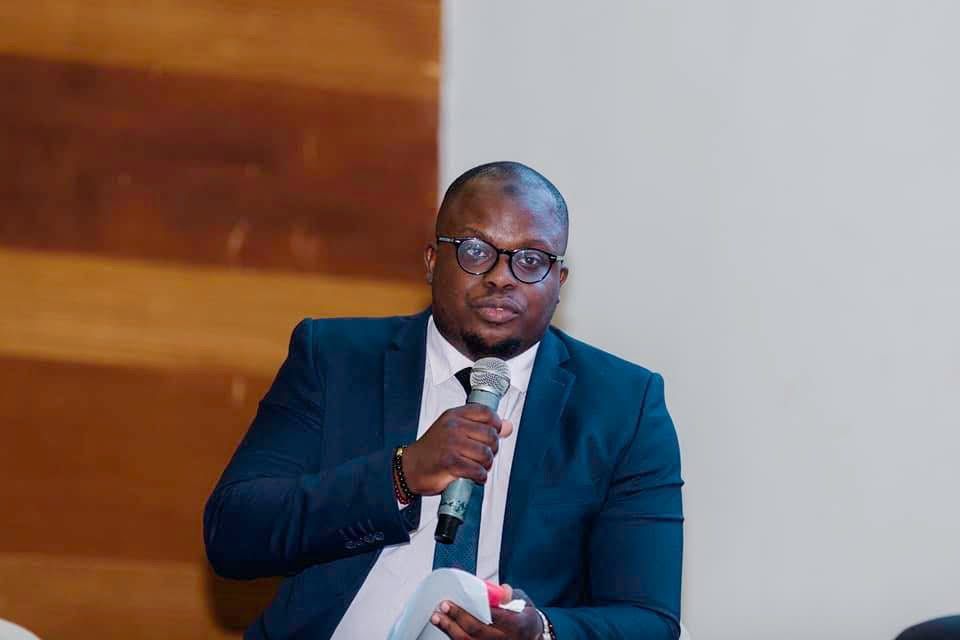
By Ismael Sy, Journalist, correspondent for Financial Afrik in Casablanca
In our opinion, the idea that intellectuals should serve the underprivileged has its limitations. The history of the world is nothing but a class struggle and the reproduction of class relations. An intellectual serving the weak can contribute to the construction of a different class system. The history of certain communist regimes has shown how some intellectuals who thought they were supporting a form of social justice woke up with a bitter taste in their mouths. How the weak of yesterday turned into the tyrants of today.
These intellectuals thus became guilty of mass crimes with the major popular repressions in the former USSR, in Mao’s China… Even though, initially, their position as enlightened advocates for the weak is morally justifiable without falling into moralism, ideologically committed intellectuals in action are not immune to manipulation.
Sartre himself had said: can we break the dependence of man on man?
As soon as one system of domination is dismantled, another system of domination takes over.
Can we free the world from power relations?
Can we build a world with mechanisms for self-regulation of power?
Power is the fuel of power struggles, of class relations. It is what defines the red line between the dominated and the dominant.
It creates the narrative of the powerless, the submissive, and their eternal servant position because, being devoid of power, they must endure the power of the powerful.
With power having an ever-increasing dynamism (x), it is rare to see a structure, a system, or a state that refuses to grow or gain more influence or power in the temporal or geographical space.
In this sense, the definition of the intellectual or their role should be reinterpreted.
Sartre, being on a mission in his time, could only conform his praxis to the challenges of his era. And he could not predict the consequences of the intellectual’s mission in social space. Only history could witness the limits of Sartre’s thinking.
Today, the intellectual should first be one who rigorously chooses the issues in which they decide to get involved; risking using their technical knowledge in service of reproducing the system of domination, if their ultimate goal is a just and balanced world.
Furthermore, they should also be capable of withdrawing, despite the moral purposes of building a better world, if they realize that the methods and means are contradictory to their goal of creating a humanity where power relations are regulated.
The intellectual of today would thus be different from the intellectual of yesterday;
A more demanding intellectual, less ideological, and sharper in exercising parrhesia. Scrutinizing their speech, their actions, their conformity with the greater whole for whom they decide to defend causes and purposes.
Regarding the writer, we can say that they are becoming increasingly rare. With the expansion of censorship mechanisms in the publishing industry, the assumption of the writer as an intellectual by essence has its limitations. Controlled mostly by the dominant doxa, the writer nowadays faces a large sorting machine that validates ideas beforehand, deciding which ones should pass and which ones should be rejected.
Today, the writer who was constantly repositioning themselves in their social space finds themselves deprived of “saying it all”. Unable to speak freely, they lose what makes them a writer. Because, according to Sartre, they are both subject to their own contradictions and those of the world. This makes them an intellectual squared. They can only be the one who meddles in everything. In this “everything,” even what we do not want to address. That is why they are the voice of those who cannot speak. The voice of those who dare not speak!
So today, we can say that we are in the era of “writers,” since the writer will not resign themselves to talking about “nothing” while more important subjects dominate the social space.
The writer is therefore disappearing to make way for the “writing,” this communication expert. Who uses their mastery of language in service of an abstract issue. A merchant of information.
So, in such a configuration, to write or to remain silent is a legitimate question for every writer…
As an intellectual by essence, will the writer accept to conform or no longer get involved in matters that do not concern them, or to say what others dare not say?
Will they, in the name of materialism or the existential challenges weighing on every individual, silence their contradictions within and become a mere writer?
These are questions that demonstrate the stakes facing the world of writing and what it has become today.
Today, in a society constantly evolving and marked by various class and power red lines creating different class architectures within societies and between states, it is important to understand what intellectuals have become and their mission in different social spaces.
This analytical framework has conditioned our praxis aiming to demonstrate what can be considered intellectual in our time, their function in the social matrix, and especially to note the bitter observation of the disappearance of the writer.

