



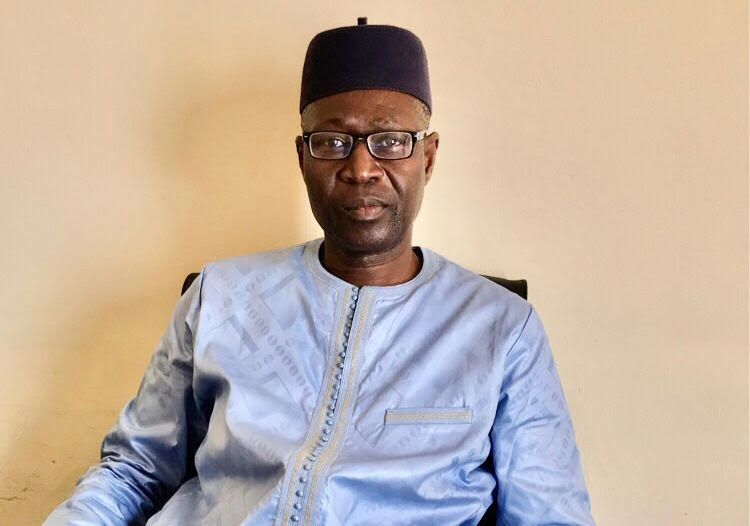
By Pr Amath NDIAYE, FASEG-UCAD.
The debate on Senegal’s public debt has led to the use of several expressions – hidden debt, undeclared debt, false statistical declarations (misreporting) or odious debt – which do not cover the same realities.
The first three generally refer to the same phenomenon: the existence of financial commitments that have not been properly recorded or declared in official statistics. The notion of odious debt, on the other hand, relates to a different issue, more legal and political in nature.
*What the Court of Auditors found*
The Court of Auditors does not systematically use the term “hidden debt”. In its audit report published in 2025, it highlighted loans and financial commitments that had not been properly reflected in the state’s official statistics.
It notably found:
a significant underestimation of the budget deficit;
loans taken outside the usual budgetary channels;
financial commitments not included in official figures;
a level of public debt higher than officially announced.
According to the Court of Auditors, public debt represented 99.67% of GDP at the end of 2023, compared to 74.4% of GDP in previous official statistics.
The gap is therefore about 25 percentage points of GDP, equivalent to several trillion FCFA of unrecorded commitments in official statistics.
*The IMF explicitly speaks of “hidden debt”*
The IMF went further by explicitly using the notion of “hidden debt” (hidden debt).
In March 2025, the IMF’s mission chief for Senegal, Edward Gemayel, confirmed the existence of around $7 billion in undeclared debt, equivalent to nearly 4,200 to 4,500 billion FCFA, accumulated between 2019 and 2024. This estimate largely confirms the conclusions of the Court of Auditors.
The IMF also indicated that:
previous budget and debt data were incorrect;
serious deficiencies existed in budgetary control;
public sector and parastatal debt needed to be revalued at higher levels than previously published.
This position was confirmed by the IMF’s Managing Director, Kristalina Georgieva:
“I want to start by giving all the credit to the Senegalese authorities for uncovering a major problem of false declarations. There was hidden debt and they brought it to light.” Source: Official transcript of the IMF – 2025 Annual Meetings
This statement shows that the term “hidden debt” is officially used by the IMF.
*Hidden debt and odious debt: two different realities*
Unlike hidden debt, undeclared debt, or misreporting, which refer to a transparency and budgetary governance issue, odious debt refers to a question of debt legitimacy.
A debt can be hidden without being odious. The discovery of undeclared debt does not automatically lead to it being classified as odious debt.
To date, neither the Court of Auditors nor the IMF has classified the debt in question as odious.
Furthermore, none of the reports published to date have concluded the existence of a misappropriation of public funds system leading to the observed indebtedness. The institutions mainly highlight issues of budgetary governance, transparency, and accounting for financial commitments.
Audits have revealed practices that have led to an underestimation of the budget deficit and public debt, as well as a significant exceeding of the 70% of GDP threshold set by the UEMOA. However, the mobilized resources have financed public investments whose achievements are visible and well-documented: the Regional Express Train (TER), the Dakar Bus Rapid Transit (BRT), the Emergency Community Development Program, flyovers, highways, and numerous economic and social infrastructures.
The debate highlighted by the Court of Auditors and the IMF mainly focuses on the sincerity of public accounts, the quality of financial information, and compliance with budgetary procedures. At this stage, it does not concern the existence of loans contracted against the general interest.
Therefore, the qualification of odious debt appears difficult to justify based on the currently available information.
*My economist’s assessment*
From an economic point of view, the terms hidden debt, undeclared debt, and misreporting fundamentally describe the same reality: that of financial commitments that existed legally but were not properly reflected in official statistics.
The difference is more a matter of vocabulary than substance. The Court of Auditors favors a technical approach, while the IMF uses the more direct term “hidden debt” and mentions a problem of false statistical declarations.
On the other hand, the concept of odious debt belongs to another realm. It requires demonstrating that the loans were contracted against the interests of the population and without benefit to them. The elements established to date by the Court of Auditors and the IMF do not lead to such a conclusion.
About Amath Ndiaye
Professor Amath Ndiaye is a Senegalese economist and research professor at the Faculty of Economics and Management Sciences (FASEG) of Cheikh Anta Diop University (UCAD) in Dakar. Holding a State Doctorate in Economics from UCAD and a postgraduate doctorate from the University of Grenoble (France), he has been teaching at UCAD since 1987. A specialist in macroeconomics and development economics, his research focuses on macroeconomic policies, public spending, inflation, and economic convergence issues within ECOWAS. Recognized for his commitment to popularizing economic sciences among the general public, he has also collaborated with several major international institutions, including the World Bank, the African Development Bank (AfDB), and has been a Visiting Scholar at the International Monetary Fund (IMF).

