



Opinion | Energy Transition & Sustainable Finance in Africa
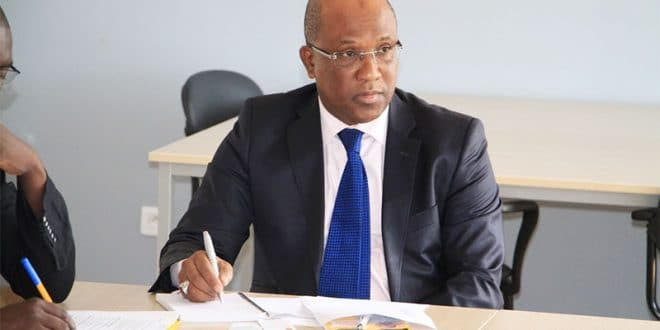
By Thierno Seydou Nourou Sy, Banker. President and founder of Nourou Financial Consulting (NFC). Dakar, Senegal. www.Nouroufinancial.com
Is sustainable finance in Africa truly financing the transformation of our economies? Behind the trendy concepts – ESG, green bonds, climate funds, sustainable taxonomies – it is this uncomfortable but necessary question that must guide our decisions today. Africa finds itself in a unique situation in contemporary history: it represents about 3% of global CO₂ emissions while hosting nearly 18% of the world’s population. The G20 countries, on the other hand, are responsible for nearly 80% of global emissions.
And yet. Nearly 600 million Africans still lack access to electricity. Over 900 million still use polluting cooking methods, with dramatic health and environmental consequences. The message is clear: Africa is experiencing climate change that it has hardly caused, but it must finance its transition with rules defined elsewhere.
In these conditions, ecological transition cannot be reduced to an environmental requirement. It is primarily a development issue, access to energy, industrialization, and economic sovereignty. The energy deficit costs several African economies between 2 and 4% of GDP each year – through industrial losses, power outages, logistical surcharges, and dependence on generators. A telling figure illustrates this reality: Spain alone produces more electricity than all of sub-Saharan Africa excluding South Africa.
Green finance that remains a showcase
It must be acknowledged: sustainable finance is advancing on the continent. The green bonds market is developing in Nigeria, Kenya, Morocco. ESG criteria are gaining strength. International institutions are getting more involved, climate funds are multiplying.
But this dynamic remains partially disconnected from African realities. It still relies too heavily on external financing, short-term profitability logic, and a focus on visible but less transformative projects. Green bonds readily finance solar parks or certified buildings. Much less often rural electrification, community mini-grids, industrial infrastructure, or local value chains.
We finance what is visible and profitable – not always what is structurally necessary. Sustainable finance thus becomes a showcase, not a lever. The numbers speak for themselves. Africa receives only about 3% of global investments in renewable energies, despite concentrating nearly 60% of the world’s best solar potential and significant reserves of strategic minerals. Of the over 100 billion dollars promised annually for global climate financing, the continent captures only 12 to 15% of the flows – while its energy transition needs are estimated at over 200 billion dollars per year by 2030. We are not asking for charity. We are asking for fair rules.
What African trajectories teach us
The continent’s experiences are enlightening. Morocco has successfully structured coherent financing for solar energy: the Noor complex represents nearly 580 MW of installed capacity, mobilizing over 2 billion dollars thanks to a clear political vision, concessional financing, public guarantees, and a stable regulatory framework. Kenya, on the other hand, has bet on geothermal energy: this source now represents between 40 and 45% of national electricity production, making the country a global leader in the sector.
In contrast, Nigeria – despite over sixty years of oil exploitation – still faces a chronic energy deficit. For over 200 million inhabitants, the actual available electrical capacity often remains below 5,000 MW.
The essential lesson is: it is not the resources that make the difference, it is the quality of the financing and its coherence with a development strategy.
The Senegal-Mauritania case: time for choices
Senegal and Mauritania are now entering a decisive phase with gas exploitation. The GTA project represents around 2.5 million tons of LNG per year – a historic opportunity. But it raises a fundamental question: will we use these resources to transform our economies, or simply to fuel a new cycle of exports?
Two trajectories are available to us. The extractive trajectory – exporting resources, dependence on external markets, low local transformation – we already know it. It has produced in some countries growth without industrialization, revenues without inclusion, wealth without transformation.
The transformative trajectory, on the other hand, involves financing energy infrastructure, supporting industrialization, investing in renewables, and developing local skills. Gas is not the problem. The real question is: how will its revenues be used.
For financial sovereignty of the transition
This is why we must go beyond the simple notion of sustainable finance – and introduce that of financial sovereignty of the transition. This approach is based on three pillars.
First, channeling financing towards the real economy: energy, industry, infrastructure, innovation. Sustainable finance cannot be limited to easily labelable projects.
Second, adapting financial instruments to the continent’s realities: long-term financing, risk sharing, public-private partnerships, mixed financing capable of absorbing the specificities of African markets.
Third, strengthening local anchoring: stronger African banks, deeper regional financial markets, better mobilization of local savings and diasporas. Today, a large part of African savings still finance foreign assets rather than the continent’s infrastructure. Financial sovereignty is first and foremost the ability to finance our own projects with our own capital.
Conclusion
Global energy transition also triggers intense geopolitical competition – for critical minerals, industrial chains, infrastructure, and control of financing. Africa must not only become the supplier of raw materials for others’ transition.
Sustainable finance should not be just compliance with international standards. It should be aligned with African development priorities. It should become a lever for economic transformation and energy sovereignty.
The question is not only to green finance in Africa – but to ensure that it truly finances the continent’s transformation.

